
Therapy for Infertility: Understanding Grief and Finding Support
Last updated: November 2025
When you’re facing fertility challenges, the emotional weight can feel as overwhelming as the physical process itself. Therapy for infertility provides essential support for navigating grief, anxiety, and relationship strain that often accompany reproductive medicine treatments. About one in eight couples experience infertility, and many find that counseling becomes a crucial part of their process—not just as a coping tool, but as a way to process loss, strengthen relationships, and make decisions aligned with their values. Many people search for an infertility psychologist near me when they realize the emotional impact extends beyond what they expected.
One question we hear from people considering therapy for infertility is whether they should wait until they’re “really struggling” before reaching out. In our practice, we find that starting counseling early in the fertility process—before crisis moments—gives you tools and support when you need them most. You don’t have to be in emotional free fall to benefit from therapy. Building a relationship with a therapist now means you have someone who understands your story when difficult moments arrive.
What type of psychotherapy is best for infertility?

Several therapeutic approaches effectively address the unique emotional challenges of infertility, and the best option depends on your specific needs and circumstances. Understanding different types of infertility counseling helps you choose support that matches where you are in your fertility care.
Types of Therapy for Infertility
Individual therapy provides a private space to process complex feelings about your body, identity, and future. Many people benefit from working with mental health professionals who specialize in reproductive medicine, as these infertility counselors understand the medical terminology, treatment timelines, and specific emotional dynamics of coping with infertility.
Couples counseling addresses how fertility challenges affect your relationship and sexual connection. Infertility can create tension around intimacy, decision-making, and communication—particularly when partners experience grief differently or disagree about treatment options. A family therapist trained in fertility issues can help you have these conversations and maintain your emotional connection during a stressful time. How your attachment style influences your response to fertility stress can shape these relationship dynamics in important ways.
Cognitive Behavioral Therapy (CBT) helps identify and change negative thought patterns that develop during fertility treatment. When you’re facing repeated disappointment with each failed cycle or pregnancy test, CBT provides tools to challenge catastrophic thinking and manage anxiety around outcomes you can’t control.
Support groups offer community with others who understand fertility problems firsthand. Whether in-person or online, these groups reduce isolation and provide practical advice from people navigating similar fertility care experiences. Many fertility centers, such as Atrium Health in Charlotte, either host support groups or can provide referrals to mental health professionals skilled in infertility counseling.
Eye Movement Desensitization and Reprocessing (EMDR) can be particularly beneficial for processing trauma related to pregnancy loss, miscarriages, or medical complications during infertility treatment. This approach helps your brain process difficult memories that may be contributing to ongoing distress.
What to do if you’re struggling with infertility?
Start by acknowledging that your feelings are valid and seeking support is a sign of strength, not weakness. Infertility affects more than just your reproductive system—it impacts your sense of self, your relationships, and your entire life perspective. Research shows that talking about your experience with someone you trust, whether a partner, friend, or counselor, helps reduce feelings of isolation and provides emotional relief.
Building Your Support Network
Consider reaching out to mental health professionals who understand the psychological aspects of fertility challenges. Infertility counseling should be available during all stages of the infertility experience, not just after treatment failure. Many people find it helpful to establish care with a therapist before or early in fertility treatment, creating a supportive relationship they can lean on throughout the process.
Practice self-care by maintaining activities you enjoy, even when fertility treatment feels all-consuming. Stay physically active, prioritize sleep, and make time for connections that bring joy—whether that’s meeting friends for a walk on the Rail Trail or finding quiet moments that have nothing to do with trying to conceive. Infertility patients who maintain some boundaries around their fertility care often report better overall well-being. Coping with isolation and loneliness becomes especially important when facing infertility in a transplant-heavy city where established support networks may be limited.
Ask your healthcare team questions about all possible outcomes, including what happens if treatments aren’t successful. Research indicates that discussing the possibility of fertility treatment being unsuccessful as part of routine care helps patients feel more prepared and supported, regardless of the outcome. Having honest conversations about different paths to family building, including adoption, donor conception, or remaining child-free, allows you to make informed decisions that align with your values.
We notice that partners experiencing infertility tend to grieve on different timelines, which can create distance in relationships when support feels most needed. One partner may want to talk about fertility treatment details while the other needs space from the topic. In couples counseling, we help you understand these differences as variations in coping rather than signs of relationship problems. Creating room for both partners’ emotional experiences strengthens your connection during treatment, regardless of outcomes.
How to overcome infertility depression?
Depression related to infertility requires the same level of attention and professional care as depression from any other cause. If you’re experiencing persistent sadness, loss of interest in activities you once enjoyed, changes in sleep or appetite, or thoughts of self-harm, reach out to a mental health professional right away. These symptoms indicate that your emotional well-being needs support beyond what self-care strategies alone can provide. If you’re looking for depression therapy in Charlotte that understands fertility-related struggles, working with an anxiety therapist in Charlotte NC who specializes in reproductive health can make a significant difference.
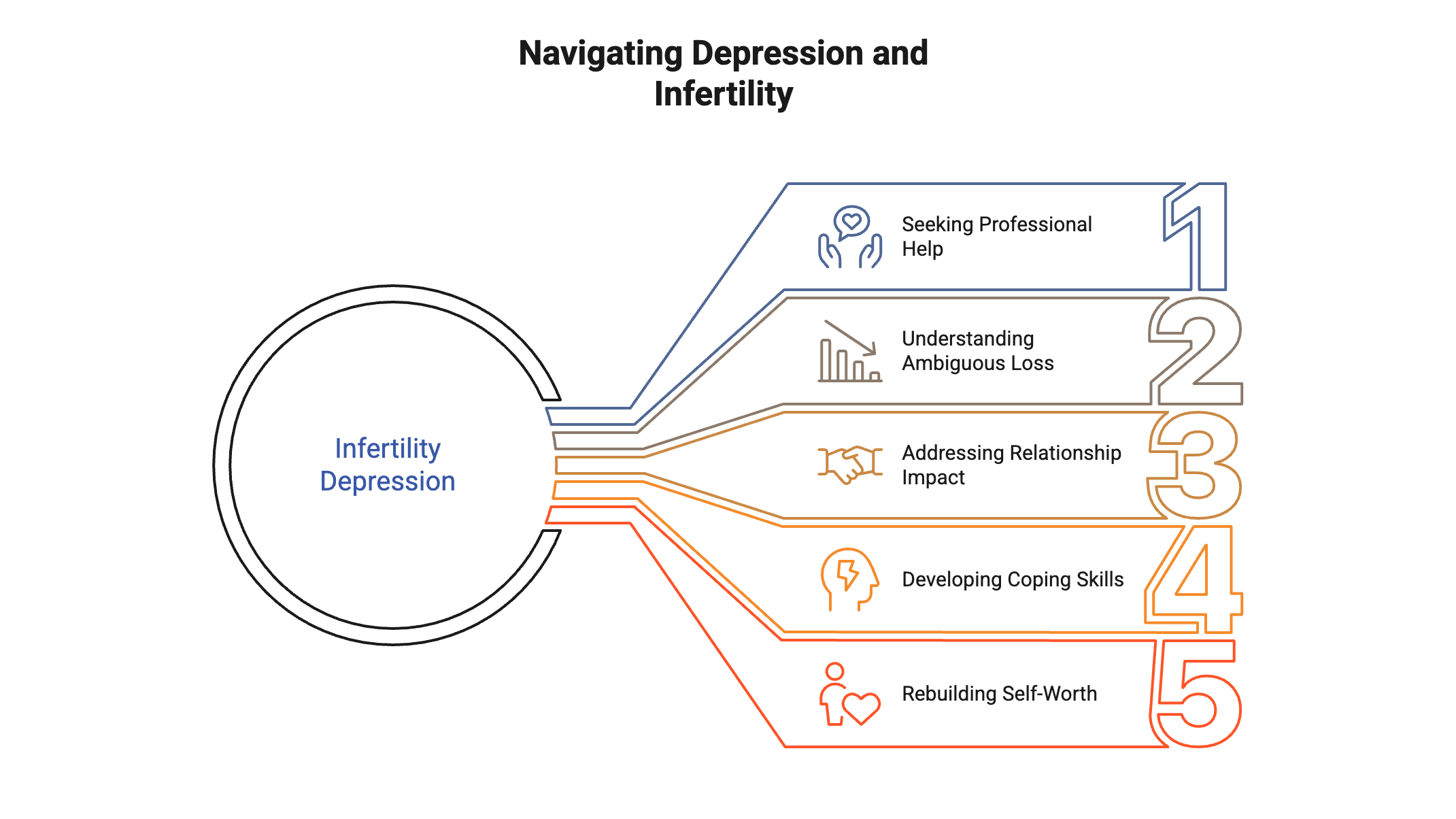
Therapy helps you process the specific losses associated with infertility—the loss of control, the imagined future with a biological child, the timeline you had planned. Many people describe infertility grief as ambiguous loss: you’re mourning something that hasn’t happened yet, which can feel confusing and difficult to explain to others who haven’t experienced fertility problems.
Mental health professionals can help you recognize how depression affects relationships in unique ways during fertility treatment. Are you avoiding social situations with families? Have you withdrawn from your partner? Are fertility treatments creating financial stress that compounds emotional distress? Addressing these interconnected challenges requires more than just getting through the next treatment cycle—it requires developing coping skills that support your mental health regardless of fertility outcomes. Rebuilding your sense of self-worth when infertility challenges your identity becomes an important part of this healing process.
Counseling can also help if you’re experiencing sexual dysfunction as a result of timed intercourse or the emotional weight of trying to achieve pregnancy. Many infertile couples report that the pressure of fertility treatment affects their intimate connection, creating a cycle where sex becomes associated with stress rather than pleasure. A therapist can help you and your partner work through these relationship challenges and reconnect emotionally.
Consider asking your fertility treatment team about integrated care models. Some reproductive medicine clinics now include psychoeducation as part of standard care, providing information about the psychological impact of fertility challenges and treatments. This approach recognizes that mental health support isn’t separate from medical care—it’s an essential component of comprehensive fertility care.
What is the best fertility treatment to get pregnant?
The most effective fertility treatment depends on the underlying cause of infertility, which is why a thorough fertility testing and infertility diagnosis process comes first. While this is ultimately a medical decision to make with your reproductive medicine team, understanding your options can help you feel confident during the decision-making process.
Common medical treatments include:
- Medications to stimulate ovulation, particularly for women with conditions like premature ovarian failure or unexplained infertility
- Surgical procedures that may address structural issues such as blocked fallopian tubes, uterine fibroids, or scar tissue affecting the reproductive system
- Intrauterine insemination (IUI), where sperm is inserted directly into the uterus during ovulation
- In vitro fertilization (IVF), where eggs are fertilized outside the body before being transferred to the uterus—the IVF process has helped millions facing both female infertility and male infertility become pregnant
- Third party reproduction, including sperm donation, donor eggs, or embryo donation, which offers paths to pregnancy when using your own genetic material isn’t possible
These options involve their own emotional considerations, which is where infertility counseling becomes particularly valuable in helping you explore feelings about genetics, family building, and what parenthood means to you.
Success rates vary significantly based on age, diagnosis, and specific risk factors. In 85% to 90% of infertility cases, conditions can be addressed through medications, assisted reproductive technology, or surgical interventions. However, these statistics don’t capture the emotional toll of uncertainty or the difficult emotions that arise when facing multiple failed cycles or choosing between treatment options.
One thing we emphasize with clients facing fertility challenges is that you can hold grief and hope at the same time. You don’t have to choose between mourning losses and staying optimistic about treatment. Therapy provides room to acknowledge the full range of your feelings—the disappointment, the fear, the exhaustion—without diminishing your commitment to family building. This emotional honesty protects your mental health better than forcing positivity through each cycle.
The experience of infertility is rarely straightforward, and the grief you feel along the way deserves attention and support. Whether you’re just beginning fertility testing, in the middle of treatment, or facing difficult decisions about next steps, you don’t have to handle this alone.
Get Support for Infertility in Charlotte
At Therapy Group of Charlotte, our psychologists understand the unique challenges of coping with infertility. We provide individual therapy, couples counseling, and support for navigating the emotional complexities of fertility treatment, pregnancy loss, and family building decisions. Contact us to schedule an appointment and find the support you need during this difficult time.
Common Questions About Therapy for Infertility
How does infertility affect men vs. women differently?
Gender differences influence how individuals experience and cope with infertility-related stress. Research suggests that women often face more social pressure around motherhood and may internalize feelings of failure when they can’t conceive. Women also undergo more physical procedures during fertility treatment, which can intensify emotional responses. Men experiencing male infertility may struggle with feelings around masculinity and virility, sometimes withdrawing emotionally rather than expressing vulnerability. Both partners need space to grieve in their own way, and infertility counselors can help couples understand these different emotional patterns as normal rather than problematic.
What are common causes of female infertility?
Female infertility can result from various reproductive system conditions, including blocked fallopian tubes (often from pelvic inflammatory disease or endometriosis), uterine fibroids that interfere with implantation, premature ovarian failure where ovaries stop functioning before age 40, and hormonal imbalances that prevent regular ovulation. Unexplained infertility—where no specific medical condition is identified—accounts for about 10-15% of infertility cases and can feel particularly frustrating. Age affects fertility as egg quality and quantity decline over time, typically becoming more pronounced after age 35. A thorough fertility evaluation with your reproductive medicine team identifies specific factors affecting your ability to achieve pregnancy.
Can lifestyle changes improve fertility?
Certain lifestyle modifications can improve your chances of pregnancy, though they work differently for different people depending on the underlying cause of infertility. Maintaining a healthy weight matters because being significantly underweight or overweight can affect ovulation and hormone production. Reducing alcohol consumption, quitting smoking, and managing stress through techniques like mindfulness can support reproductive health. Regular exercise helps, though excessive intense exercise may actually impair fertility in some women. Adequate sleep and nutrition provide your body with resources needed for reproductive function. While lifestyle changes alone don’t resolve structural issues like blocked fallopian tubes or severe male infertility, they can optimize your overall health during fertility treatment.
How long should you try before seeing a fertility specialist?
Most doctors recommend consulting a fertility specialist after one year of trying to conceive through unprotected sex if you’re under 35, or after six months if you’re 35 or older. However, certain medical conditions warrant earlier evaluation regardless of how long you’ve been trying. These include irregular or absent menstrual cycles, known uterine or fallopian tube problems, endometriosis, previous pelvic infections, erectile dysfunction or other sexual function concerns, or a history of cancer treatment that may affect fertility. If you have risk factors for infertility or a known medical condition affecting the reproductive system, starting fertility testing sooner allows more time to explore different treatment options.
Is infertility more common than I think?
Yes, infertility affects approximately one in eight couples, making it far more common than most people realize before facing fertility challenges themselves. Many people keep their struggles with infertility private, which can create the illusion that everyone else conceives easily. This silence contributes to feelings of isolation when you’re experiencing fertility problems. The prevalence increases with age, with women over 35 experiencing higher rates of infertility. Male infertility contributes to about half of all infertility cases, either alone or in combination with female factors. Knowing how common fertility challenges are doesn’t diminish your personal experience, but it can help you feel less alone and more willing to seek support through infertility counseling or support groups.
