
Understanding Infertility Grief: When Loss Goes Unrecognized
Infertility grief is a real and profound form of loss that affects one in eight couples, yet it often goes unacknowledged by society. When you’re unable to conceive or carry a pregnancy, you’re not just facing a medical challenge—you’re mourning the loss of dreams, identity, and the family you imagined. Infertility grief is what mental health professionals call “disenfranchised grief,” meaning it’s a loss that isn’t openly recognized or socially supported, making the emotional pain harder to bear.
In our practice, we see how infertility grief shows up in unexpected ways. Clients come to therapy feeling guilty for avoiding friends with children or declining baby shower invitations. They describe a sense of failure that permeates other areas of life. What strikes us is how many people question whether they have the “right” to grieve when there’s no death, no funeral. We help clients understand that ambiguous loss deserves the same validation as any other grief.
Can You Grieve From Not Being Able to Get Pregnant?

Yes. Infertility grief is a legitimate psychological response to loss. When you experience infertility, you’re mourning multiple losses at once: the dream of biological children, your imagined family timeline, control over your body and life plans, and sometimes your sense of identity itself. Research shows that the emotional toll of infertility can lead to significant psychological distress, including depression and anxiety, with effects that can persist long after fertility treatments end.
The grief you feel with each negative pregnancy test, each failed IVF cycle, or each unsuccessful fertility treatment is not an overreaction—it’s your mind and heart processing real loss. Unlike other types of grief that society acknowledges, infertility grief often lacks the rituals, support systems, and validation that help people heal. This makes the grieving process harder to navigate.
What Is Disenfranchised Grief?
Disenfranchised grief refers to loss that society doesn’t openly acknowledge or validate. With infertility, there’s no funeral, no obituary, no casket—just an invisible absence that others may not recognize as worthy of mourning. Infertility grief is a loss that exists in the space between hope and heartbreak, made more painful by its invisibility.
The disenfranchised nature of this loss means you might hear comments like “just relax” or “at least you can try again,” which minimize your feelings rather than validate them. Family members might not understand why you need space from baby showers or pregnancy announcements. Friends might wonder why you’re still sad months or years into your fertility journey.
This lack of support for infertility grief can make you question whether your emotions are valid. They are. The fact that society doesn’t have a clear framework for supporting this type of loss doesn’t make your grief any less real or your feelings any less legitimate.
Why Do People Get So Sad About Infertility?
Infertility affects your sense of self, your relationships, and your hopes for the future—often all at once. It’s not just about wanting to get pregnant; it’s about confronting a shift in how you see yourself and your life.
Many women experiencing infertility report intense feelings of self-blame toward their bodies, as if their reproductive system has betrayed them. This can lead to a painful loss of trust in your own body. When your body doesn’t respond the way you expect during fertility treatments, each month’s disappointment compounds the last, creating an emotional roller coaster of hope and grief.
The cyclical nature of infertility grief sets it apart from other losses we treat. Each month brings renewed hope followed by disappointment, creating a pattern of recurring trauma. Clients describe the two-week wait after treatment as excruciating—suspended between hope and dread. We work with individuals and couples to develop resilience for this cycle while acknowledging that the repetitive nature of the loss makes it harder to process.
The fertility journey is emotionally draining because of the financial, physical, and time investments involved. Starting infertility treatment means committing to a process with no guarantees, where you might undergo multiple rounds of intrauterine insemination, in vitro fertilization (IVF), or embryo transfer—each one carrying its own emotional weight. The IVF process itself can be grueling, with hormone injections, monitoring appointments, and anxiety consuming your mental health and well-being.
Infertility also creates ripple effects in your relationships. The emotional problems that arise can strain partnerships, as couples often grieve differently or struggle to communicate about their powerful emotions. Changes in sexual satisfaction are common, as intimacy becomes tied to conception rather than connection.
How Infertility Affects Relationships
Research on relationship outcomes during infertility shows that while many couples grow closer through shared adversity, the stress can create significant strain. Communication breakdowns, mismatched grieving processes, and the pressure of treatment decisions can lead to conflicts. Some couples find that approaching infertility as a team problem—rather than assigning blame—helps them navigate the intense emotions together.
The experience can be challenging when there’s a male partner involved but the woman carries disproportionate emotional and physical burden of fertility challenges. Secondary infertility—when you struggle to conceive after having biological children—brings its own unique grief, as others may dismiss your loss with comments like “at least you have one.” Primary infertility, the inability to conceive a first child, carries the weight of an entirely unrealized dream.
Support groups and couples therapy can provide outlets for processing these relationship challenges. Many infertile couples report that having a support network of others who understand makes a significant difference in maintaining their connection.
How to Deal with Sadness of Infertility?
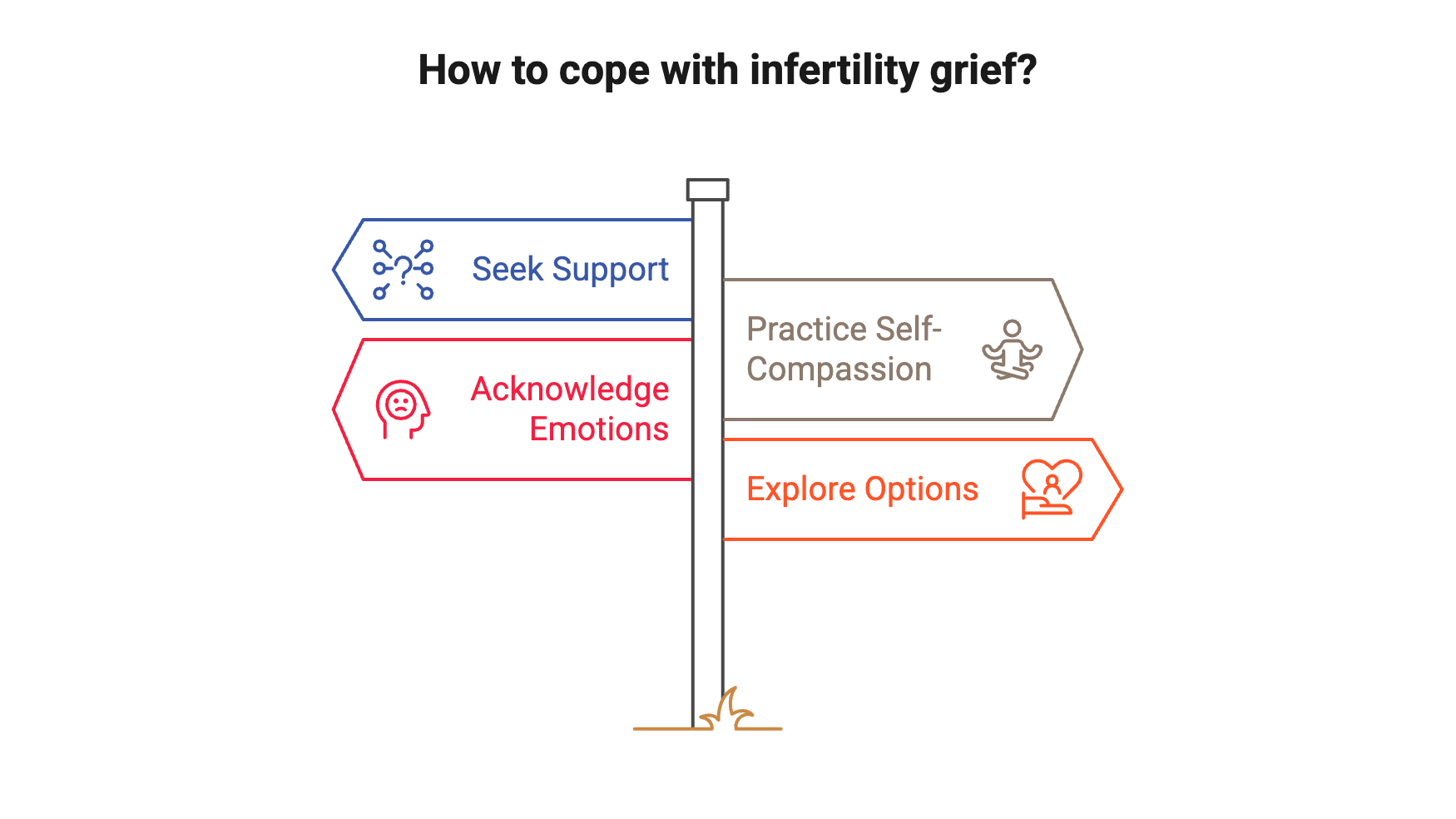
The most effective coping strategies for infertility grief involve seeking support, practicing self-compassion, and allowing yourself to feel your emotions without judgment.
First, acknowledge that your feelings are valid. The sadness, anger, and anxiety you experience with each failed attempt or negative pregnancy test deserve recognition. Allow yourself to grieve rather than pushing the emotions away. While you may have heard of the five stages of grief (denial, anger, bargaining, depression, acceptance), infertility grief doesn’t follow a linear path—it cycles and resurfaces with each new disappointment.
We’ve found that the most effective therapy for infertility grief involves validation before solutions. Many clients arrive having been told to “just adopt” or “stop stressing.” Our approach focuses first on acknowledging the legitimacy of their loss. We create space for anger at bodies that don’t cooperate, sadness over lost timelines, and grief over imagined children. Only after validation can we explore coping strategies and path forward.
Seek professional help from a mental health professional who specializes in infertility. Counseling can help you develop coping strategies, process the grieving process, and improve your overall well-being. Research shows that discussing the possibility of unsuccessful outcomes with your healthcare team—rather than focusing only on success—can help you cope better with disappointment.
Connect with others through support groups, either in-person or online communities. Hearing from other people on the fertility journey helps combat feelings of isolation. Studies show that social support is protective against depression and anxiety in the context of infertility.
Practice self-care through physical activity, activities you enjoy, and maintaining your health outside of fertility treatment. Set boundaries to protect your emotional peace—it’s okay to skip baby showers or events focused on pregnant women when you need to. Making space for your intense emotions doesn’t mean you’re weak; it means you’re taking care of yourself. Self-compassion becomes essential when self-blame threatens to take over.
Consider exploring all your options, including speaking with a fertility clinic about alternative paths like using a sperm donor, assisted reproductive technology options, adoption, or coming to terms with a child-free life. Some people find that deciding to stop treatment is the right decision for their mental health and life goals. Emotional healing looks different for everyone.
Finding Support in Charlotte
Charlotte Women’s Counseling, part of Therapy Group of Charlotte, specializes in supporting individuals and couples through infertility, pregnancy loss, and reproductive trauma. Our clinicians understand the deeply personal nature of infertility grief and can help you move through this challenging time with compassion and evidence-based approaches.
Whether you’re just starting infertility treatment, undergoing fertility treatments, or processing an unsuccessful fertility treatment, professional support can make a significant difference. We also work with couples experiencing relationship strain from the fertility challenges, offering couples therapy to help partners stay connected through the grieving process.
You don’t have to face this alone. The grief from infertility deserves recognition, validation, and proper support.
Get Support for Infertility Grief in Charlotte
If you’re struggling with the emotional toll of infertility, we’re here to help. Contact Therapy Group of Charlotte to connect with a Charlotte therapist who understands the unique challenges of the fertility journey and can provide therapy in Charlotte tailored to your needs.
This blog provides general information and discussions about mental health and related subjects. The content is not intended to be a substitute for professional medical advice, diagnosis, or treatment. Always seek the advice of your physician or other qualified health provider with any questions you may have regarding a medical condition.

