

If you live in South End—or nearby in Dilworth, Sedgefield, Wilmore, or Uptown—this guide shows you how to choose a child therapist and what to expect in the first weeks. It’s simple, local, and grounded in evidence‑based child therapy. Every child is unique, with individual strengths and challenges that dictate the therapeutic approach.
How do I start finding a child therapist in South End Charlotte?
Start with your goal. What’s most pressing—worry, big feelings, school stress, behavior changes, a family transition, or a recent hard event? Anxiety in kids can also look physical—more stomachaches or headaches around school time—not just words about worry.
Narrow by age and specialty. Look for therapists who routinely work with your child’s age (preschool, elementary, middle, or high school) and your concern. Check bios for child‑specific training and supervision.
Make a short local list. Combine South End–area practices with referrals from your pediatrician or school counselor. Note practical fit—after‑school times, in‑person vs. telehealth, parking, and LYNX Blue Line access—so weekly sessions are doable.
Prioritize approaches that work. For many school‑age children and teens, cognitive behavioral therapy helps reduce anxiety and depression and teaches everyday coping skills. For younger kids, parent involvement and play‑based work are common (more on that below).
Use trusted evidence hubs. If you like to double‑check methods, the California Evidence‑Based Clearinghouse offers plain‑language summaries of child therapies.
Which qualifications and licenses should I look for?
Choose a therapist licensed in North Carolina with clear experience treating children and teens. Common licenses include LCMHC, LCSW, LMFT, and Psychologist (PhD/PsyD). Beyond the letters, scan for therapists who offer a safe and supportive environment for your child.
- Specialized training with kids and adolescents
- Trauma‑informed and culturally responsive care
- A plan for parent involvement and school collaboration when needed
- Guidance on when to add psychological testing or a psychiatry consult if attention/learning or medication questions arise
What therapy approaches fit different ages and concerns?
Match the method to your child and your goals.
- Play therapy and parent‑child therapies help younger children express feelings through play and strengthen the caregiver‑child bond (e.g., PCIT/CPP/CPRT)—especially after stress or trauma.
- CBT (cognitive behavioral therapy) teaches practical skills—naming thoughts, practicing coping skills, and changing small behaviors—that reduce anxiety and depression in school‑age kids and teens.
- For anxiety and OCD, adding gradual exposure improves outcomes.
- When there’s a known traumatic event, Trauma‑Focused CBT is often recommended and includes structured parent involvement.
Parents are part of good child therapy. Expect brief parent check‑ins or coaching alongside your child’s sessions; this keeps skills moving from the office into home and school.
What happens in the first three sessions?
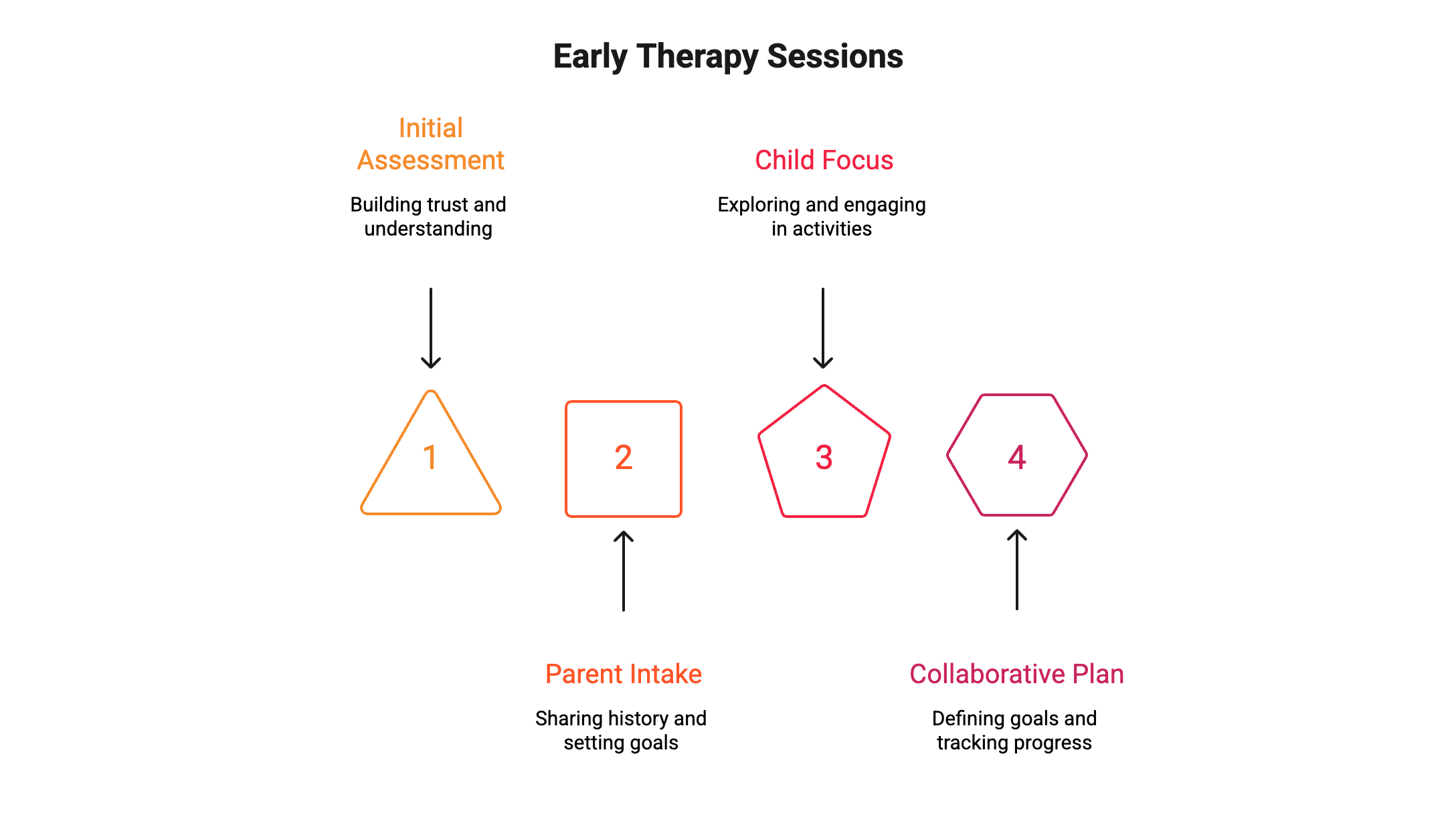
Early sessions are gentle and structured to build trust.
Session 1 (Parent intake). You’ll share history, current concerns, strengths, and goals. You’ll also review policies, privacy, and how updates are shared.
Sessions 2–3 (Child focus). Your child meets the therapist, explores the room, and begins with age‑friendly activities—talk, play, drawing, or simple skill practice. With CBT work, you’ll see skills like naming thoughts and feelings and trying small coping steps; with play/dyadic work, you’ll see relationship‑building and emotion coaching.
Collaborative plan. By the end of the first few visits, you’ll have clear goals, a recommended frequency (often weekly at first), and a simple way to track progress at home and school. If trauma is part of the picture, your therapist may discuss trauma‑informed care and how the plan supports safety and recovery. Individualized treatment plans are created for each child to ensure effective support in therapy.
How will we know therapy is working?
You’ll notice gains at home, at school, and in the therapy room.
- Clear goals turn into everyday changes—fewer school refusals, calmer mornings, better sleep, more flexible problem‑solving.
- Brief check‑ins or rating scales every few weeks help track progress.
- Parent and teacher feedback (when appropriate) rounds out the picture.
- If progress slows, your therapist can adjust the plan—change session focus, add parent coaching, coordinate with school, or discuss testing or a psychiatry consult.
What practical logistics should South End parents consider?
Pick a therapist who fits your family’s schedule and routine so therapy is easy to stick with.
- After‑school/evening times and predictable session length (often 45–50 minutes)
- In‑person near South End for consistency, plus telehealth for busy weeks
- Parking and LYNX Blue Line access; leave a few extra minutes for drop‑off/pick‑up
- Payment basics: out‑of‑network care with superbills for reimbursement, HSA/FSA use, transparent fees and cancellation policies
- Online intake forms completed before the first visit to reduce first‑day stress
- Child therapy sessions generally last for several months based on the child’s needs and goals.
How can I prepare my child for the first session?
Keep it simple and reassuring. Try a short script like: “We’re going to meet a feelings helper. They help kids with worries and big feelings. You can talk, play, or draw. You don’t have to share everything today.”
- Eat a snack first; bring a comfort item if that helps.
- Plan a calm activity after the appointment.
- Remind your child there are no right answers—just a chance to practice feeling‑better skills with a helper.
Are there red flags or times to escalate?
Call your therapist promptly or seek urgent help if you notice talk of self‑harm, severe aggression, sudden intense changes in mood/behavior, or any immediate safety concern. If there is immediate safety risk, call 911 or your local emergency number.
Ready to get started near South End?
Therapy Group of Charlotte offers child‑friendly, evidence‑based care a short drive from South End—serving nearby neighborhoods like Dilworth, Sedgefield, Wilmore, and Uptown. We partner with parents, keep goals clear, and track progress in everyday life.
Next step: Request an appointment and we’ll help your family get started.
Frequently Asked Questions about Child Therapy in Charlotte, NC
What qualifications should I look for in a child therapist?
Look for a licensed clinical mental health counselor, social worker, or psychologist with specialized training in child counseling services. Therapists trained in evidence-based techniques such as cognitive behavioral therapy, play therapy, and dialectical behavioral therapy are ideal for addressing your child’s emotional challenges.
How can therapy help improve my child’s emotional well-being?
Child therapy provides a supportive environment where children can express their feelings, develop coping skills, and work towards therapeutic goals. Techniques like art therapy and mindfulness techniques help young minds build self-awareness, improve communication, and foster healthy relationships.
Are therapy sessions available both in person and online in Charlotte, NC?
Yes, many child therapists in Charlotte offer flexible therapy sessions, including in-person visits and telehealth options, to accommodate busy families and ensure consistent mental health care.
How involved are parents in the therapy process?
Supportive parents play a crucial role in the healing journey. Therapists often collaborate with parents through coaching and check-ins to reinforce progress and create a nurturing home environment that complements therapy.
What types of challenges can child therapy address?
Child therapy can help with a wide range of difficulties, including behavioral issues, anxiety, depression, trauma, family changes, autism, grief, and social skills development, providing comprehensive assessments and tailored treatment plans for the whole child.