

Short version: Anxiety is common and very treatable, and many people improve with the right help—a point underscored by review of anxiety disorders. Anxiety disorders affect 40 million American adults each year, making them the most common mental illness in the United States. If you’re wondering how to help someone with anxiety—a partner, friend, or family member—small, caring steps make a big difference for mental health. This guide covers what to say, what to skip, simple ways to calm the body, and when to loop in a mental health professional.
What does helpful support look like right now?
Start by lowering the intensity in the room when someone with anxiety feels overwhelmed. Speak more slowly, sit or stand at their level, and reduce extra noise or distractions. Validate first—before any problem-solving—because feeling understood helps the nervous system settle. When you know how to help someone with anxiety, validation comes first, fixes later.
- Try: “This is hard, and I’m with you.”
- Ask what would help today: a short walk, quiet time, a glass of water, or finishing one small task together.
- Do a quick safety check. If there’s any concern about harm to self or others, take it seriously and seek immediate help.
Script you can use: “I see you’re anxious. Let’s take this one step at a time—I’m here.”
What should I say—and what should I avoid?
Say
- “I can tell this feels overwhelming. You don’t have to handle it alone.”
- “Let’s focus on the next 10 minutes.”
- “Do you want comfort, problem-solving, or just company right now?”
Skip
- Minimizing: “It’s not a big deal,” “Just relax.”
- Forced fixes: leading with “You should…” in the first five minutes.
- Endless reassurance loops (answering the same worry many times). Instead, validate the feeling and gently shift to a small, doable step.
What can we do in the moment when anxiety spikes?
60-second grounding (3-3-3 rule):
- Name 3 things you see.
- Name 3 sounds you hear.
- Move 3 body parts (roll shoulders, wiggle toes, stretch fingers).
Calming breaths: Inhale through the nose for 4, slow exhale for 6. If physical symptoms (racing heart, tight chest) show up, longer exhales help. Repeat for 1–2 minutes. These brief skills draw from cognitive-behavioral approaches shown to help with an anxiety disorder, including generalized anxiety disorder and panic disorder, as summarized in this study review.
Panic-attack first aid:
- Remind: panic feels dangerous but is time-limited.
- Sit, breathe with long exhales, sip water.
- Avoid fleeing the situation instantly; step out briefly if needed, then re-enter when calmer.
- If symptoms are new, severe, or include chest pain or breathing trouble that doesn’t settle, seek medical care. Adults can also be screened for anxiety in routine care, which helps people get support sooner.
How do I support without feeding avoidance?
It helps to balance emotional support with gentle action. Support means warmth plus small steps; accommodation means removing every discomfort. When you always rescue an anxious person from a hard moment, the short-term relief can grow long-term avoidance. Knowing how to help someone with anxiety often looks like offering calm presence and a tiny, doable plan.
Try a gentle nudge. Pair comfort with a step that keeps life moving: “Let’s do the first five minutes together, then decide.” If the grocery store feels like a 7/10, try two quick stops or a smaller store. Celebrate any follow-through. Over time, these micro-wins build confidence and reduce anxious thoughts.
Boundary script: “I want to support you. Let’s try the first 5 minutes together, then we can reassess.”
What habits lower anxiety over time?
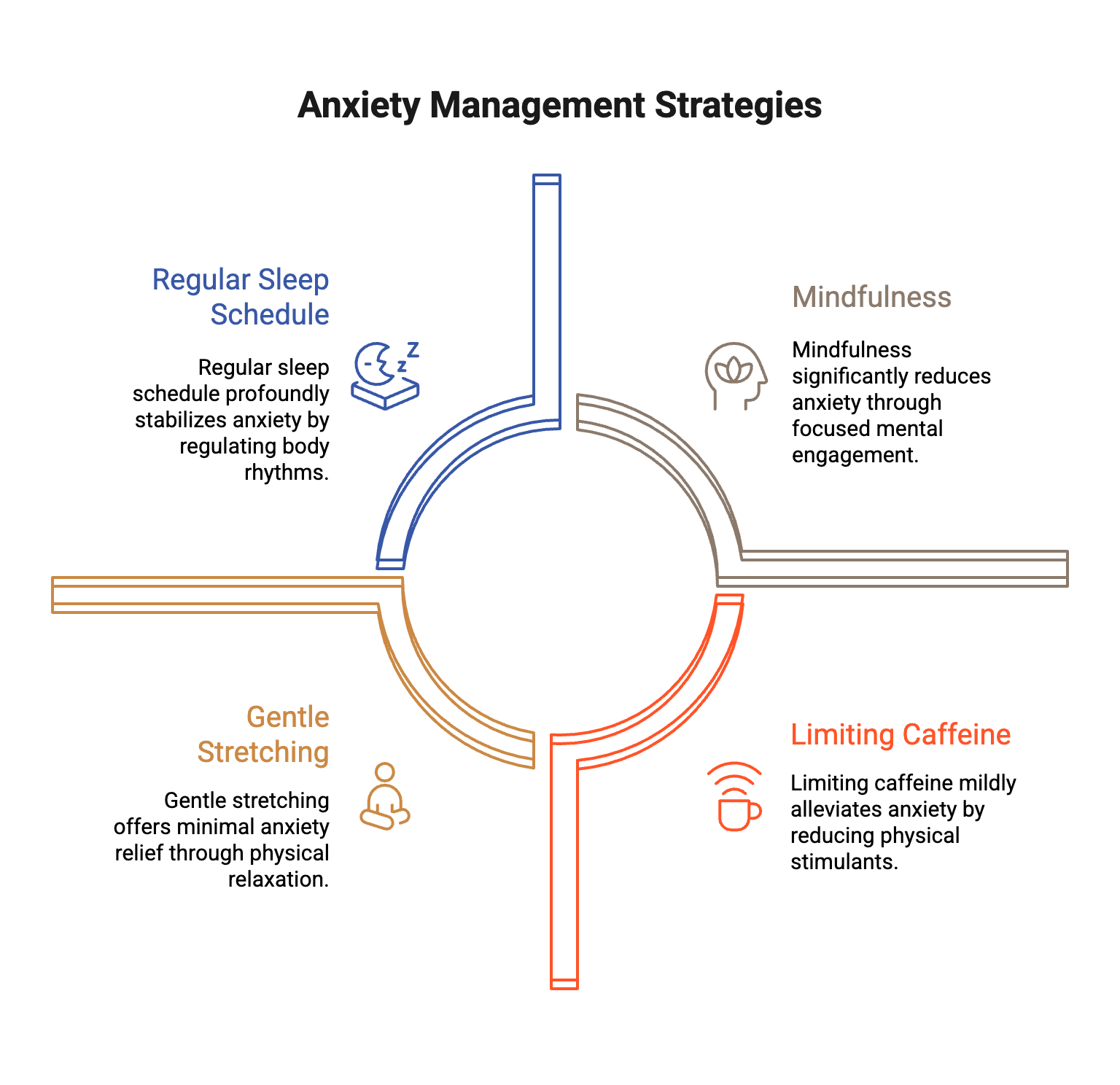
Small routines help the body feel safer when you’re experiencing anxiety symptoms. Keep regular sleep and wake times, and protect a simple wind-down routine. Limit caffeine and alcohol, which can raise physical symptoms like a racing heart. Add daily movement—walks count—and, if you can, get morning light; these coping strategies support mental health. Use a short list each day with one top priority so life feels more manageable.
Mind-body skills also help. A few minutes of slow breathing, mindfulness, or gentle stretching can steady the nervous system. Exercise and skills-based approaches used in cognitive behavioral therapy reduce anxiety symptoms in conditions such as generalized anxiety disorder and panic disorder, according. For older adults, see supportive guidance in the 2025 American Geriatrics Society update.
When should I encourage professional help in Charlotte?
Encourage care when anxiety symptoms interrupt work, school, sleep, relationships, or driving. Strong avoidance, frequent panic attacks, or worries that feel out of control are also signals. Many people with an anxiety disorder do not recognize what is happening, making it difficult to seek help. If past strategies haven’t stuck—or symptoms keep returning—it’s time to connect with mental health professionals.
Evidence-based treatments, including cognitive behavioral therapy, help many people with an anxiety disorder. Your loved one may also be screened for anxiety in routine medical visits, which helps people get support sooner, and women’s preventive-care guidelines support screening as well (see WPSI 2020).
Next step: Offer to help with scheduling, rides, or first-session questions. If you’re in South End, Dilworth, Plaza Midwood, or NoDa, pick a time and location that’s easy to keep.
Supportive script: “This has been heavy for a while. A therapist can give us tools that actually work—how about we look at options together?”
How do I take care of myself while I help?
Caring for someone with anxiety takes energy. Keep your own sleep, meals, movement, and friendships on the calendar. Set limits on late-night crisis chats when possible, and share care with trusted family or friends so you’re not the only support. Taking breaks from supporting someone with anxiety can help prevent burnout. This protects your energy levels and makes your support more sustainable.
Permission line: “I care about you, and I also need rest. Let’s check in tomorrow morning.”
Charlotte-specific next steps
- If you’re in South End, Dilworth, Plaza Midwood, or NoDa, choose a time and place that fits your routine (traffic and game days are real).
- If your loved one is experiencing anxiety symptoms most days, reach out for treatment. Evidence-based care is available locally. The Therapy Group of Charlotte can help you or your family member start with a therapist who understands anxiety disorders.
Call to action: Contact the Therapy Group of Charlotte to talk through options for individual therapy or couples support for anxiety—or to connect with an anxiety therapist in Charlotte.
Frequently Asked Questions About How to Help Someone with Anxiety
What are some signs that someone is struggling with significant anxiety?
Signs of significant anxiety can include persistent worrying, physical symptoms like a racing heart or restlessness, difficulty concentrating, and avoiding situations that cause fear or stress. Anxiety can also manifest through a range of symptoms including defensiveness, irritability, and restlessness. Recognizing these signs early can help you offer support more effectively. Generalized anxiety disorder, or GAD, is characterized by excessive worry that occurs most of the time for at least six months.
How can I offer support without making the person feel uncomfortable?
Offering support means respecting the person’s boundaries and listening to their needs. Avoid pressuring them to talk or act before they are ready, and instead provide a calm presence and gentle encouragement. This approach helps the person feel safe and understood rather than uncomfortable.
When should I encourage someone with anxiety to see a doctor or mental health professional?
If anxiety symptoms interfere with daily life, such as disrupting work, sleep, or relationships, or if the person is suffering from depression or panic attacks, it is important to encourage them to seek professional help. Mental health professionals can provide diagnosis and treatment based on the Diagnostic and Statistical Manual criteria.
How can I manage my own emotions while supporting an anxious person?
Maintaining your own emotional health is crucial when supporting someone with anxiety. Set clear boundaries, practice self-care, and seek support from others if needed. Managing your own emotions helps you provide better, sustainable support without becoming overwhelmed.
What long-term strategies can help reduce anxiety symptoms?
Long-term strategies include maintaining regular routines, engaging in physical activity, learning coping skills like mindfulness or cognitive behavioral techniques, and avoiding behaviors that reinforce anxious thoughts. These approaches help manage anxiety and improve overall mental health over time.