

Medical PTSD is a type of post-traumatic stress disorder that develops after frightening treatment experiences or traumatic medical events such as serious illness, major surgery, or time spent in intensive care. About 6 out of every 100 people will experience post traumatic stress disorder at some point in their lives, and medical events are increasingly recognized as significant trauma triggers that can lead to lasting psychological and physiological responses.
Medical trauma isn’t limited to combat veterans or survivors of sexual assault. A cancer diagnosis, emergency surgery, or even feeling powerless during a medical procedure can trigger the same stress response that follows other trauma. The symptoms—intrusive thoughts, avoidance of healthcare settings, and severe anxiety—can make it difficult to seek necessary medical care, creating a cycle that affects both mental and physical health.
Understanding medical PTSD is the first step toward healing. Medical traumatic stress is treatable, and with the right support from mental health professionals, most people can recover and reclaim their sense of safety.
What is the difference between PTSD and medical PTSD?
Medical PTSD isn’t a separate diagnosis in the Diagnostic and Statistical Manual of Mental Disorders—it’s a specific manifestation of post traumatic stress disorder where the traumatic event occurs within a medical setting or involves healthcare experiences. The symptoms of PTSD are consistent across different types of trauma, but the triggers and context differ significantly.
Traditional PTSD often follows events like combat, sexual assault, or natural disasters. Medical PTSD, by contrast, stems from experiences within the healthcare system—a heart attack, traumatic childbirth, cancer treatment, painful medical procedures, or perceived mistreatment by healthcare professionals. While someone with combat-related PTSD might avoid loud noises or crowded spaces, a patient experiencing medical trauma may avoid hospitals, doctor appointments, or even medical shows on television.
The medical setting itself can intensify trauma responses. Healthcare settings often involve loss of control, physical pain, threatened death, and separation from family members—all factors that can contribute to developing PTSD symptoms. Children are particularly vulnerable, as medical events can be especially frightening and confusing when they lack the context to understand what’s happening to their body.
In our practice, we regularly see clients who’ve delayed necessary medical care for years because of anxiety tied to past healthcare experiences. One pattern we observe is that people often don’t realize their avoidance of doctors is connected to a specific traumatic event. They may attribute their symptoms to busy schedules or general anxiety, when in reality they’re experiencing symptoms of medical trauma that deserve specific attention and treatment.
How do you know if you have medical PTSD?
You may have medical PTSD if you experience intrusive memories, nightmares, or flashbacks about a medical event that persist for more than a month after the traumatic experience. Common PTSD symptoms include unwanted thoughts about the traumatic event, avoidance of medical settings or reminders of the trauma, negative thoughts about your body or health, feelings of detachment, and heightened anxiety or fear when medical care is needed.
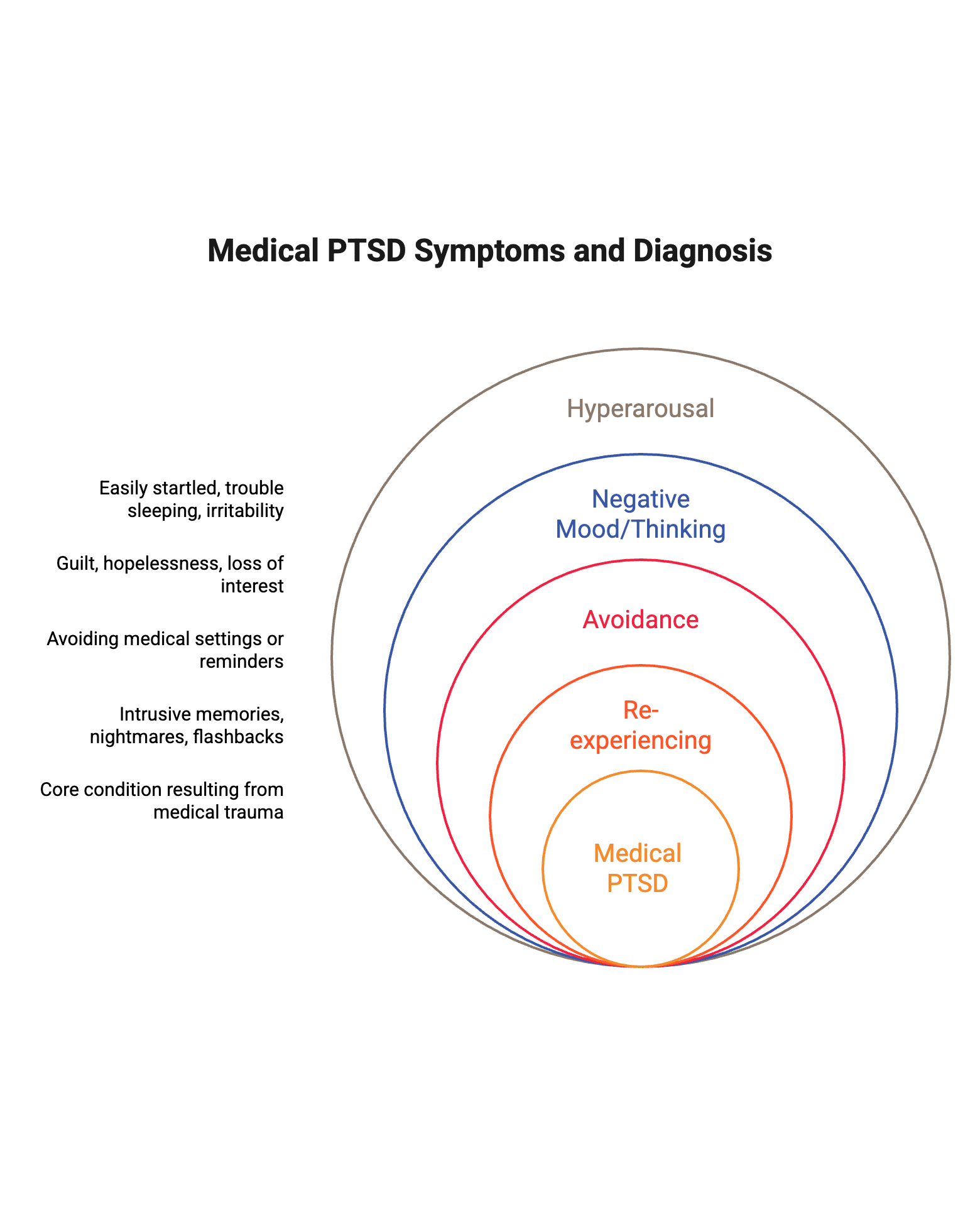
Mental health professionals use standardized diagnostic criteria and assessment tools to evaluate stress disorder PTSD. Doctors typically ask about four main symptom clusters: re-experiencing the trauma (intrusive memories, nightmares), avoidance of reminders, negative changes in mood or thinking (guilt, hopelessness, loss of interest), and hyperarousal (being easily startled, trouble sleeping, irritability). These PTSD symptoms must last at least one month and significantly affect your daily life to meet diagnostic criteria for post traumatic stress disorder.
Medical trauma can also include physical symptoms that many people don’t immediately connect to the traumatic event. Memory problems, chronic pain, headaches, and sleep disturbances are common. Some people develop anxiety disorders or depression alongside their PTSD symptoms, complicating diagnosis if healthcare providers aren’t looking at the whole picture.
It’s important to note that not everyone who experiences a frightening medical event will develop PTSD. Most people show resilience and process the experience without lasting symptoms. However, certain factors increase risk, including previous mental health conditions, lack of social support, the severity of the medical event, and feeling helpless or lacking control during treatment.
What is the best medication for PTSD?
Selective serotonin reuptake inhibitors (SSRIs) are the most commonly recommended medications for managing core PTSD symptoms, though therapy should always be the first-line treatment. Consulting a mental health professional is essential for accurate diagnosis and personalized treatment planning for post traumatic stress disorder, as medication works best when combined with trauma-focused therapy approaches.
The American Psychiatric Association and Department of Veterans Affairs recommend specific SSRIs—including sertraline, paroxetine, and fluoxetine—as well as the serotonin-norepinephrine reuptake inhibitor (SNRI) venlafaxine for treating PTSD. These antidepressants help regulate the brain’s response to stress and can reduce PTSD symptoms like intrusive thoughts, anxiety, and depression that often accompany stress disorder PTSD.
For sleep disturbances and nightmares associated with PTSD, doctors may prescribe prazosin, a blood pressure medication that’s been found effective in treating these specific symptoms. Many patients with medical trauma report that nightmares about their hospital experience are particularly distressing, and prazosin can provide significant relief.
We work alongside psychiatrists and primary care doctors to support clients taking medication for PTSD. What we’ve learned is that medication can help stabilize PTSD symptoms enough that therapy becomes more accessible—it’s hard to process trauma when you’re not sleeping or experiencing constant panic. However, medication alone rarely resolves post traumatic stress disorder. The most successful outcomes occur when medication supports the therapeutic work rather than replacing the treatment.
However, medication is rarely sufficient on its own. Cognitive behavioral therapy, prolonged exposure therapy, and eye movement desensitization and reprocessing (EMDR) remain the gold standard treatments for PTSD, including medical trauma. A systematic review of interventions for PTSD symptoms induced by medical events found that trauma-focused psychotherapy consistently produces the strongest and most lasting results. Medication can play a helpful part in managing symptoms while a person engages in therapy, creating a holistic approach to healing from medical trauma.
Is PTSD a disability or medical condition?
PTSD is a medical condition—specifically, a mental health condition—that can sometimes qualify as a disability depending on how severely PTSD symptoms affect a person’s daily functioning. The Diagnostic and Statistical Manual of Mental Disorders classifies PTSD among trauma and stressor related disorders, recognizing post traumatic stress disorder as a legitimate mental disorder with specific diagnostic criteria and evidence-based treatments.
As a mental health condition, PTSD involves real changes in brain function and stress response systems. Post traumatic stress disorder is not a character flaw, a sign of weakness, or something a person can simply “get over.” Research shows that trauma affects brain regions involved in memory, emotion regulation, and threat detection. These physiological responses to trauma are why PTSD requires professional treatment, not just willpower or positive thinking.
Whether PTSD qualifies as a disability depends on the severity of symptoms and their impact on major life activities. Under the Americans with Disabilities Act, a patient may be considered disabled if their mental health condition substantially limits one or more major life activities—such as working, sleeping, or interacting with others. For someone with medical PTSD who avoids all medical care, putting their physical health at risk, or who cannot maintain employment due to symptoms, disability protections may apply.
The Social Security Administration also recognizes PTSD as a potentially disabling condition. Veterans with service-related PTSD can receive disability benefits through the Department of Veterans Affairs. For others, qualifying for Social Security Disability requires demonstrating that PTSD symptoms prevent substantial gainful work despite treatment.
When we talk with clients about PTSD and disability, we emphasize that seeking accommodation or benefits isn’t admitting defeat—it’s recognizing that trauma has real effects and that support exists. Many people experiencing medical trauma struggle with guilt about needing help when their illness or injury has disrupted their whole life.
Importantly, recognizing PTSD as a medical condition means it’s treatable. Mental health professionals trained in trauma therapy use evidence-based approaches that help most people improve significantly. Treatment typically involves a combination of trauma-focused cognitive behavioral therapy and, when needed, medication to manage symptoms like anxiety, depression, or sleep problems.
If you’ve experienced medical trauma and recognize these symptoms in your life, know that healing is possible. PTSD doesn’t define your whole life, and with appropriate treatment and support from healthcare professionals and your family members, you can process what happened and move forward. Whether your traumatic event was recent or years ago, seeking help from a mental health professional is a strong, positive step toward feeling better.
Get Support for Medical PTSD in Charlotte
At Therapy Group of Charlotte, our therapists understand the unique challenges of medical trauma and PTSD. If you’re searching for therapy charlotte nc or therapy near me, our South End practice offers evidence-based treatment including cognitive behavioral therapy and EMDR to help you heal from frightening medical experiences. Reach out to our team to learn more about how therapy can help you reclaim your sense of safety and well-being.
Common Questions About Medical PTSD
Can you prevent medical PTSD after traumatic medical procedures?
While not everyone can prevent medical PTSD, awareness of the intense impact of medical procedures is an important first step. Talking with healthcare professionals about your fears before surgery or medical procedures, having family members present when possible, and using relaxation techniques like deep breathing or progressive muscle relaxation during medical care can help reduce risk. If you notice anxiety symptoms developing after a medical event, seeking support early from a mental health professional can prevent symptoms from worsening.
What self-help strategies can help with medical trauma?
Several self-help strategies can help reduce anxiety symptoms related to medical trauma. Relaxation techniques such as mindfulness meditation, deep breathing exercises, and gentle movement can help calm your nervous system. Maintaining regular sleep schedules, staying connected with supportive family members, and gradually facing medical situations with proper support can aid healing. Similar coping approaches to other forms of isolation can be helpful. However, while these coping strategies are helpful, they work best alongside professional treatment, particularly for moderate to severe symptoms of medical trauma.
How does medical trauma affect families?
Medical trauma can affect both children and their parents, creating ripples throughout family systems. When a child experiences traumatic medical procedures, parents may develop their own trauma symptoms from witnessing their child’s suffering. Similarly, when adults undergo frightening treatment experiences, family members who provide care may experience secondary trauma. This is why stressor related disorders often require a holistic approach to relationships that considers the whole family system, not just the individual patient.
This blog provides general information and discussions about mental health and related subjects. The content is not intended to be a substitute for professional medical advice, diagnosis, or treatment. Always seek the advice of your physician or other qualified health provider with any questions you may have regarding a medical condition.