

Anxious brain, meet a different kind of therapy. EMDR uses gentle left‑right stimulation while you recall a stressful memory or worry. That rhythmic input helps your nervous system unhook the fear response so the memory feels less loud and less sticky over time. If you’re searching for EMDR for anxiety in Charlotte, here’s how it works and what to expect.
What is EMDR in simple terms?
EMDR stands for Eye Movement Desensitization and Reprocessing. In sessions, your therapist guides you to notice a target memory, image, sensation, or belief while you follow left‑right movements (eyes, taps, or tones). The goal is not to erase the past. The goal is to help your brain file the experience correctly so it no longer sets off alarms in daily life. Research shows EMDR can be as effective as CBT in reducing anxiety symptoms and also help with phobias and worry when used by trained clinicians, often alongside other evidence‑based care like CBT.
How does EMDR reduce anxiety?
Here’s a practical way to understand it:
- Anxiety locks memories “hot.” When something feels overwhelming, the brain can store it with high emotion, body tension, and rigid beliefs (for example, “I’m not safe.”).
- Bilateral stimulation helps the brain update. As you process a target with left‑right input, your system re‑files the memory so it’s less triggering and more balanced. This process also helps strengthen self-esteem and associates past traumatic events with new positive thought processes.
- Daily life gets easier. Over time, familiar triggers—say, a tense meeting in Uptown—no longer pull the same surge of dread.
What happens in an EMDR session? (8 phases, in plain language)
EMDR therapy is structured into eight phases that target past, present, and future experiences to address emotional triggers.
1) History & plan. We map your goals, triggers, strengths, and supports.
2) Preparation & skills. You learn quick tools—calm‑place imagery, paced breathing, and “butterfly” self‑taps—so sessions feel steady.
3) Choose a target. We pick a snapshot—an image, thought, or body feeling—that best represents the anxiety.
4) Assessment. We set starting points: the upsetting image, the negative belief, the preferred belief, your current emotion and body sensations, and a SUDS rating (0–10) for distress.
5) Desensitization (processing). You focus on the target while we run short sets of left‑right stimulation. You notice what changes—images, thoughts, emotions, sensations—until the SUDS score drops.
6) Installation. We strengthen a more balanced belief that fits the updated experience.
7) Body scan. Eyes closed, you scan head‑to‑toe for leftover tension and we clear any residue.
8) Closure & re‑evaluation. We end with grounding and a simple between‑session plan. Next time, we review gains and choose the next target.
Most sessions last ~60 minutes. Some people process a single clear target; others have a few clusters to work through. EMDR can stand alone or pair with CBT skills, exposure, or medication management.
Is virtual EMDR effective in Charlotte?
You can do EMDR in person at our South End office or by telehealth anywhere in North Carolina. In virtual care, we use on‑screen light bars, alternating tones, or guided taps. Early outcomes suggest telehealth EMDR can be comparable to in‑office work when privacy and safety steps are in place, and we’ll help you set up a quiet space, good headphones, and a pause plan if emotions rise too fast.
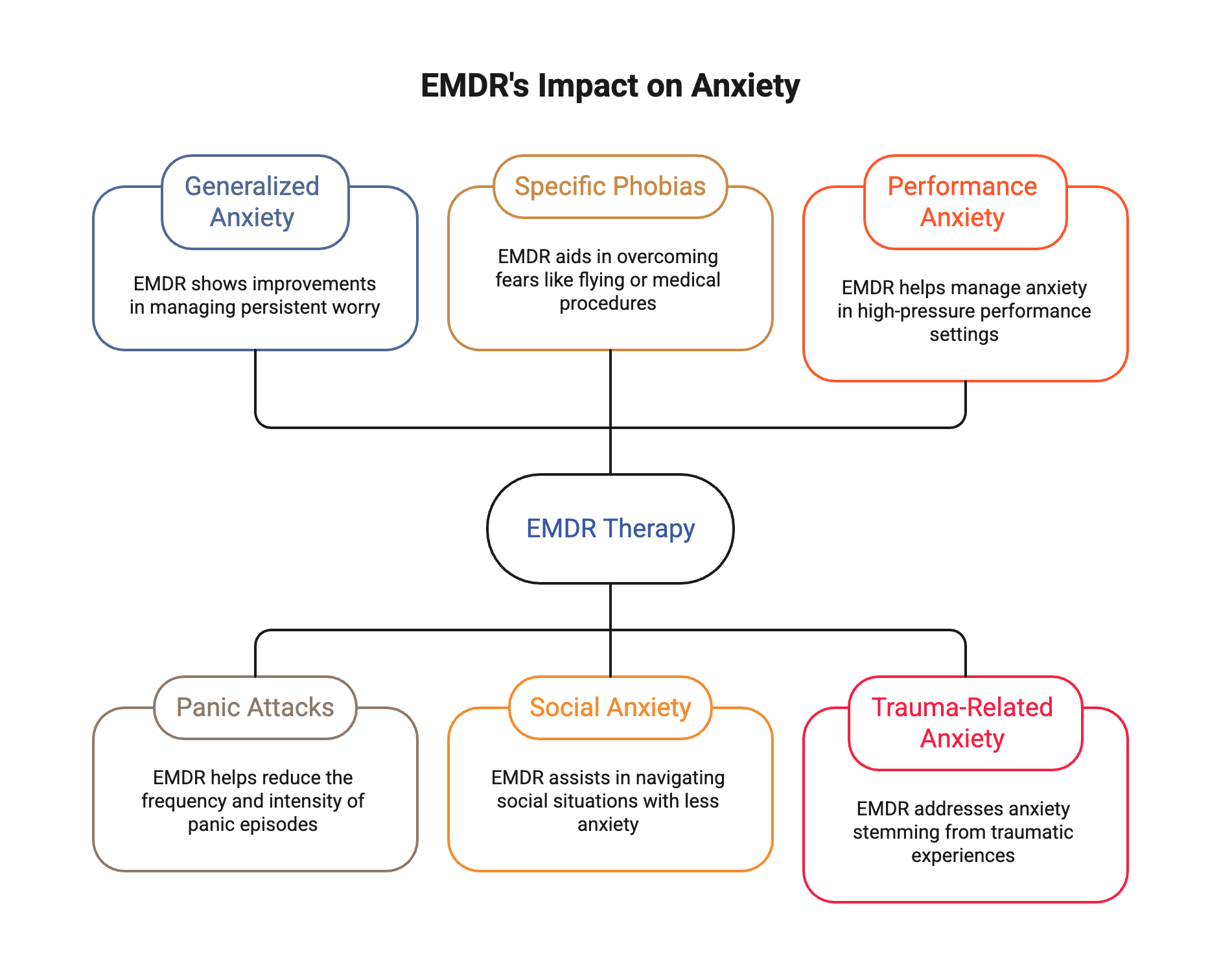
Which anxiety problems can EMDR help?
EMDR for anxiety can be useful across several concerns when delivered by trained clinicians:
- Generalized anxiety and chronic worry often show meaningful improvement in symptom intensity and interference.
- Panic attacks may decrease in frequency and intensity after targeted EMDR work.
- Specific phobias (flying out of CLT, elevators, medical procedures) respond well to focused EMDR targets, as supported by work on specific phobias.
- Social and performance anxiety (crowded South End events, high‑stakes Uptown presentations) can ease as triggers lose their “hot” charge.
- Trauma‑related anxiety benefits from trauma‑informed pacing and careful target selection, consistent with guidance on trauma‑informed pacing.
How many sessions does EMDR take?
There isn’t one right number:
- Brief course for a single, well‑defined fear or memory.
- Moderate plan for a few related targets (for example, panic + performance).
- Longer arc for layered stress over years or complex anxiety.
We’ll set a pace that keeps you steady and moving.
What will I feel during and after EMDR?
During processing, people often notice waves of emotion, flashes of images, and shifts in body tension, followed by a sense of relief or neutrality as distress drops. After sessions, it’s common to have temporary emotional waves or vivid dreams, along with feeling tired or thoughtful—reactions that usually settle within a day or two. We’ll give simple aftercare (hydration, light movement, sleep routine) and slow down if anything feels too intense.
Safety, fit, and when EMDR isn’t the first step
Good EMDR is collaborative and paced. If you’re in the middle of a major crisis, dealing with strong dissociation, or navigating certain health conditions, we start with stabilization and grounding skills and adjust the speed before deeper processing. This safety‑first sequencing is core to trauma‑informed care and helps you get benefits without overwhelm.
Getting started with EMDR at Therapy Group of Charlotte
We offer evidence‑based, trauma‑informed EMDR with licensed clinicians who work at your pace. We’re out‑of‑network and provide superbills to support reimbursement. Sessions are available in person in South End and via telehealth across North Carolina. When you’re ready, use our Make an appointment button to find a time that fits. If you’re looking for an EMDR therapist in Charlotte, we’re here to help.
Frequently Asked Questions About EMDR for Anxiety
What anxiety disorders can EMDR therapy effectively treat?
EMDR therapy has been shown to be effective in treating a range of anxiety disorders, including generalized anxiety disorder, panic disorder, social anxiety disorder, specific phobias, and obsessive compulsive disorder. It helps patients by reducing anxiety symptoms linked to traumatic memories and distressing events.
How does EMDR treatment work to reduce anxiety symptoms?
EMDR treatment involves bilateral stimulation—such as eye movements, tapping, or tones—while the patient focuses on a disturbing event or painful memories. This process helps desensitize the emotional response and facilitates reprocessing therapy, allowing the brain’s natural ability to heal to reduce intense emotions and negative beliefs associated with traumatic experiences.
How many EMDR therapy sessions are typically needed?
The number of EMDR sessions varies depending on the individual and the complexity of their anxiety symptoms. Some patients experience a significant reduction in symptoms after just a few sessions, while others may require a moderate plan of six to twelve treatment sessions to achieve lasting results.
Can EMDR therapy be combined with other treatments?
Yes, EMDR therapy can be effectively combined with other treatment modalities such as cognitive behavioral therapy (CBT), exposure therapy, and medication management. This integrated approach often leads to a significant reduction in anxiety and improves overall quality of life for patients suffering from mood disorders and severe stress.
What should I look for in a qualified EMDR therapist?
A qualified EMDR therapist should be a licensed mental health professional with specific training and certification in EMDR therapy. It is important that the therapist is experienced in working with anxiety disorders and can tailor a treatment plan to address your current symptoms and traumatic experiences safely and effectively.