
What Are the Early Warning Signs of Caregiver Burnout?
The early warning signs of caregiver burnout include persistent fatigue, sleep disturbances, frequent illness, and emotional changes like sadness, anxiety, or irritability. Physical symptoms often appear first—headaches, body aches, or a weakened immune system—while emotional signs like feeling overwhelmed, helpless, or losing interest in activities you once enjoyed signal that caregiver stress has progressed to burnout. Recognizing these signs early is crucial, as caregiver burnout doesn’t just affect your own health—it also impacts your ability to provide quality care for your loved one.
Caregiver burnout is a state characterized by physical, emotional, and mental exhaustion resulting from the prolonged stress associated with caregiving responsibilities. It develops gradually as the demands of caring for a family member accumulate over time, especially when caregivers feel unsupported, unappreciated, or overwhelmed by their duties.
Can Being a Caregiver Cause Mental Illness?

Yes, prolonged caregiving stress can contribute to mental health conditions like depression and anxiety if left unaddressed. Research shows that family caregivers of adults with chronic illnesses experience significant psychological burden, including increased rates of depression, anxiety disorders, and chronic stress. The constant demands of caregiving, combined with feelings of isolation and role confusion, create conditions that can impact mental well being.
When mental health symptoms go untreated, quality of life reduces for both the caregiver and the care recipient. Many caregivers experience what’s called “caregiver burden”—the physical strain and emotional toll that comes from balancing caregiving duties with other life responsibilities. This burden can manifest as clinical depression, generalized anxiety, or even symptoms similar to post-traumatic stress.
Recognizing these risks early and seeking support from a mental health professional can prevent temporary stress from becoming a more serious mental health condition. Finding a therapist who understands caregiver burnout can help caregivers develop coping strategies before reaching a crisis point.
What Are the Physical Symptoms of Caregiver Burnout?
Physical symptoms include chronic fatigue, persistent insomnia, frequent headaches, body pain, weakened immune function, and high blood pressure. Primary caregivers often notice they’re getting sick more often than usual or that minor illnesses take longer to resolve. Changes in weight—either losing or gaining without trying—are also common physical signs of caregiver burnout.
Other physical health indicators include:
- Trouble sleeping or sleeping too much despite feeling tired
- Frequent headaches or migraines that weren’t present before
- Digestive problems or changes in appetite
- Increased susceptibility to colds and infections
- Muscle tension or bodily pain without clear cause
We see caregivers in Charlotte who’ve dismissed their physical symptoms for months, attributing fatigue to “just being busy” or headaches to “normal stress.” When clients address these warning signs, they discover their bodies have been signaling distress far longer than they realized. The physical symptoms of caregiver burnout are your body’s way of saying it needs support—not something to push through until a crisis forces change.
These physical symptoms develop because chronic stress keeps your body in a prolonged state of “fight or flight,” which depletes your resources and weakens your immune system. The demanding nature of caregiving—lifting, interrupted sleep, skipping meals—adds to the physical strain on caregivers’ bodies and own health.
What Physical Health Conditions Can Develop?
Beyond immediate symptoms, caregiver burnout can contribute to more serious health conditions over time. Caregivers may develop heart disease, persistent high blood pressure, or experience a weakened immune system that makes them vulnerable to chronic illness. The physical health of caregivers often deteriorates when they prioritize caregiving responsibilities over maintaining a healthy diet, getting enough sleep, and engaging in regular physical activity.
What Emotional and Behavioral Changes Signal Burnout?
Emotional signs include persistent sadness, anxiety, irritability, feeling hopeless or helpless, and emotional exhaustion. Caregivers might find themselves feeling overwhelmed even by small tasks, experiencing mood swings, or crying more easily than usual. Feeling sad or experiencing a sense of dread about caregiving duties that once felt manageable indicates emotional depletion from caregiver burnout.
Behavioral changes due to caregiver burnout include:
- Withdrawal from social activities and relationships
- Losing interest in hobbies you previously enjoyed
- Increased use of alcohol, medication, or other substances to cope
- Becoming less attentive or patient with the care recipient
- Feelings of resentment toward the care recipient or others
- Emotional numbness or feeling disconnected from daily life
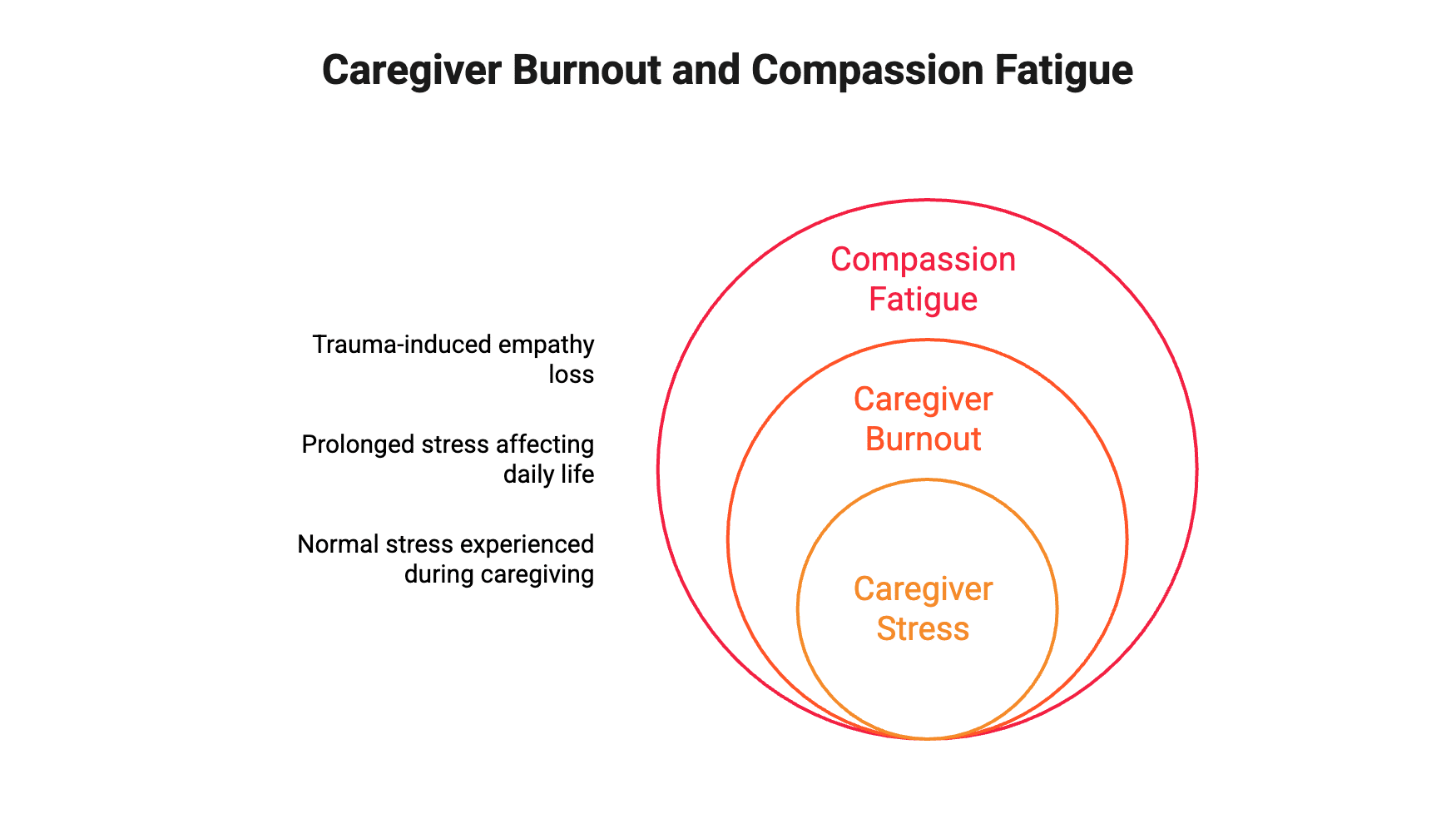
Almost every caregiver experiences these feelings at some point during their caregiving journey. The difference between normal caregiver stress and burnout is the intensity, duration, and impact on your daily functioning. When these feelings persist for weeks and begin affecting your relationships, work, or ability to provide care, it’s time to seek support from a support group or mental health professional.
Understanding Compassion Fatigue vs. Caregiver Burnout
Compassion fatigue can also develop alongside caregiver burnout, though they’re distinct conditions. Compassion fatigue is a condition that affects caregivers who are constantly exposed to the trauma or suffering of others. Unlike caregiver burnout, which develops gradually over time through prolonged stress, compassion fatigue can occur suddenly after a traumatic event.
While caregiver burnout and compassion fatigue share similar symptoms like emotional exhaustion and withdrawal, compassion fatigue involves emotional numbness and a decreased ability to feel empathy. The causes differ too: burnout arises from prolonged exposure to caregiving stress, while compassion fatigue stems from the emotional toll of witnessing another person’s trauma. Compassion fatigue may be easier to manage with appropriate interventions, while caregiver burnout often requires more time and sustained effort to recover from.
We’ve worked with family caregivers experiencing symptoms that look like PTSD after caring for someone through Alzheimer’s disease or cancer. These caregivers describe intrusive memories of medical crises, hypervigilance about the care recipient’s safety even after care has ended, and guilt about feeling relieved when caregiving responsibilities decrease. These reactions are understandable responses to prolonged trauma, not character flaws.
How Do You Know When It’s Time to Stop Being a Caregiver?
It’s time to consider alternative care arrangements when burnout impacts your physical or mental health, your ability to provide safe care diminishes, or when caregiving responsibilities prevent you from meeting your own basic needs. Warning signs include thoughts of harming yourself or the care recipient, complete emotional exhaustion that doesn’t improve with rest, or when your own health conditions are worsening due to severe stress from caregiving.
Other indicators that signal the need for change:
- Your mental and physical health are deteriorating despite attempts at self care
- The care recipient’s needs have exceeded what you can safely provide at home
- You feel persistent resentment or anger toward the care recipient
- You’re experiencing symptoms of depression or extreme stress that interfere with daily life
- Family dynamics and relationships are breaking down due to caregiving strain
Recognizing these signs isn’t failure—it’s wisdom. Transitioning to professional care, whether through nursing homes, assisted living, or increased respite care services, can sometimes be the most loving choice for both caregivers and their family member. Professional caregiving services can provide specialized nursing services and support that allows caregivers to transition from primary caregiver to an advocate and loving friend or family member.
Can You Get PTSD From Being a Caregiver?
Yes, caregivers can develop post-traumatic stress symptoms, especially when caring for someone with a traumatic illness, witnessing medical emergencies, or experiencing the death of a loved one. While not everyone who experiences caregiver stress will develop full PTSD, many caregivers report symptoms like intrusive thoughts, hypervigilance, avoidance behaviors, and emotional numbness after traumatic caregiving experiences.
Caregivers of individuals with Alzheimer’s disease, cancer, or other progressive illnesses may witness the care recipient’s decline over months or years, creating a form of prolonged traumatic exposure. The constant worry about medical crises, watching someone suffer, and making end-of-life decisions can leave lasting psychological impacts that affect caregivers’ mental health.
If you’re experiencing flashbacks, nightmares about your caregiving experience, or severe anxiety that interferes with your daily routine, it’s important to talk with a mental health professional who specializes in trauma and understands caregiver burnout. These symptoms are treatable, and early intervention can prevent them from becoming more severe or developing into chronic mental health conditions.
How Long Does It Take to Recover From Caregiver Burnout?
Recovery time varies depending on the severity of caregiver burnout and the support systems available, but most caregivers begin feeling improvement within a few weeks to a few months with appropriate interventions. Research on caregiver interventions shows that structured support programs, including respite care, psychoeducational training, and counseling, can reduce symptoms within 6-12 weeks.
The recovery process involves:
- Regular respite care to provide consistent breaks from caregiving duties
- Seeking support from support groups or in person therapy near me
- Implementing coping strategies like mindfulness, breathing exercises, and stress management techniques
- Addressing any underlying mental health conditions with a mental health professional
- Rebuilding self care practices and setting realistic boundaries around caregiving responsibilities
In our practice, we work with caregivers who are navigating recovery from burnout. What we’ve learned is that healing isn’t about returning to doing everything you did before—it’s about creating a sustainable caregiving approach. This means accepting help from other caregivers in your family, utilizing local resources like respite care, and recognizing that taking care of yourself isn’t selfish—it’s essential for providing effective care to the care recipient.
How Can You Recover From Caregiver Burnout?
Mindfulness-based interventions have shown effectiveness in reducing emotional exhaustion and helping caregivers feel more accomplished and compassionate in their roles. Even dedicating a few hours each week to activities that restore your energy—whether that’s exercising, spending time with friends, or pursuing hobbies—can make a meaningful difference in managing caregiver burnout.
Practical steps for recovery include taking a temporary break through respite care services, maintaining a balanced diet and healthy diet, getting enough sleep, and incorporating physical activity into your daily routine. Setting boundaries around caregiving duties helps prevent feel overwhelmed feelings from returning. Many caregivers benefit from joining a support group where they can connect with other caregivers who understand the unique challenges of this role.
Recovery is not linear. Caregivers may have good weeks and challenging weeks, especially if the care recipient’s condition changes or new caregiving demands arise. The key is establishing ongoing support systems and utilizing helpful resources rather than viewing recovery as a one-time fix. Local resources, including community caregiving organizations and therapy in Charlotte, provide accessible support.
Recognizing the early signs of caregiver burnout gives caregivers the opportunity to make changes before their health is compromised. If you’re experiencing several of these warning signs, reaching out for support is a sign of strength, not weakness.
Get Support for Caregiver Burnout in Charlotte
If you’re experiencing caregiver burnout or want to prevent it before it starts, the therapists at Therapy Group of Charlotte can help. We work with many caregivers who are learning to balance their own well being with their caregiving responsibilities. Contact us to schedule an appointment and start building the support system you need.
This blog provides general information and discussions about mental health and related subjects. The content is not intended to be a substitute for professional medical advice, diagnosis, or treatment. Always seek the advice of your physician or other qualified health provider with any questions you may have regarding a medical condition.

