

Therapists can spot stages of caregiver burnout long before the person caring for their loved one realizes something is wrong. In our Charlotte practice, we regularly see capable, organized people who insist they’re managing fine—right up until they’re not. Understanding these stages of caregiver burnout helps you recognize the warning signs of mental exhaustion caused by prolonged stress before reaching a breaking point.
What Are the Stages of Caregiver Burnout?
Caregiver burnout develops gradually through distinct stages, starting with manageable stress and progressing to complete emotional and physical depletion. Research shows that family caregivers experience significantly higher levels of emotional exhaustion compared to non-caregivers, and nearly half of all family caregivers experience clinical depression, particularly the primary caregiver who provides intensive care of 21 or more hours per week. This mental exhaustion develops as care demands intensify over time.
Rather than happening overnight, caregiver burnout follows a recognizable pattern that mental health professionals are trained to identify:
Stage 1: The Warning Stage – When Everything Feels Manageable (But Isn’t)
You’re tired more often. You’ve cut back on your brewery hangs on the Rail Trail. You’re sleeping less soundly but telling yourself it’s temporary—once you get Mom’s medications sorted out, once Dad’s physical therapy schedule stabilizes, once you find better home care.
Common early signs include:
- Feeling fatigued even after a full night’s sleep
- Having less time for yourself or hobbies you used to enjoy
- Experiencing minor sleep disruptions or difficulty falling asleep
- Noticing increased worry or stress about your loved one
You’re functional—still performing well at work, handling logistics. But you don’t see that you’re already compensating in ways that won’t be sustainable.
We often see caregivers who approach this like another project—just another deadline to manage—applying the same problem-solving skills that make them successful at work. But caregiving doesn’t have a completion date, and the demands typically increase rather than resolve. This mismatch between expectations and reality accelerates burnout.
Stage 2: The Control Stage – Compensating Through Hypervigilance
This is the stage where caregivers manage increasing demands through heightened control and perfectionism. You micromanage caregiving tasks, double-check everything, stay up late researching conditions or coordinating appointments.
You may notice:
- Difficulty concentrating at work or making decisions
- Withdrawing from friends and social activities
- Feeling anxious or irritable more frequently
- Physical exhaustion that doesn’t improve with rest
- Neglecting your own health care needs
Many caregivers experience feelings of isolation, guilt, or helplessness as care responsibilities grow. Research indicates that living with the person you’re caring for, spending many hours each day on care duties, experiencing financial stress, and feeling socially isolated all increase your risk of burden. Caregivers often neglect their own needs during this stage.
The Charlotte angle hits different here. When you’ve moved here for work and your aging parent is still back home, you’re managing long-distance care while trying to maintain the life you built. Video calls from your desk coordinating aides, last-minute flights during crises. The isolation compounds—guilty for not being there physically, resentful it’s consuming your life here.
Stage 3: The Survival Stage – Just Getting Through Each Day
At this stage, caregivers are surviving rather than thriving. The care you provide may decline—not because you care less, but because you have less to give. Your emotional health deteriorates as chronic stress takes its toll.
Signs you’ve reached this stage:
- Feeling emotionally detached or numb
- Experiencing compassion fatigue toward your loved one
- Constant, unshakeable fatigue even after rest
- Developing your own physical symptoms like persistent insomnia, weakened immune system, or high blood pressure
- Feeling hopeless about your situation
Research describes three dimensions of burnout: emotional exhaustion (feeling drained), depersonalization (feeling detached), and reduced sense of accomplishment (nothing makes a difference). Caregivers may unintentionally become less attentive, straining the relationship with the care recipient.
We frequently encounter caregivers at this stage who feel intense guilt about their emotional detachment. They worry they’re failing their loved one when they feel less patient or compassionate. Understanding that this detachment is a symptom of burnout—not a character flaw—helps caregivers seek support without the added burden of shame.
Stage 4: The Burnout Stage – Complete Depletion
This is the final stage where caregivers experience severe chronic stress and may be physically unable to continue providing care. At this point, professional support isn’t optional—it’s necessary.
Warning signs include:
- Severe depression or anxiety that interferes with daily functioning
- Chronic physical health problems requiring medical attention
- Complete emotional withdrawal or numbness
- Thoughts of harming yourself or feelings of complete hopelessness
- Physical inability to continue caregiving duties
Caregivers at this stage often develop significant health problems—weakened immune systems, cardiovascular issues, and mental health conditions requiring immediate intervention.
What Does Caregiver Fatigue Look Like?
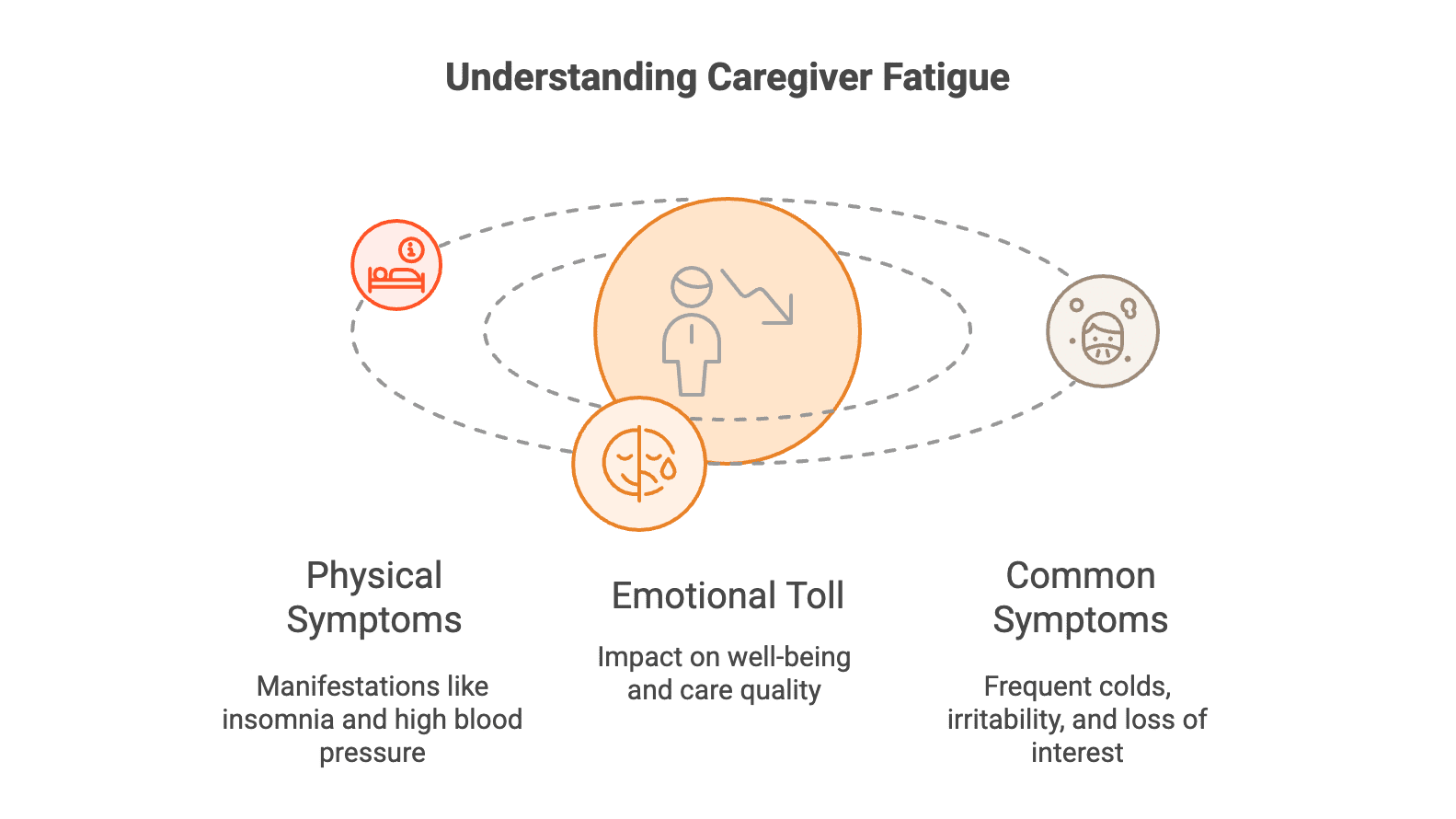
Caregiver fatigue manifests differently than regular tiredness—it’s a bone-deep exhaustion that doesn’t improve with sleep or rest. Physical symptoms include persistent insomnia, frequent illness due to a weakened immune system, changes in appetite, high blood pressure, and constant physical strain.
But the emotional toll is equally significant. Caregiver burnout affects not only your own well being but also impacts your loved one, as burnout can lead to reduced quality care.
Common symptoms of caregiver fatigue:
- Difficulty sleeping or sleeping too much
- Unexplained aches and pains
- Frequent colds or infections
- Changes in appetite or weight
- Feeling irritable, sad, or emotionally numb
- Loss of interest in activities that used to feel rewarding
- Compassion fatigue that makes caregiving feel like a burden
How Do You Know When It’s Time to Stop Being a Caregiver?
It’s time to seek additional support or transition care responsibilities when you experience thoughts of self-harm, severe depression or anxiety, complete inability to cope, or serious neglect of your own health.
But even before reaching that crisis point, consider whether:
- Your physical health is deteriorating due to care demands
- You’re experiencing emotional numbness or detachment from your loved one
- Your loved one’s needs have exceeded your ability to safely manage them (particularly those requiring memory care)
- You’re putting both yourself and your loved one at risk
- Professional caregivers, memory care facilities, or emotional support services could provide better specialized support
Seeking respite care or transitioning to professional care isn’t failure—it’s recognizing the limits of what one person can provide. Prioritizing your health ensures your loved one receives quality care.
What Are Signs of Caregiver Stress?
Early signs of caregiver stress include fatigue, irritability, anxiety, withdrawal from social activities, and neglecting self care. Recognizing signs of caregiver burnout early allows you to implement support strategies before reaching advanced burnout stages.
Physical signs of caregiver stress:
- Chronic fatigue that doesn’t improve
- Sleep problems or insomnia
- Frequent headaches or body aches
- Changes in appetite
- Increased illness or difficulty recovering
Emotional and behavioral signs:
- Feeling frustrated, anxious, or sad frequently
- Emotional withdrawal from the care recipient or family members
- Irritability or mood swings
- Loss of interest in activities
- Difficulty concentrating
Many people caring for loved ones don’t notice caregiver burnout creeping in until they’re already overwhelmed. Professional counseling and support groups provide essential resources for recognizing and managing these stress levels before burnout escalates.
Why “I’m Fine” Is What Worries Us Most
Here’s what therapists notice: Someone who says “I’m fine” most emphatically is often the one heading toward the hardest crash.
Why? Because high-functioning people—the type who move to Charlotte for a banking position, who manage teams, who pride themselves on competence—are exceptionally good at pushing through. They’re used to solving problems through effort. They treat care responsibilities like project management.
But care responsibilities aren’t a project with a defined end date. The demands increase. And the skills that make you successful professionally—powering through, not asking for help—accelerate burnout when providing care.
What You Can Do
Preventing and managing caregiver burnout requires prioritizing your well being, building a support network, and seeking help before reaching crisis levels. Understanding the stages helps you intervene earlier.
Practical steps to prevent burnout:
Recognize signs early: Use tools like the Caregiver Self-Assessment Questionnaire to evaluate your stress levels before you’re completely overwhelmed.
Build your support network: Connect with other caregivers through support groups. Knowing you’re not alone reduces isolation.
Use respite care: Respite care services give you essential breaks to recharge while ensuring your loved one receives care.
Practice self care: Maintain your health appointments and engage in hobbies or exercise. Protecting your well being is a requirement for sustainable caregiving.
Seek professional support: Therapy and counseling can significantly reduce burden and improve quality of life.
Consider additional support options: At-home care services, adult day programs, or memory care facilities can relieve overwhelming demands.
Talk to your healthcare provider: Ask your doctor to screen for depression and anxiety. Be direct about struggling with care responsibilities.
In our practice, we consistently see that caregivers who engage in therapy and build support systems experience better outcomes—both in their own well being and in their ability to provide care. Balancing care responsibilities with personal health isn’t selfish; it’s necessary. The caregivers who seek help early maintain their capacity to care longer and more effectively.
Getting Help in Charlotte
If you’re experiencing caregiver burnout or recognize yourself in these stages of caregiver burnout, seeking help is a sign of strength. You don’t need to manage this alone or wait until you’re in crisis.
Connect With Caregiver Support in South End
Our Charlotte therapists understand the unique challenges facing caregivers, particularly those managing long-distance care or balancing care with demanding careers. We provide evidence-based support to help you prevent burnout and maintain well being.
This blog provides general information and discussions about mental health and related subjects. The content is not intended to be a substitute for professional medical advice, diagnosis, or treatment. Always seek the advice of your physician or other qualified health provider with any questions you may have regarding a medical condition.