
Therapy for LGBT Individuals: Addressing Internalized Homophobia and Self-Acceptance in Charlotte
If you’re an LGBTQ person in Charlotte, NC, you may have noticed patterns in how you think about yourself—a harsh inner critic, difficulty accepting compliments, or a sense that you need to prove your worth. These feelings often stem from internalized homophobia, the unconscious adoption of negative societal messages about sexual orientation and gender identity. Therapy LGBT services can help you recognize and challenge these patterns, building genuine self-acceptance and a stronger sense of your authentic self.
What is internalized homophobia?

Internalized homophobia is the unconscious absorption of negative cultural attitudes about LGBTQ people, which then gets directed inward. Growing up in a society with anti-LGBTQ messages—whether from family, religious communities, media, or peers—many LGBTQ individuals develop critical internal voices that echo these harmful beliefs.
This shows up in different ways. You might find yourself thinking “I’m too much” or “something’s wrong” with you. You might struggle with perfectionism, trying to compensate for feeling fundamentally flawed. Some people experience shame about their relationships or avoid talking about their partner in certain settings. Others notice they’re harder on themselves than they’d ever be on a friend. These patterns reflect societal pressures that affect one’s ability to fully embrace their true self.
Minority stress compounds these challenges. Research shows that experiencing discrimination, hiding your identity, or anticipating rejection takes a real toll on mental health. Many LGBTQ individuals experience depression or anxiety at some point in their lives. LGBTQ individuals face greater risk for these mental health challenges—not because of their identity, but because of the stress of living in a society that doesn’t always affirm who they are.
How does internalized homophobia affect mental health?
The impact goes beyond occasional negative thoughts. Internalized homophobia is linked to depression, anxiety, substance use, and difficulties in relationships. When you’ve internalized the message that your identity is wrong or shameful, it affects how you move through life and can contribute to various mental health issues.
You might notice persistent self-criticism that seems out of proportion to the situation. Many LGBTQ people describe a constant background hum of “not enough”—not straight enough, not gay enough, not masculine or feminine enough. This internal conflict drains energy that could go toward building the life you want. The impact on self-worth can be significant, affecting everything from career choices to intimate connections.
In relationships, internalized homophobia creates distance and difficulty with intimacy. Some people struggle to be fully vulnerable with partners because part of them still believes their relationships are less valid. Others avoid dating entirely, convinced they don’t deserve connection.
The good news: these patterns aren’t permanent. LGBTQ-affirmative therapy has strong evidence for reducing depression and anxiety while building self-acceptance and resilience.
In our work with LGBTQ clients, we often see how surprised people are to realize how much mental energy goes into self-monitoring and criticism. One client described it as having a hostile roommate in her head. Through therapy, she learned to notice those voices, understand their source, and replace them with something kinder.
What is LGBTQ-affirmative therapy?
LGBTQ-affirmative therapy is an approach that sees your identity as healthy and valid, not something that needs to be fixed or changed. Affirmative therapists understand minority stress and how societal stigma affects mental health. They don’t view your sexual orientation or gender identity as the problem—instead, they help you process the impact of discrimination and develop coping strategies for managing life’s challenges in a world that isn’t always affirming.
This type of therapy in Charlotte provides a safe space where you don’t have to explain or justify your identity. Your therapist—whether a licensed clinical social worker, psychologist, or other mental health professional—won’t make assumptions about your relationships, gender expression, or life goals. Instead of starting from scratch each session, you can focus on the actual issues you’re dealing with—whether that’s anxiety, relationship challenges, life transitions, or building self-esteem.
LGBTQIA therapy creates a validating space where you can explore your authentic self without judgment. Many therapists who specialize in working with the LGBTQ community understand the unique challenges you face, from managing mental illness to processing experiences of discrimination.
How is it different from regular therapy?
Standard therapy approaches often miss the specific challenges LGBTQ people face. An affirming therapist has specialized training in understanding how minority stress, coming out processes, and identity development affect well-being. They recognize that depression or anxiety in LGBTQ clients often has roots in external stigma that’s been internalized.
For example, a therapist without this training might not recognize that a client’s perfectionism is connected to trying to prove their worth in a heteronormative environment. Or they might not understand how deeply family rejection can affect someone’s sense of self, even years later. Evidence-based affirmative practice addresses these specific dynamics and uses evidence-based approaches tailored to your unique process of self-discovery.
How does therapy help with internalized homophobia?
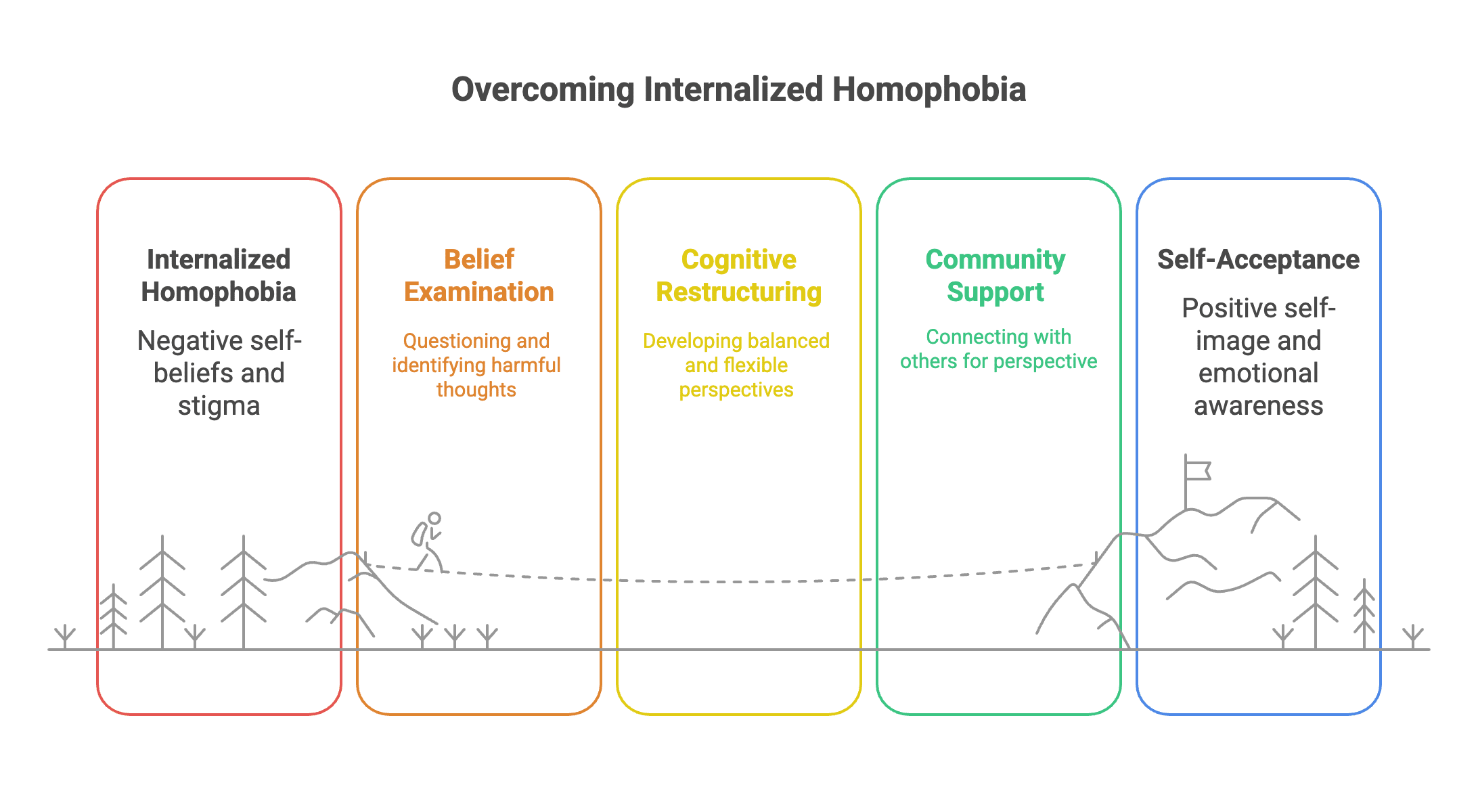
Therapy creates space to examine beliefs you may not have questioned before. Many of the critical thoughts you have about yourself aren’t actually yours—they’re messages you absorbed from growing up in a homophobic or transphobic culture. An affirming therapist helps you identify which thoughts serve you and which are echoes of stigma. This process of identity exploration happens in a nonjudgmental space where you can safely examine what you truly believe versus what you’ve been taught to believe.
Cognitive-behavioral therapy adapted for LGBTQ individuals specifically targets minority stress and internalized stigma. You’ll learn to notice automatic negative thoughts, trace them back to their source, and develop more balanced perspectives. This isn’t about positive thinking or pretending discrimination doesn’t exist—it’s about building mental flexibility so you’re not controlled by old messages. These coping skills help you handle life’s challenges without internalizing negative experiences.
Group therapy offers another powerful approach. Connecting with other LGBTQ people working through similar challenges reduces isolation and provides perspective. Group interventions show effectiveness in reducing depression while building community and shared coping skills. The LGBTQ community can be a source of tremendous support during this process.
What does this work actually look like?
In sessions, you might explore questions like: Where did you first learn that your identity was something to hide? What would it mean to stop trying to earn acceptance and simply claim it? How would your life look different if you believed you deserved good things? This identity exploration process is deeply personal and moves at your own pace.
The therapist might help you identify “should” statements that reflect internalized messages rather than your actual values. You’ll practice self-compassion—treating yourself with the same kindness you’d offer a friend. Over time, you develop the ability to notice self-critical thoughts without getting hooked by them. This work strengthens your emotional awareness and helps you respond to difficult feelings with more skill.
Can therapy help me accept myself?
Yes. Self-acceptance doesn’t mean you suddenly love everything about yourself or never have doubts. It means building a more compassionate relationship with yourself and recognizing your LGBTQ identity as worthy of respect and celebration. It means living as your authentic self, not the version you think others want you to be.
Therapy provides tools for challenging internalized shame. You’ll work on distinguishing between what you genuinely feel and what you’ve been taught to feel. Many clients describe this as finding their true self beneath layers of protective adaptation. The process involves building self-esteem that comes from within rather than from external validation.
Research on LGBTQ-affirmative cognitive behavioral therapy shows it’s particularly effective for building self-esteem, especially for Black and Latino sexual minority men who face compounded minority stress. The work addresses both internal criticism and external discrimination, supporting personal growth across all areas of life.
We’ve noticed that self-acceptance isn’t usually a single breakthrough—it’s gradually turning up the volume on your own voice while turning down internalized critical messages. Clients tell us they didn’t realize how much they’d been holding back until they felt safer being fully themselves.
What if I’m not ready to come out?
You don’t need to be out to benefit from therapy. LGBTQ-affirmative therapy meets you where you are. Whether you’re privately questioning your sexual identity, selectively out to certain people, or fully open about who you are, an affirming therapist provides a supportive environment without pressure.
Some people use therapy specifically to work through the coming out process—exploring fears, rehearsing conversations, processing reactions from family or friends. Others focus on building internal acceptance before deciding if or how to come out. There’s no right timeline or required path. Navigating identity happens at different speeds for everyone, and that’s completely valid.
Your therapist can help you think through the risks and benefits of coming out in different contexts. For some people in Charlotte, NC, being open at work feels safer than being out with family. Others face different calculations. Trauma-informed care recognizes that survival sometimes means selective disclosure, and that’s valid. This approach honors your experiences and supports whatever path forward makes sense for you.
What other mental health challenges can therapy address?
LGBTQ individuals often deal with mental health challenges beyond internalized homophobia. Many people come to therapy for anxiety, depression, substance use, eating disorders, obsessive-compulsive disorder, mood disorders, or borderline personality disorder. The difference with affirmative therapy is that these conditions are treated while understanding the context of minority stress and how gender identity and sexual orientation intersect with mental health.
For example, social anxiety in LGBTQ people might be connected to past experiences of rejection or current fear of discrimination. Substance use might have roots in using alcohol or drugs to cope with hiding your identity or managing anxiety in unwelcoming environments. An affirming therapist addresses the presenting problem while acknowledging these larger dynamics.
Different therapeutic approaches are available, including dialectical behavior therapy for emotional regulation, motivational interviewing for ambivalence about change, and holistic therapy that considers how identity intersects with all aspects of well-being. Your therapist might draw from multiple evidence-based approaches to support your unique needs.
How do I find an affirming therapist in Charlotte?
Look for therapists who explicitly identify as LGBTQ-affirming or who list LGBTQIA therapy as a specialty. The right therapist will have continuing education and specialized training in working with diverse gender identities and sexual orientations. They should understand concepts like minority stress, gender-affirming care, and identity exploration without needing you to educate them.
Many therapists in Charlotte now offer online therapy in addition to in-person sessions, giving you more options for finding someone who’s a good fit. Whether you’re in South End, Dilworth, Myers Park, Sedgefield, or anywhere else in Charlotte, NC, you can access Charlotte counseling that truly understands the LGBTQ community. LGBTQ therapists and affirming therapists practice throughout the city, making it easier to find someone with the right expertise.
In your first appointment, pay attention to how the therapist talks about identity and relationships. Do they make assumptions about your life? Do they use inclusive language when discussing gender identities and sexual orientation? Do you feel heard and respected? Trust your instincts—the therapeutic relationship matters as much as the therapist’s credentials. A welcoming space where you feel empowered to be yourself is essential for lasting change.
We approach therapy with LGBTQ clients from a stance that your identity is a source of strength, not pathology. Our goal is supporting you in building the life that feels most authentic—whether that means processing family rejection, navigating discrimination, or simply learning to like yourself better.
What can I expect from working on self-acceptance?
The process isn’t linear. Some weeks you’ll feel more confident; others, old patterns of self-criticism might resurface. That’s normal. Lasting change comes from consistently practicing new coping strategies and challenging internalized messages. This is a process of personal growth that unfolds over time.
You might notice small shifts first: catching yourself mid-criticism and choosing a gentler thought, setting a boundary you would have avoided before, or sharing something about your identity you previously kept hidden. Over time, these small changes add up and support you in building resilience for whatever life brings.
Therapy in Charlotte helps you build a supportive internal environment even when the external world isn’t always welcoming. You develop coping strategies for handling discrimination without internalizing it. You learn to distinguish between legitimate self-improvement and the exhausting work of trying to be acceptable to people who won’t accept you anyway. This strengthens your well-being across all areas of life.
The goal isn’t to eliminate all doubt or insecurity—that’s not realistic for anyone, regardless of sexual orientation or gender identity. It’s to develop a more compassionate, flexible relationship with yourself. To recognize that your identity, relationships, and life have inherent worth. To feel empowered to pursue what matters to you without constantly second-guessing whether you deserve it.
Find LGBTQ-Affirmative Therapy in Charlotte
If you’re struggling with internalized homophobia, self-criticism, or the weight of living as an LGBTQ person in Charlotte, NC, therapy can help. The therapists at Therapy Group of Charlotte provide LGBTQ-affirmative therapy in a welcoming space where your identity is respected and affirmed. Our team understands the unique challenges faced by individuals navigating identity and offers a supportive space for self-discovery and healing. Schedule an appointment to start building greater self-acceptance and well-being.
Disclaimer: This article is for educational purposes only and is not a substitute for professional medical advice, diagnosis, or treatment. Always seek the advice of your physician or qualified mental health provider with any questions you may have regarding a medical or mental health condition. If you are in crisis or experiencing thoughts of self-harm, please call 988 (Suicide and Crisis Lifeline) or go to your nearest emergency room.

