
Does Couples Therapy Work? 70% Success Rate + What That Actually Means
Research shows that approximately 70-75% of couples report improved relationship satisfaction after couples therapy. But what does “working” actually mean—and does it always mean staying together? The answer is more nuanced than most people realize, and understanding what couples therapy can (and can’t) do is the first step toward deciding if it’s right for your relationship.
What Is the Success Rate of Couples Therapy?
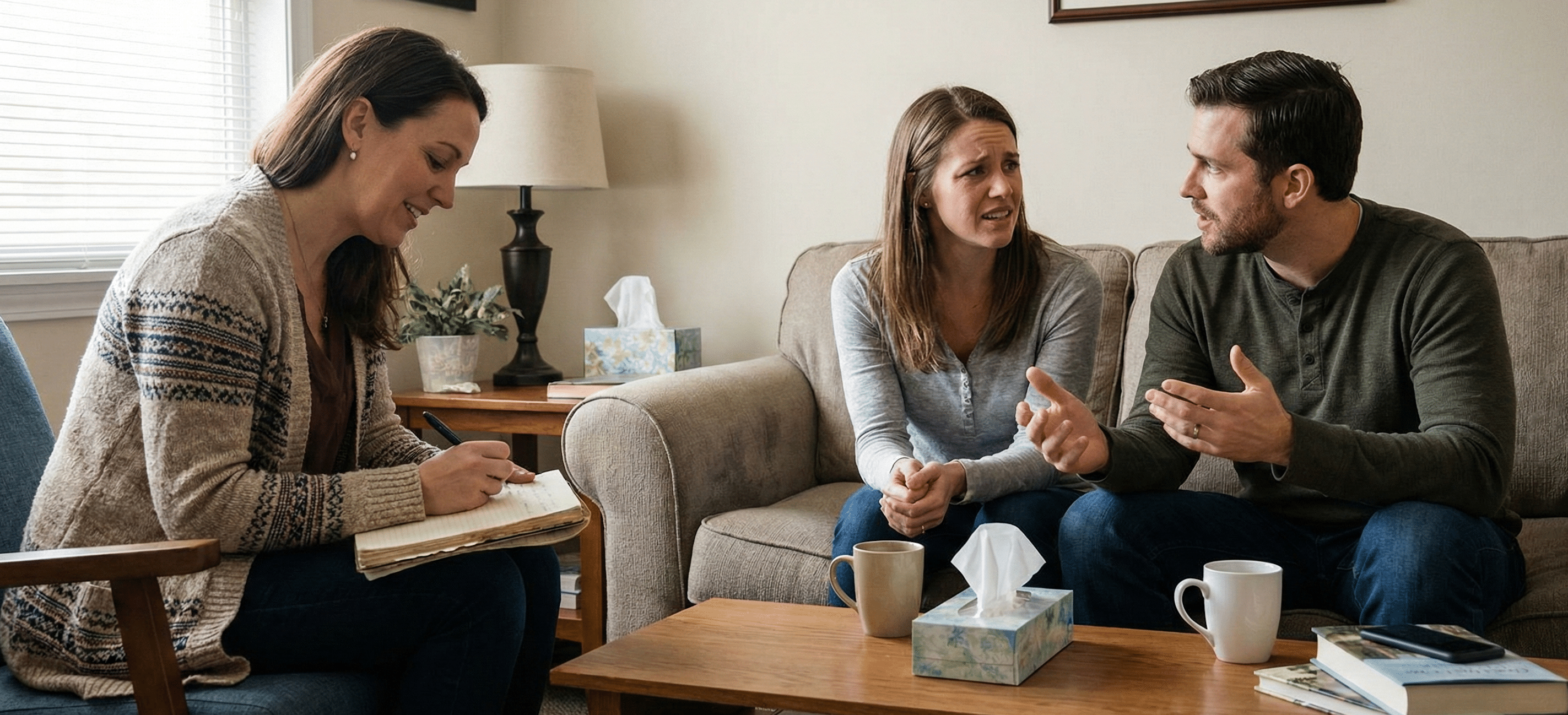
Multiple large-scale studies have found that couples therapy produces substantial, measurable improvements for the majority of participants. Research involving thousands of couples has consistently demonstrated that those who complete couples counseling experience significant gains compared to couples who don’t seek help.
Specifically, the data shows that couples therapy produces large effects on relationship satisfaction, meaning the improvements are noticeable in daily life. These benefits typically appear within a few months and can last for a year or longer.
Nearly 90% of clients report improved emotional health after participating in couples counseling, and over 75% report increased satisfaction in their relationship. For couples using emotionally focused therapy specifically, research indicates that 70-75% of couples move from distress into recovery.
The evidence is clear: marriage counseling works for most people who commit to the process. But “success” doesn’t always look the way you might expect.
In our practice, we often see couples who worry they’ve waited too long to seek help. The research actually tells a more hopeful story—meaningful improvement is possible even when relationships feel stuck. What matters most is both partners coming in ready to engage honestly.
What Does “Success” Actually Mean in Couples Therapy?
When researchers measure whether couples therapy works, they typically look at metrics like:
- Relationship satisfaction and happiness: How content partners feel in the relationship
- Communication skills: Both what you say and how you say it
- Emotional closeness: The sense of intimacy and connection between partners
- Mental health outcomes: Reduced anxiety and depression in both partners
- Conflict resolution: The ability to navigate disagreements constructively
In one federal randomized trial, couples who completed therapy reported better relationship happiness, more warmth and support, better communication, and less conflict at both 12 months and 30 months after starting the program.
But sometimes “success” means ending the relationship intelligently. Couples therapy isn’t just for people trying to save their marriage. Some couples work with a couples therapist to:
- Navigate separation or divorce with less conflict
- Improve co-parenting dynamics
- Gain clarity about whether to stay or leave
- End the relationship with mutual understanding and respect
When Is Couples Therapy Most Effective?
Research shows that couples therapy is most effective when:
- Both partners are actively engaged: Active participation and a shared desire to improve the relationship are crucial for positive outcomes
- You seek help sooner rather than later: Couples who seek help within six years of problems arising often see better results from marriage counseling
- You’re honest about what’s happening: Couples counseling works best when both partners treat it as a shared process and remain open during sessions
- You practice between sessions: Therapy typically includes practicing insights and problem-solving skills at home between weekly sessions
Couples facing more challenges often benefit the most from therapy. This includes couples dealing with financial stress, communication problems, persistent conflict, or relationship distress.
Does It Work for All Types of Couples?
One of the strengths of modern couples therapy is how well it works across different circumstances. Research has demonstrated effectiveness for:
- Married and unmarried couples
- Couples from diverse racial and economic backgrounds
- Couples with low incomes
- Couples experiencing mild to moderate relationship problems
- Couples facing major life transitions like relocation or parenthood
For couples where one partner is highly sensitive, couples counseling can help navigate emotional intensity and develop communication strategies that honor both partners’ needs.
LGBTQIA+ couples often benefit from working with marriage counselors who understand the unique challenges of navigating relationships in a heteronormative culture.
In Charlotte’s fast-growing transplant community, we frequently work with couples navigating the stress of building a life in a new city without extended family nearby. The skills learned in couples therapy—clear communication, emotional support, teamwork—become even more critical when you don’t have a built-in support network.
We frequently work with couples navigating major transitions—job relocations, new parenthood, financial stress. What stands out is how relationship patterns that worked before can stop working under new pressures. Couples counseling provides tools to adapt together rather than drift apart during these pivotal moments.
What Are the Different Types of Couples Therapy?
Couples therapists are licensed mental health professionals with specific training in relationship science and family systems. Several approaches have strong research support, including:
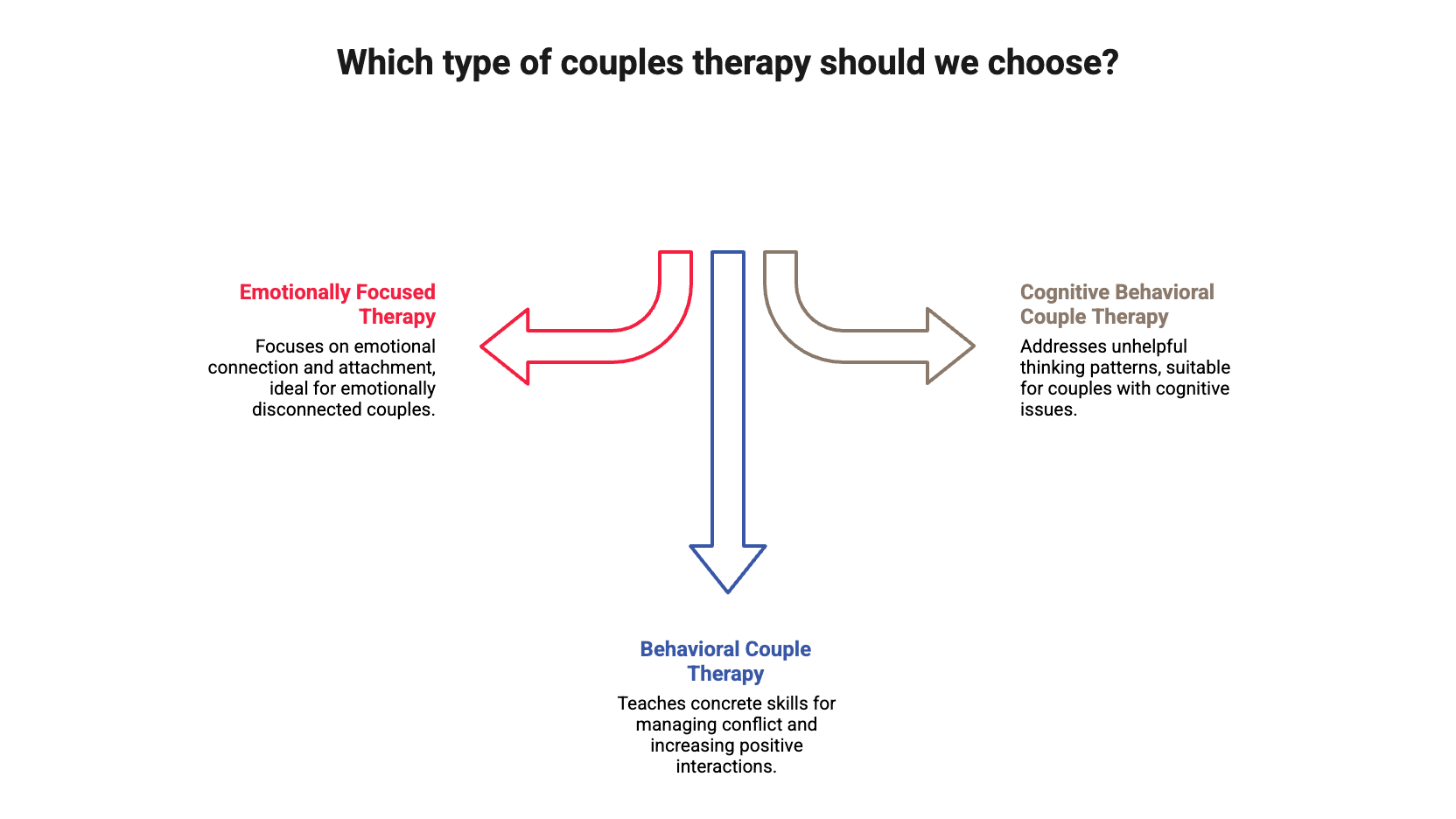
Emotionally Focused Therapy (EFT): Focuses on emotional connection and attachment. Helps partners understand and respond to each other’s emotional needs. Particularly effective for couples who feel emotionally disconnected.
Behavioral Couple Therapy: Focuses on changing specific behaviors and communication patterns. Teaches concrete skills for managing conflict and increasing positive interactions.
Cognitive Behavioral Couple Therapy: Addresses how thoughts, feelings, and behaviors interact. Helps partners identify and change unhelpful thinking patterns that affect the relationship.
Couples therapy has evolved into a firmly established intervention with its own evidence-based methods backed by decades of research. All of these approaches have been proven effective in rigorous studies. Most couples therapists are trained in multiple modalities and flexibly draw on techniques from all of them as needed. The best approach depends on your specific needs and what resonates with you as a couple.
What About Online Therapy?
Online couples therapy programs are also effective. A review of multiple studies found that online relationship education improves relationship satisfaction, communication, and individual mental health. Online couples counseling offers flexibility and can be a good option if in-person therapy isn’t accessible.
What Is the Downside of Couples Therapy?
While marriage counseling is effective for many people, it’s not without challenges:
Cost: Couples therapy typically costs between $150 and $400 per session and is rarely covered by insurance because it’s not usually deemed medically necessary. Some therapists offer sliding fee scales, and some couples opt for intensive sessions over a weekend to condense the timeline.
Time commitment: Most relationship education programs involve 9-20 hours of instruction spread over several weeks. Most couples attend weekly sessions for approximately 12 weeks, though duration varies based on your goals.
It requires both partners: While some programs now offer services when only one partner can attend, traditional couples counseling works best when both partners participate actively. If only one partner is motivated, progress is limited.
It won’t fix everything: Couples therapy is effective for addressing relationship dynamics, but co-occurring issues like untreated depression or anxiety need attention. Some issues may require individual therapy alongside couples work for the best outcomes. The therapy process also can’t create motivation where none exists—both people have to want to be there.
Sometimes it clarifies that the relationship should end: This can feel like a failure, but gaining clarity about an unhealthy relationship—and ending it with less damage—is actually a valuable outcome.
What Percentage of Couples Survive Counseling?
This question assumes that “survival” equals success, but the reality is more complex. Research shows that the average person receiving couple therapy is better off at termination than 70-80% of individuals not receiving treatment—regardless of whether the relationship continues.
Some couples stay together with dramatically improved relationship quality. Others separate but maintain better co-parenting relationships and individual mental health. Some couples work with a marriage counselor to improve co-parenting dynamics, whether they’re staying together or separating. The therapy process helps parents reduce conflict and create a more stable environment for children. Both outcomes can be considered successful depending on what was needed.
The goal of couples therapy isn’t always to keep people together. It’s to help partners make informed decisions, communicate effectively, manage emotions constructively, and—if they choose to stay together—build a healthier relationship going forward.
Couples therapy can help partners rebuild trust after infidelity, navigate emotional withdrawal, and address sexual difficulties. Most couples who complete therapy report lasting improvements in communication and emotional health, even if they eventually separate. The skills learned in therapy—active listening, emotional regulation, problem-solving—transfer to future relationships and other areas of life.
When couples ask us if therapy can help after years of the same arguments, we explain that duration matters less than willingness. We’ve seen relationships transform when both people commit to showing up differently. The skills learned extend beyond the relationship into every area of life.
If you’re in a relationship where you feel disconnected, stuck in repetitive arguments, or uncertain about the future, couples counseling offers a structured way to work through those challenges with professional guidance. The research is clear that most couples see meaningful improvement—and that improvement can look different for every relationship.
Get Started with Couples Therapy in Charlotte
Whether you’re looking to strengthen your relationship, work through specific challenges, or gain clarity about your future together, our team of licensed therapists specializes in evidence-based approaches like Emotionally Focused Therapy and Cognitive Behavioral Therapy. We work with couples at all stages—from those just starting to feel disconnected to those considering separation.
Connect with our couples counselors →
This blog provides general information and discussions about mental health and related subjects. The content is not intended to be a substitute for professional medical advice, diagnosis, or treatment. Always seek the advice of your physician or other qualified health provider with any questions you may have regarding a medical condition.

