
Health Anxiety Is Ruining My Life
Last updated: November 2024
Health anxiety is ruining my life—this is how many people with illness anxiety disorder describe their constant fear of serious illness. Health anxiety, also known as illness anxiety disorder, is one of several anxiety disorders involving excessive worry about having or developing a serious medical condition, even when medical tests show few or no symptoms. Research shows cognitive behavioral therapy effectively treats health anxiety and helps people with health anxiety reclaim their daily life.
Health anxiety affects approximately 4-6% of people in the United States, often beginning in early adulthood. People with health anxiety misinterpret normal physical sensations—like chest pain, muscle twitches, or digestive discomfort—as signs of life threatening illness. This persistent fear drives excessive searching of symptoms online, repeated medical appointments, and constant reassurance requests from healthcare professionals.
Why is my health anxiety so severe?

Health anxiety becomes severe when anxiety disorders create constant fear dominating daily life. Illness anxiety disorder develops through risk factors including family history of serious illness, health scares, or medical conditions requiring attention.
Mental health professionals explain that illness anxiety disorder often co-occurs with generalized anxiety disorder, panic disorder, and obsessive compulsive disorder. Multiple anxiety disorders create compounded challenges where health worries intensify. When anxiety disorders remain untreated, illness anxiety disorder symptoms worsen. Comprehensive assessment helps develop effective treatment for anxiety disorders.
Health anxiety disorder shares similarities with somatic symptom disorder, where physical symptoms cause significant distress despite no serious medical condition. People with health anxiety interpret bodily sensations as signs of illness, worsening anxiety through avoidance or excessive reassurance-seeking.
In our practice, we work with people whose health anxiety is ruining their relationships and career. We see individuals visiting emergency rooms weekly, convinced each physical sensation signals a serious diagnosis. One pattern we notice: the more someone seeks reassurance or searches symptoms online, the more their health anxiety grows. When clients begin cognitive behavioral therapy, they report wishing they’d sought help sooner. Understanding how attachment styles shape relationships provides context for why health anxiety strains connections.
Am I actually sick or is it anxiety?
When health anxiety is ruining your peace of mind, distinguishing between actual medical needs and anxiety symptoms becomes difficult. Health anxiety makes normal physical sensations feel like signs of illness, creating persistent fear that healthcare providers are missing something serious.
Mental health professionals help people with health anxiety differentiate between symptoms requiring medical attention versus physical symptoms generated by anxiety disorders. Anxiety disorders produce genuine sensations—chest pain, digestive issues, dizziness, muscle tension—but these stem from emotional distress rather than serious illness.
Healthcare providers can perform medical tests to rule out serious medical conditions. When tests show few or no symptoms yet health worries persist, illness anxiety disorder is likely contributing. This distinguishes illness anxiety disorder from situations requiring actual medical attention.
Recognizing health anxiety patterns
People with health anxiety typically show specific patterns in their care seeking behaviors. Health anxiety affects how someone interprets bodily sensations—minor physical symptoms become evidence of worst case scenarios. These patterns distinguish illness anxiety disorder from normal health concerns. When health anxiety is ruining daily life, individuals may:
- Check physical symptoms constantly throughout the day
- Search symptoms online for hours, reading about serious illness
- Visit multiple doctors seeking second, third, and fourth opinions
- Request repeated medical tests despite previous negative results
- Avoid certain physical activities fearing they’ll trigger serious illness
- Experience panic attacks when noticing physical sensations
- Need constant reassurance from family members about health status
These care seeking patterns indicate that anxiety disorders, rather than serious medical conditions, are driving the health concerns. Healthcare professionals can help identify when health anxiety affects someone’s interpretation of physical symptoms versus when symptoms indicate actual medical conditions requiring medical care.
Understanding how anxiety disorders manifest physically helps distinguish illness anxiety disorder from actual medical conditions. When anxiety disorders are present, physical symptoms often follow stress patterns. Healthcare professionals trained in anxiety disorders recognize these patterns and guide people toward appropriate treatment for anxiety disorders rather than unnecessary testing.
How can I stop my health anxiety?
To stop health anxiety from ruining your life, mental health professionals recommend cognitive behavioral therapy as the first-line treatment for illness anxiety disorder and related anxiety disorders. Research demonstrates that cognitive behavioral therapy significantly reduces health anxiety and helps people with health anxiety reclaim their daily life. Mental health professionals use behavioral modification strategies specifically designed to treat health anxiety and other anxiety disorders that may be present. Cognitive behavioral therapy addresses illness anxiety disorder by targeting both the thoughts and behaviors that maintain health anxiety.
Cognitive behavioral therapy for illness anxiety disorder addresses the negative thoughts and behavioral patterns that worsen health anxiety. Mental health professionals help people with health anxiety challenge unrealistic fears about serious illness and develop healthier responses to physical sensations. Treatment includes exposure exercises where individuals with health anxiety gradually face health worries without excessive searching, care seeking, or reassurance-seeking behaviors. These techniques prove effective for illness anxiety disorder and related anxiety disorders.
Healthcare providers may recommend medications like serotonin norepinephrine reuptake inhibitors (SNRIs) alongside cognitive behavioral therapy for illness anxiety disorder. Studies show both internet-based and in-person therapy effectively treat health anxiety, giving people with health anxiety flexible options for addressing anxiety disorders.
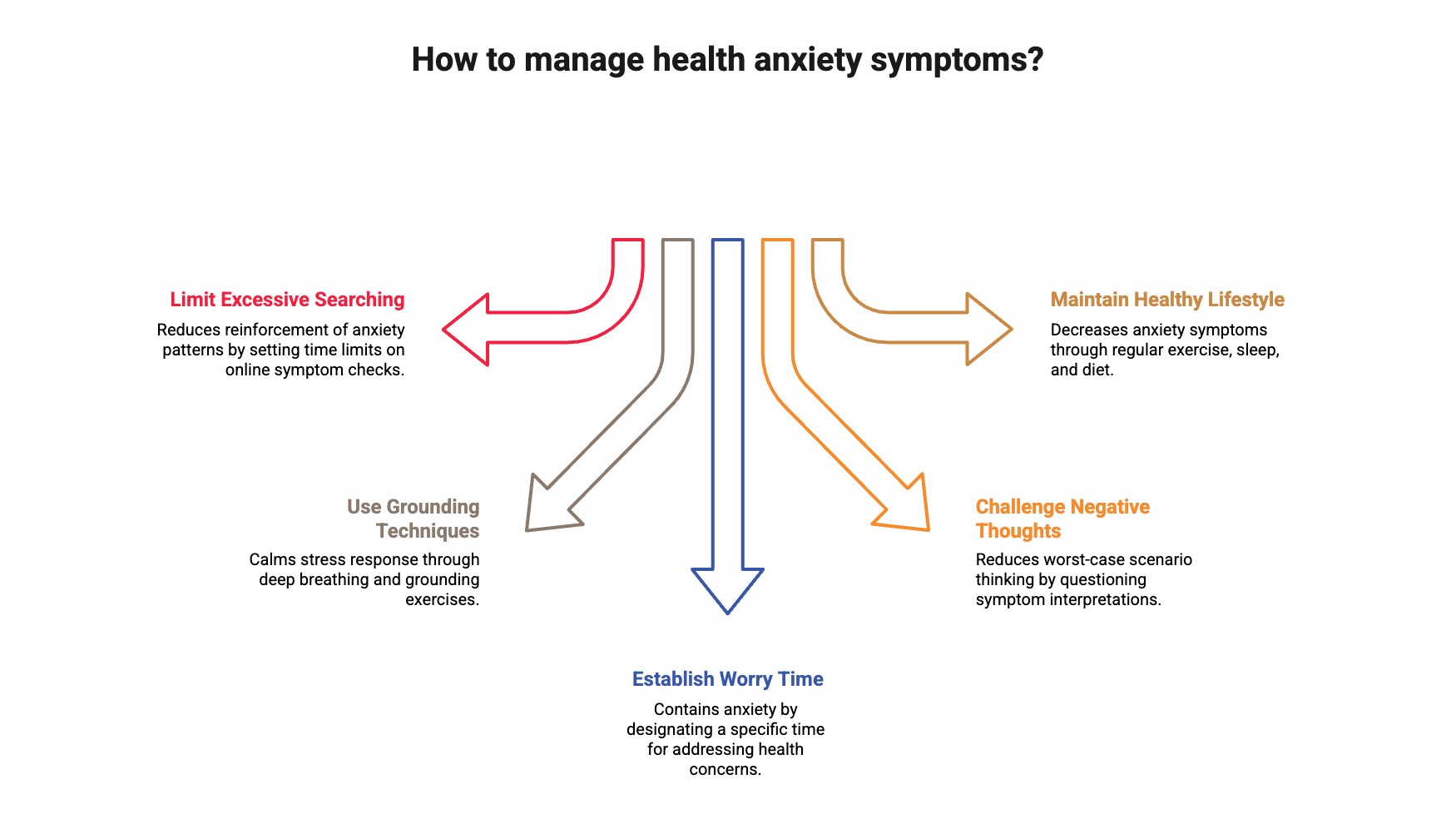
Practical steps to manage health anxiety
Mental health professionals recommend these techniques to help people with health anxiety manage symptoms and reduce the impact of illness anxiety disorder on daily life:
Limit excessive searching. People with health anxiety spend hours searching symptoms online, which makes health anxiety worse and reinforces illness anxiety disorder patterns. Set specific limits—checking symptoms online no more than once daily for 10 minutes maximum. Gradually reduce this time as health anxiety decreases. Mental health professionals treating anxiety disorders emphasize that breaking the symptom-searching cycle is crucial for recovery from illness anxiety disorder and related anxiety disorders.
Use grounding techniques. When persistent fear arises, grounding techniques and deep breathing calm the stress response.
Establish worry time. Designate a 15-minute period for health concerns. When health anxiety surfaces outside this time, wait until worry time.
Challenge negative thoughts. Health anxiety creates worst case scenario thinking that fuels illness anxiety disorder. Mental health professionals teach people with health anxiety to question whether physical symptoms indicate serious illness or represent anxiety disorders amplifying normal sensations. Building stronger self-esteem and self-compassion helps reduce the negative thought patterns that drive health anxiety.
Maintain a healthy lifestyle. Regular exercise, adequate sleep, and a balanced diet help reduce anxiety symptoms. People with health anxiety sometimes avoid physical activities fearing they’ll cause serious illness, but appropriate exercise actually helps manage anxiety and improve overall health status.
In Charlotte, where many of us juggle demanding careers in banking and tech while trying to build community as transplants, health anxiety can feel particularly isolating. If you’re searching for “therapy charlotte” or “anxiety therapist charlotte nc” to address health anxiety or illness anxiety disorder, finding the right support from mental health professionals who specialize in anxiety disorders makes a significant difference. Treatment for health anxiety works best when mental health professionals understand how anxiety disorders affect daily life.
In our South End practice, we work with people who feel stuck in the checking cycle—taking their pulse dozens of times daily, photographing skin changes, or analyzing test results for hours. What helps most is creating a concrete plan to reduce these behaviors gradually. We help clients identify their most frequent checking behavior and reduce it by half first, then move to the next one. This stepwise approach produces better results than attempting to eliminate all checking behaviors at once.
Can you ever recover from health anxiety?
Yes, people can fully recover from illness anxiety disorder when they receive appropriate treatment from mental health professionals. Research shows that CBT produces lasting improvements in health anxiety, with many people experiencing health anxiety maintaining their recovery years after treatment ends. Recovery from illness anxiety disorder doesn’t mean never having health concerns—it means health worries no longer dominate daily life or prevent normal functioning.
Recovery from health anxiety involves learning to manage anxiety disorders rather than eliminate all health worry. People with health anxiety learn to tolerate uncertainty about health status without excessive care seeking or symptom searching. This process shares similarities with managing boredom and emotions—both require tolerance for uncomfortable feelings. Mental health professionals help people with health anxiety develop realistic perspectives about serious illness through treatment for illness anxiety disorder and related anxiety disorders. Learning to live with uncertainty is a core skill in treating anxiety disorders.
Treatment for illness anxiety disorder addresses both cognitive patterns (negative thoughts, unrealistic fear) and behavioral patterns (excessive searching, care seeking, reassurance-seeking) through cognitive behavioral therapy targeting anxiety disorders. This approach produces lasting results.
A reminder we give our clients: recovery from health anxiety doesn’t mean you’ll never worry about your health again. It means you’ll have the tools to recognize when worry becomes excessive and know how to respond without letting it take over. We see people return for occasional check-ins when life stress triggers old patterns, and that’s normal. Having strategies in place prevents temporary setbacks from becoming full relapse.
Healthcare professionals emphasize seeking support early prevents health anxiety from becoming more severe. When health anxiety is ruining relationships, career performance, or financial stability, professional support for illness anxiety disorder becomes essential. Mental health professionals can differentiate illness anxiety disorder from other anxiety disorders and create treatment plans that address each person’s specific health anxiety patterns.
If health anxiety is ruining your life, mental health professionals specializing in anxiety disorders can provide evidence-based treatment to help reclaim your daily life.
Get support for health anxiety in Charlotte
At Therapy Group of Charlotte, our doctoral-level psychologists specialize in anxiety disorders, including illness anxiety disorder and related conditions. We offer cognitive behavioral therapy and evidence-based treatments that effectively address health anxiety. Our mental health professionals understand how health anxiety, illness anxiety disorder, and other anxiety disorders affect daily life and provide professional support to stop the cycle of health worries. Located in South End, we serve individuals throughout the Charlotte area seeking therapy for health anxiety, illness anxiety disorder, and other anxiety disorders. Contact us today to schedule a consultation with our mental health professionals who specialize in treating health anxiety.
This blog provides general information and discussions about mental health and related subjects. The content is not intended to be a substitute for professional medical advice, diagnosis, or treatment. Always seek the advice of your physician or other qualified health provider with any questions you may have regarding a medical condition.

