

Living with chronic illness or chronic pain can feel overwhelming. Beyond the physical symptoms, many people experience anxiety, depression, grief, and isolation that make daily life even harder. Mental health therapy offers practical support for managing these emotional challenges while navigating chronic medical conditions.
Therapy for chronic illness isn’t about ignoring your physical health—it’s about addressing how chronic pain and mental health challenges are deeply intertwined. Whether you’re dealing with common struggles chronic pain patients face or adjusting to a new diagnosis, a therapist for chronic illness can help you develop coping strategies, process difficult emotions, and build resilience.
What Is Counseling for Chronic Health Conditions?
Counseling for chronic health conditions focuses on the emotional and psychological impact of living with chronic illness. A licensed clinical social worker or licensed professional counselor trained in chronic health issues understands how physical symptoms affect your mental health and overall well being.
Chronic illness therapists use multiple therapeutic modalities tailored to your needs. These therapeutic approaches help you:
- Manage anxiety depression and stress related to your medical condition
- Process medical trauma from difficult diagnoses or treatments
- Address relationship issues that arise from chronic medical conditions
- Develop practical strategies for daily challenges
Therapeutic patient education helps you understand your condition and build skills for managing both physical and emotional aspects of chronic illnesses.
Individual therapy creates a safe space where you can express feelings without judgment. Your therapist works with you—not just on you—to identify goals that matter to your life.
How Are Chronic Pain and Mental Health Connected?
Chronic pain and mental health challenges feed into each other. Many chronic pain patients also struggle with anxiety, depression, and stress. Research shows that emotional support can ease the burden of chronic pain.
Your brain processes both physical pain signals and emotional distress through overlapping pathways in the nervous system. When you’re anxious or depressed, your body may amplify pain signals, making physical symptoms feel worse. Conversely, constant physical discomfort naturally affects your mood, energy, and outlook.
This connection doesn’t mean your pain “isn’t real” or that it’s “all in your head.” It means that addressing emotional well being can genuinely impact how you experience physical symptoms.
Therapy helps break this cycle by teaching you skills to manage both the physical and emotional aspects of chronic illness.
What Is the Best Therapy for Chronic Illness?
The best therapy depends on your needs, but cognitive behavioral therapy (CBT) and acceptance and commitment therapy (ACT) are evidence-based therapeutic approaches particularly effective for chronic conditions.
Cognitive behavioral therapy helps you identify and change unhelpful thoughts that worsen anxiety, depression, or pain. For example, if you notice catastrophic thinking when symptoms flare—”This will never get better”—CBT teaches you to examine and reframe these patterns. CBT changes negative thought patterns associated with chronic pain and chronic illnesses.
Acceptance and commitment therapy takes a different angle. Instead of fighting difficult feelings, ACT helps you acknowledge your experience while still moving toward what matters in your life. This approach can be especially helpful for chronic illness, where some level of discomfort may be ongoing. You learn to hold space for both pain and personal growth.
Many chronic illness therapists blend these therapeutic modalities based on what you need. Some also incorporate mindfulness techniques, trauma-informed approaches for medical trauma, or somatic work that connects body awareness with healing.
How Does Therapy Actually Help With Chronic Pain?
Therapy promotes feelings of safety that can reduce chronic pain signals in the brain. When your nervous system feels constantly under threat from ongoing symptoms, it can amplify pain responses. Psychotherapy offers skills to manage and reduce chronic pain’s impact on daily life.
Therapeutic approaches teach you practical strategies like:
- Pacing activities to match your energy levels
- Responding to symptom changes without panic
- Communicating your needs to medical professionals and loved ones
- Problem-solving when pain disrupts important plans
Therapy also addresses the fear and self criticism that often accompany chronic health conditions. Many people blame themselves or feel their body has betrayed them. A good therapist helps you develop self-compassion and realistic expectations.
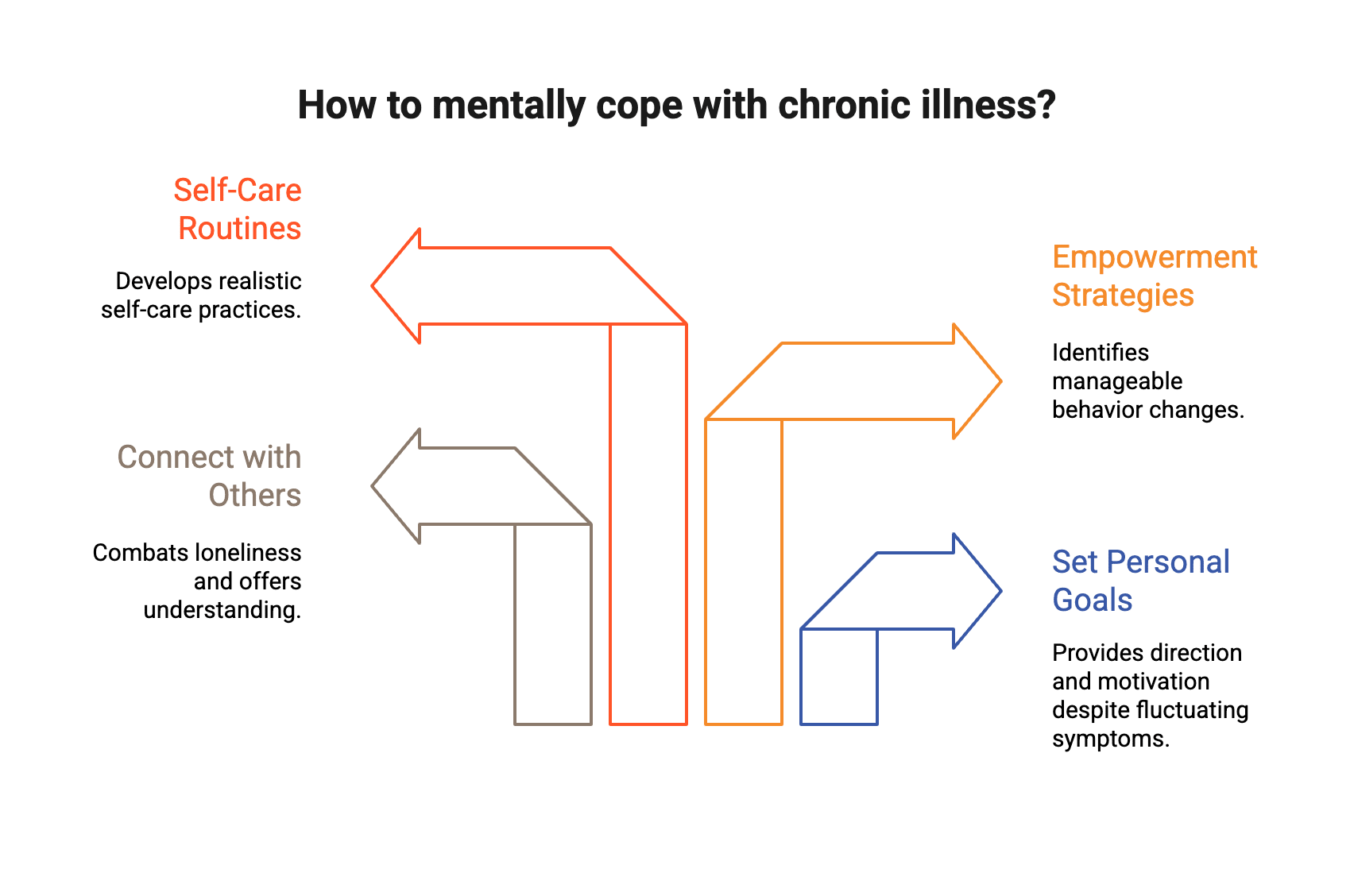
How Do You Mentally Cope With Chronic Illness?
Mental coping with chronic illness involves building resilience through key strategies. Setting personal goals with your healthcare team—like managing caregiving responsibilities, staying connected with loved ones, or pursuing meaningful activities—gives you direction even when symptoms fluctuate.
Connecting with others who understand your experience can combat the loneliness many people with chronic illnesses feel. Most patients with chronic medical conditions report feelings of isolation. Support groups, either in-person or online, offer community where you can share experiences without explaining yourself constantly.
Empowerment-oriented strategies help you identify what behavior changes feel manageable. This might mean adjusting your approach to work, renegotiating relationships, or finding new ways to engage in activities you value. Your therapist can help you navigate these transitions while processing the grief that often comes with letting go of your pre-diagnosis life.
Practicing self-care becomes essential but also more complex with chronic medical condition limitations. Therapy helps you develop realistic self-care routines that account for your energy levels, pain patterns, and symptoms.
What About Caregiver Stress?
If you’re supporting someone with chronic illness, caregiver stress deserves attention too. Caregiving responsibilities can lead to burnout, especially without adequate support. Many caregivers experience their own anxiety depression and feelings of isolation while managing the demands of caring for loved ones.
Therapy for caregivers addresses the emotional toll of watching someone you love struggle, managing your own needs alongside theirs, and navigating guilt when you need breaks. Getting therapeutic support is practical, not selfish.
What Is the Hardest Chronic Illness to Live With?
There’s no single answer to what chronic illness is hardest—each person’s experience is unique depending on their symptoms, personality traits, support system, and access to treatment. What feels unbearable to one person might differ from another’s biggest challenge.
Some chronic illnesses like cancer or irritable bowel syndrome come with intense physical discomfort. Others, like invisible chronic illnesses, carry the added burden of people not believing your limitations. Conditions affecting young adults can disrupt education, career building, and relationships in especially isolating ways.
What matters more than ranking difficulty is acknowledging your struggle as real and worthy of support. Whether you’re managing chronic pain, disability, medical trauma, or adjusting to life with chronic medical conditions, your feelings are valid. Therapy provides space to process the anger, grief, fear, and frustration that come with chronic illness without minimizing what you’re going through.
How Do I Find the Right Therapist?
When looking for mental health therapy in Charlotte, seek out therapists who specifically mention chronic illness, chronic pain, or medical conditions in their expertise. A licensed clinical social worker or licensed professional counselor with specialized training in chronic health issues will better understand the intersection of physical health and mental health. For those outside Charlotte, such as in DC, you may find affordable therapy through guides that list sliding scale options and community resources.
If you are struggling to find the right fit, look for therapists who:
- Use evidence-based approaches like cognitive behavioral therapy or acceptance and commitment therapy
- Offer telehealth appointments for flexibility around symptoms and medical appointments
- Demonstrate empathy and understanding in their communication
- Build a strong therapeutic relationship that acknowledges your reality
In Charlotte’s South End and surrounding neighborhoods like Dilworth, Sedgefield, and Myers Park, you’ll find therapists who understand how chronic illness affects work, relationships, and daily life in our community.
Get Started With Therapy for Chronic Illness in Charlotte
The therapists at Therapy Group of Charlotte work with clients managing chronic illness and chronic pain. They understand that living with chronic medical conditions requires both practical coping skills and emotional processing. Schedule an appointment to start building the support you need for your best life despite ongoing health challenges.
Frequently Asked Questions About Therapy for Chronic Illness
What other services do therapists for chronic illness offer?
Therapists specializing in chronic illness often provide a range of other services beyond individual therapy. These can include caregiver support, group therapy, psychoeducation, and advocacy resources to help clients manage both emotional and practical challenges related to chronic medical conditions.
How can therapy help me feel safe while managing chronic pain?
Therapy promotes a new sense of safety by teaching skills that help regulate the nervous system and reduce pain signals in the brain. Through techniques like mindfulness and acceptance and commitment therapy, clients learn to feel safe in their bodies despite ongoing symptoms.
Can therapy offer support for caregiver stress?
Yes, therapists recognize that caregiving responsibilities can lead to significant stress and burnout. Therapy offers practical strategies and emotional support to help caregivers balance their own well-being while managing the demands of caring for loved ones with chronic illness.
How does therapy address the connection between physical health and mental health?
Therapists with specialized training understand how physical symptoms and mental health challenges are deeply intertwined. They use evidence-based therapeutic approaches to help clients manage unhelpful thoughts, anxiety, and depression, improving overall well being despite chronic medical conditions.
What should I look for when choosing a therapist for chronic illness?
Look for licensed clinical social workers or licensed professional counselors who mention expertise in chronic illness, chronic pain, or medical trauma. It’s important they offer evidence-based approaches, flexible services like telehealth, and create a safe space where you feel understood and supported.
Disclaimer: This article is for educational purposes only and is not a substitute for professional medical advice, diagnosis, or treatment. Always seek the advice of your physician or qualified mental health provider with any questions you may have regarding a medical or mental health condition. If you are in crisis or experiencing thoughts of self-harm, please call 988 (Suicide and Crisis Lifeline) or go to your nearest emergency room.