

If you’re part of the LGBT community in South End, you deserve mental health services that truly understand your experiences. LGBT therapy offers specialized support for the unique challenges you may face, from managing depression and anxiety to exploring gender identity and building self-esteem. Finding affirmative therapists who create a safe and supportive space can make all the difference in your mental health outcomes.
What Is LGBT Therapy and Why Does It Matter?
LGBT therapy is mental health treatment provided by licensed therapists who are trained to understand the specific needs of lesbian, gay, bisexual, transgender, and gender nonconforming individuals. This type of affirmative therapy goes beyond standard counseling by addressing how stigma and discrimination affect your emotional well-being.
Research shows that affirmative care improves health outcomes when mental health professionals respect your identity, use your correct name and pronouns, and create a supportive environment where you feel comfortable talking about your life. Affirmative therapists don’t treat your identity as something to be changed. Instead, they help you address relationship issues, life challenges, and mental health conditions while understanding the added pressures of being part of the LGBT community.
Finding someone specifically trained in LGBT issues often leads to better mental health support. You’re more likely to feel comfortable discussing topics like coming out, family dynamics, or gender affirming care when your therapist has dedicated training in these areas.
Why Do LGBT Individuals Face Higher Mental Health Challenges?
LGBT people experience depression, anxiety, and other mental health conditions at higher rates than their heterosexual peers. This isn’t because being LGBT causes mental health problems—it’s the result of ongoing stress from discrimination, rejection, and living in a society that doesn’t always accept or understand you.
According to a national survey, LGBT young people and adults face unique challenges like hiding your identity at work, managing family relationships after coming out, and dealing with rejection from your community. Gay men, lesbian women, transgender individuals, and others in the LGBT community often carry the weight of these experiences while trying to manage everyday life.
The good news is that LGBTQ-affirmative psychotherapy is designed to address these specific stressors. Therapy services that understand minority stress—the chronic stress from being part of a marginalized group—can help you build coping tools and resilience.
How Does Affirmative Therapy Help With Depression and Anxiety?
Affirmative therapy approaches these issues differently than traditional treatment. Your therapist will help you understand how external stressors—like rejection, hiding your identity, or lack of community support—contribute to your depression or anxiety. Research demonstrates that LGBTQ-affirmative approaches lead to better mental health outcomes because they address both your symptoms and the specific context of your life.
In therapy sessions, you’ll work on practical strategies to manage anxiety and depression, build your sense of self-worth, challenge negative thoughts, and develop healthy coping skills. Some clients benefit from individual therapy, while others find group therapy or support groups helpful for connecting with people who understand their experiences.
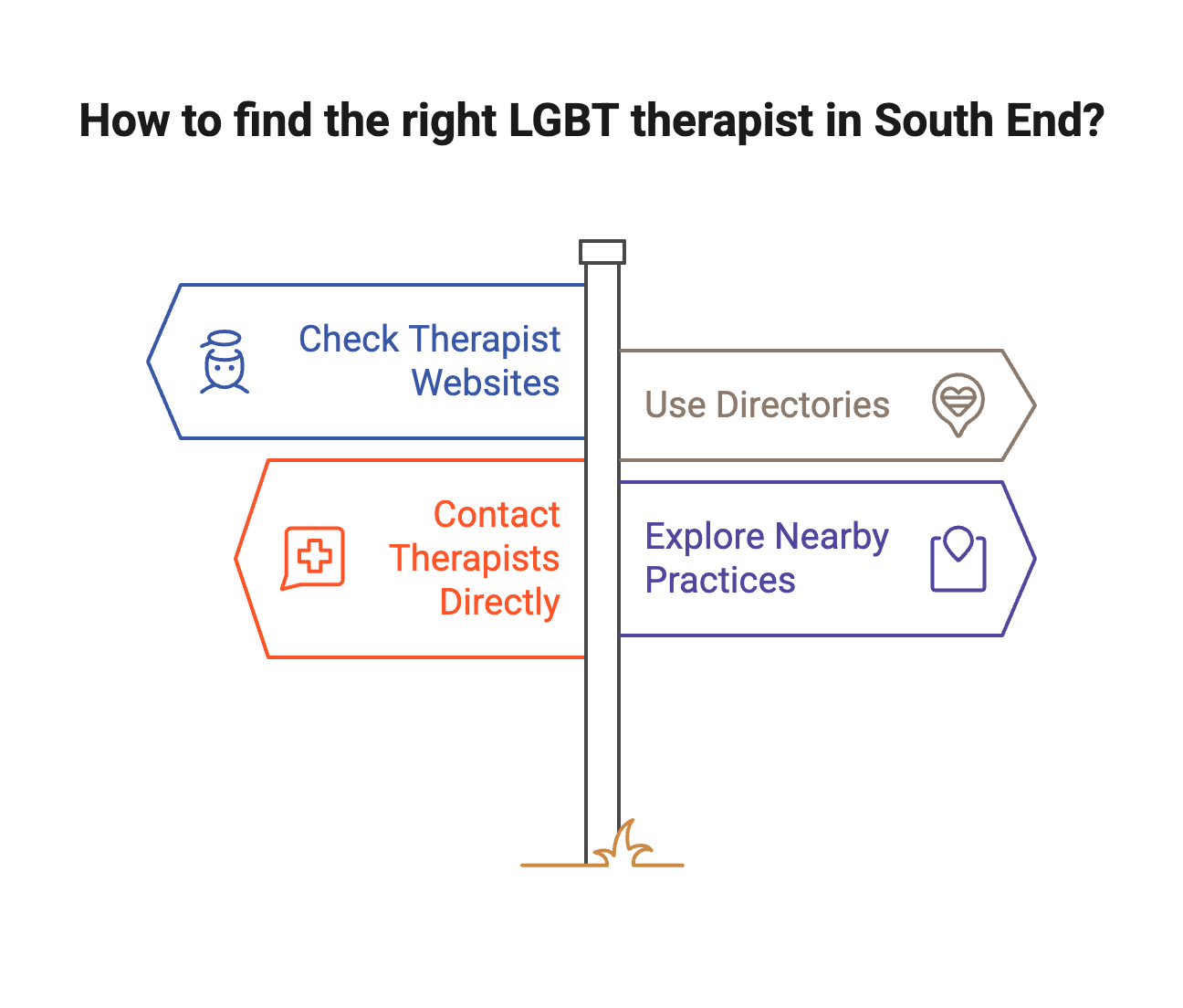
How Do You Find the Right LGBT Therapist in South End?
Finding a therapist who truly understands LGBT experiences can feel overwhelming, but there are several ways to connect with the right mental health professionals in Charlotte’s South End area. Look for therapists who specifically mention LGBT or LGBTQ-affirmative training on their websites. Check directories from the Human Rights Campaign and organizations like the Trevor Project. The National Alliance on Mental Illness also offers local referrals to mental health services.
When you contact a potential therapist, ask about their experience working with LGBT clients: “Have you received training in LGBT mental health?” or “How do you address issues related to sexual orientation and gender identity in therapy?” A good therapist will welcome these questions.
In South End, you’re close to Dilworth, Sedgefield, and Myers Park, giving you access to several therapy practices with both in-person and online counseling options.
Can Online Therapy Work for LGBT Mental Health Support?
Online therapy has become an increasingly popular option for LGBT individuals seeking support, and research shows it can be just as effective as in-person counseling. Guided LGBTQ-affirmative internet-based therapy has shown positive results for reducing depression and anxiety in LGBT youth and adults.
Online therapy offers important advantages: privacy if you’re not out to everyone, convenience without commute time, and access to therapists who specialize in LGBT issues even if they’re not in your immediate neighborhood. Most clients find that once they adjust to the format, online counseling feels just as supportive and effective.
How Can Family Therapy Support LGBT Youth and Their Families?
Family therapy plays a crucial role in supporting LGBT young people and their families. For LGBT youth, having family acceptance makes a tremendous difference in mental health. The Trevor Project consistently finds that young people with supportive families have significantly better outcomes.
Research on best practices in LGBT care emphasizes that family support is one of the strongest protective factors for LGBT youth mental health. Family therapy can help parents and siblings understand what their LGBT family member is experiencing, address communication breakdowns, and learn how to create a safe space at home.
Many families in South End seek therapy when their teen or young adult child comes out, or when a family member begins gender transition. A skilled therapist can help families move from conflict to understanding, even when the process feels difficult.
Building Community Connections
While working with a licensed therapist is valuable, building connections with other LGBT people in South End can enhance your mental health support. The Trevor Project offers 24/7 crisis support for LGBT youth, and the National Alliance on Mental Illness provides local support groups for people managing mental health conditions.
In South End, you’ll find an accepting community with many LGBT-friendly businesses and events. Remember that seeking support is a sign of strength, not weakness. You deserve care that honors who you are and supports your goals for a healthier, more fulfilling life.
We’re LGBTQ+ Affirming – Reach Out When You’re Ready
If you’re looking for LGBT therapy in South End, the therapists at Therapy Group of Charlotte are here to help. Our team provides affirming mental health services for individuals, couples, and families in a supportive environment. Schedule an appointment to get started.
Frequently Asked Questions About LGBT Therapy
What mental health resources are available for the LGBT community?
There are various mental health resources tailored to the LGBT community, including individual therapy, group therapy, family therapy, and support groups. Many therapist networks specialize in providing culturally competent and affirming support to address unique challenges faced by marginalized communities.
How do I find a therapist who provides culturally competent care?
Look for licensed therapists who have specific training in LGBT mental health and who advertise their experience in providing affirming support. Checking directories from organizations like the Human Rights Campaign or local mental health networks can help you find trained counselors who understand LGBT issues.
Are online therapy services effective for LGBT individuals?
Yes, online therapy is a safe and effective option that many LGBT individuals use. It offers privacy, convenience, and access to therapists who specialize in gender affirming care and address anxiety disorders, depression, and other mental health conditions.
What types of therapy services are most beneficial for LGBT clients?
Affirmative therapy, gender affirming therapy, individual therapy, family therapy, and group therapy are all valuable. These services focus on creating a supportive environment to discuss sexual orientation, gender identity, and related life challenges, improving emotional well-being and mental health outcomes.
How can I find payment information or affordable options for LGBT therapy?
Many therapists accept insurance and provide sliding scale fees to make therapy more accessible. When contacting a therapist, ask about payment information, insurance coverage, and any available financial assistance to ensure you can access the support you need.
Disclaimer: This article is for educational purposes only and is not a substitute for professional medical advice, diagnosis, or treatment. Always seek the advice of your physician or qualified mental health provider with any questions you may have regarding a medical or mental health condition. If you are in crisis or experiencing thoughts of self-harm, please call 988 (Suicide and Crisis Lifeline) or go to your nearest emergency room.