

Losing a loved one is one of life’s most painful experiences. For most people, the grief process involves waves of sadness and longing that gradually ease over time. But sometimes grief doesn’t follow this path. When grief feels stuck—lasting months or years without improvement—it may be complicated grief or prolonged grief disorder. The good news? Grief therapy is a proven treatment that helps people heal when grief feels overwhelming. Grief counseling often begins after the initial aftermath of the loss, typically a week or so following the funeral.
If you’re in Charlotte’s South End, Dilworth, or Myers Park neighborhoods and wondering whether your grief is “normal” or if you need help, this guide will help you understand when grief becomes complicated and how grief counseling can support your healing.
What Is Complicated Grief?
Complicated grief is intense mourning that doesn’t ease with time and interferes with your day-to-day life. While normal grief gradually softens, complicated grief stays sharp and all-consuming, making it hard to work, connect with family members, or find meaning in life.
Research shows that about 7-10% of bereaved people develop prolonged grief disorder, which is now recognized as a distinct mental health condition. This isn’t about “getting over” someone too slowly—it’s about grief that keeps you stuck in intense distress.
Common signs include:
- Persistent yearning for the person who died
- Difficulty accepting the loss, even months later
- Feeling that life has no purpose
- Avoiding reminders of the loss or being unable to think about anything else
- Intense guilt or anger that doesn’t fade
How Is Complicated Grief Different from Normal Grief?
Normal grief is painful but changes over time. You have good days and bad days. You slowly adjust to life without your loved one while keeping their memory alive.
Complicated grief feels frozen. The pain stays just as intense six months, a year, or even several years after the loss. You might struggle with daily tasks or withdraw from friends and family members who want to support you.
Key insight: Complicated grief isn’t a character flaw or a sign of weakness. It’s a recognized condition that responds well to specific types of grief therapy.
What Kind of Therapy Is Best for Grief?
Cognitive behavioral therapy (CBT) for grief is the most effective treatment for prolonged grief disorder. This type of grief therapy helps you understand your grief, manage painful feelings, and gradually face reminders of your loss so they become less overwhelming.
Grief counseling sessions typically involve:
- Talking about your loved one in a safe space
- Learning skills to manage emotions like sadness, guilt, or anxiety
- Setting goals to reconnect with activities and people
- Working through avoided situations that trigger distress
- Finding meaningful ways to honor your loved one while moving forward
- Addressing secondary grief, which compounds a primary loss by triggering grief over other associated losses
Studies show that grief-focused CBT works better than general counseling or medication alone. Most people see improvement within 16-20 weekly sessions with a trained grief counselor.
The Role of Support Groups
Support groups complement individual grief counseling by creating community during a difficult time. When you attend a support group, you realize you’re not alone in your struggle. You’ll hear how others cope with similar feelings and gain hope from people further along in their healing process. GriefShare is a support group designed to help individuals move through the grief process in a safe and welcoming environment. Over 1 million people have found hope and healing through GriefShare.
Many Charlotte-area support groups meet weekly and provide structured discussions about managing anniversaries, holidays, and relationships with family members who grieve differently than you do.
What to Do When Grief Is Overwhelming?
When grief feels too heavy to carry alone, professional help can make a real difference. Here are signs it’s time to reach out to a mental health practitioner:
- Your grief hasn’t eased after six months or more
- You’re having trouble functioning at work or maintaining relationships
- You’re experiencing severe guilt or self-blame
- You’ve withdrawn from friends, family, and activities
- You’re having thoughts of wanting to die or be with your loved one
Crisis support: If you’re having thoughts of self-harm, call 988 (Suicide and Crisis Lifeline) or go to your nearest emergency room immediately.
For non-crisis situations, a grief counselor specializing in bereavement can help. Grief therapy gives you a supportive environment to process feelings, learn coping strategies, and adapt to life after loss. Meditation can help reduce physical and psychological effects associated with grief.
What Are the 7 Stages of Grief?
Many grief counselors reference seven stages that people may experience:
- Shock and denial – Initial disbelief
- Pain and guilt – Intense emotional and physical symptoms
- Anger and bargaining – Frustration and “what if” thinking
- Depression and loneliness – Deep sadness as reality sets in
- Reconstruction – Adjusting to daily life
- Acceptance – Coming to terms with the loss
- Hope – Finding meaning moving forward
Here’s what matters: Grief isn’t a linear process. You don’t move neatly through stages and “complete” grief. Instead, you may cycle between different feelings, have setbacks during anniversaries, and that’s completely normal.
Grief therapy helps when you feel stuck in one stage—particularly shock, anger, or depression—and can’t find your way forward despite time passing.
What Are the 3 C’s of Grief?
Mental health professionals often discuss grief using the “3 C’s” framework:
- Cause – Understanding what triggered the loss
- Consequence – Recognizing how the loss affects your life and relationships
- Coping – Learning healthy ways to process emotions and adapt
Grief counseling helps you work through each area, giving you tools to cope with difficult emotions while honoring your loved one.
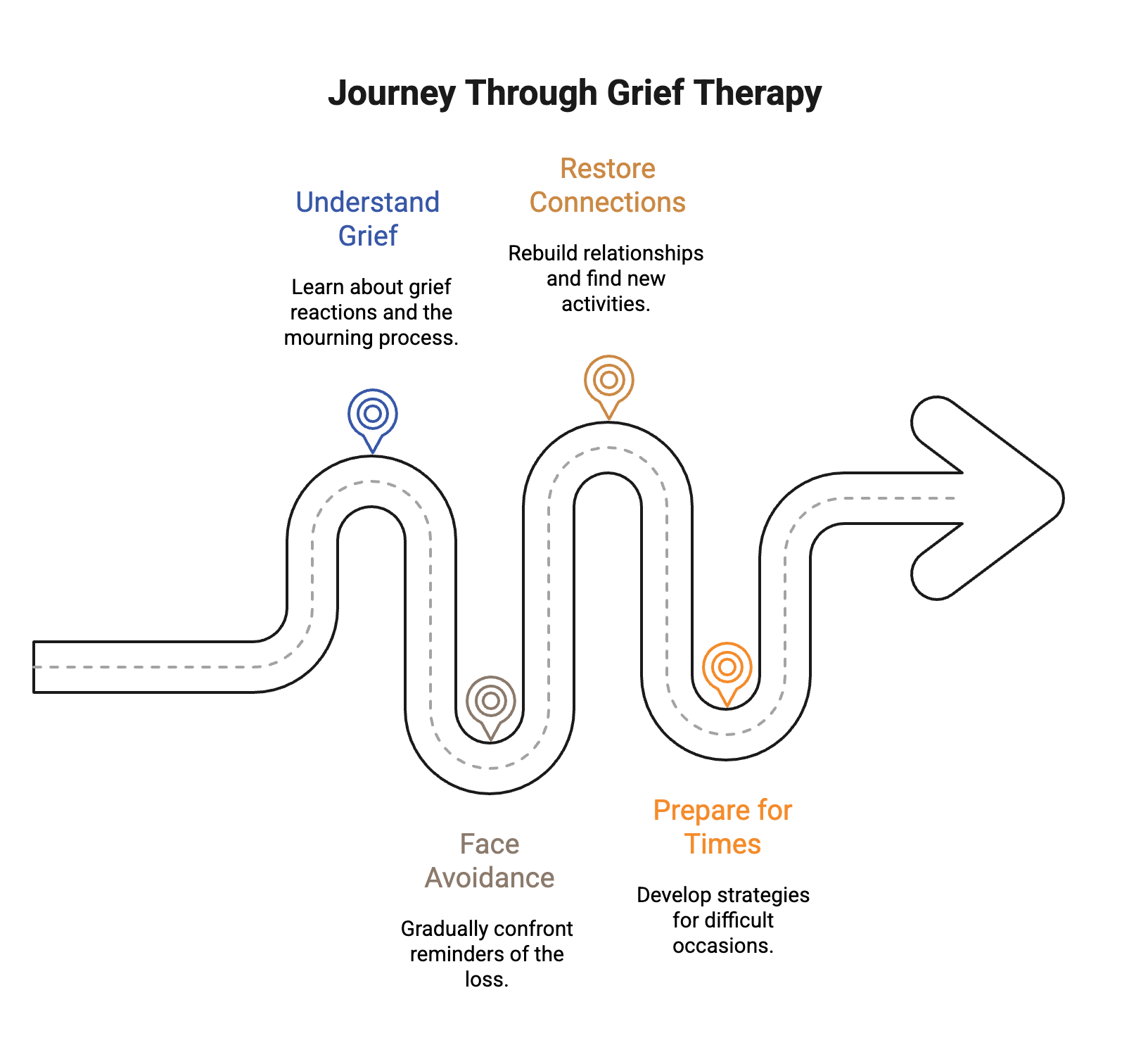
How Grief Therapy Helps You Move Forward
Grief therapy works by helping you accept the reality of your loss, process the pain, and adjust to a changed world. Your therapist will work with you to:
Understand your grief reactions. You’ll learn why grief can feel so intense and why complicated grief happens to some people. Understanding the grief process helps normalize your experience. Professionals may use the “four tasks of mourning” to facilitate adaptation to loss.
Face avoided situations. Many people with complicated grief avoid places or activities that remind them of their loved one. Therapy helps you gradually face these reminders in a safe way.
Restore meaningful connections. Grief often leads to isolation. Your grief counselor will help you reconnect with family members and friends, find new activities, and set goals for the future.
Prepare for difficult times. Anniversaries, birthdays, and holidays can bring surges of grief. Your therapist will help you plan ahead and develop coping strategies.
Remember: Seeking help for grief is a sign of strength, not weakness. You don’t have to carry this pain alone.
Finding Grief Counseling in Charlotte
If you’re in Charlotte’s South End area or nearby neighborhoods like Dilworth or Myers Park, accessing grief therapy is easier than you might think. Many mental health professionals specialize in bereavement work and understand the unique challenges of complicated grief.
When choosing a grief counselor, look for someone who:
- Has specific training in grief therapy
- Uses evidence-based approaches like CBT
- Creates a supportive environment where you feel comfortable
- Understands that everyone’s grief process looks different
The therapists at Therapy Group of Charlotte understand how devastating loss can be and how hard it is to ask for help when you’re grieving. Whether you lost a parent, partner, child, or close friend, grief counseling can help you find a path through the pain toward healing and hope.
If you’re struggling with grief that won’t ease, schedule an appointment to talk with a therapist who specializes in grief and loss. You deserve support during this difficult time.
Frequently Asked Questions About Grief Therapy
What is the difference between grief counseling and grief therapy?
Grief counseling helps individuals process their feelings of loss in a supportive environment, focusing on uncomplicated grief. Grief therapy, on the other hand, involves specialized techniques designed to address complicated grief reactions and prolonged grief disorder, helping bereaved clients accept the reality of their loss and foster healing. Though in reality the terms are used interchangeably.
When should I seek help from a professional counselor for grief?
If your grief is profound, lasts longer than six months, or interferes with your well-being and daily life, it’s important to seek help. A professional counselor or mental health practitioner can provide mental health services tailored to your needs, especially if you are struggling with trauma, complicated grief, or suicide loss.
Can grief therapy help with different forms of loss?
Yes, grief therapy supports many forms of loss, including death of a loved one, pet loss, and ambiguous loss. Therapy helps individuals cope with the mourning process and guides them through their unique grief journey in a safe and helpful manner. Ambiguous loss encompasses feelings of uncertainty when someone or something is missing. Disenfranchised grief is the grief that results from a loss that isn’t openly accepted or recognized by society. Creating memory books can help actively remember the deceased in a positive way.
How do social workers and mental health professionals support the grieving process?
Social workers and mental health professionals provide counseling and therapy that foster healing by helping clients understand their grief, manage difficult emotions, and develop coping strategies. They create a supportive environment to assist individuals and families in moving forward after loss.
Is grief therapy suitable for children?
Absolutely. Grief therapy for children uses age-appropriate techniques to help them express their emotions and understand their loss, supporting their emotional recovery and well-being during a difficult time.
Disclaimer: This article is for educational purposes only and is not a substitute for professional medical advice, diagnosis, or treatment. Always seek the advice of your physician or qualified mental health provider with any questions you may have regarding a medical or mental health condition. If you are in crisis or experiencing thoughts of self-harm, please call 988 (Suicide and Crisis Lifeline) or go to your nearest emergency room.