

Living with chronic illness affects more than just your physical health—it impacts your emotions, relationships, and sense of self. Research shows that psychotherapy improves both mental well-being and physical health outcomes for people managing chronic conditions. Whether you’re dealing with depression, anxiety, grief, or the day-to-day stress of treatment, therapy for chronic illness provides evidence-based tools to help you cope, adapt, and find meaning in your life despite ongoing health challenges.
What type of therapy is best for chronic illness?
No single therapy works for everyone with chronic illness, but several evidence-based approaches have strong research support. The most effective therapy for you depends on your specific symptoms, emotional challenges, and personal preferences.
Cognitive Behavioral Therapy (CBT) is one of the most well-studied approaches for chronic health conditions. CBT helps you identify and change thought patterns that worsen symptoms like pain or fatigue. By learning to recognize unhelpful thinking—such as catastrophizing about symptoms or feeling helpless—you can develop more balanced perspectives that reduce distress and improve daily functioning.
Mindfulness-based therapies teach you to focus on the present moment without judgment. Research demonstrates that mindfulness reduces stress, improves mood, and lessens the impact of physical symptoms. Mindfulness-Based Stress Reduction (MBSR) combines meditation with gentle movement to strengthen the mind-body connection, which can be helpful when chronic pain or fatigue makes you feel disconnected from your body.
Acceptance and Commitment Therapy (ACT) focuses on accepting what you cannot control while committing to actions aligned with your values. Rather than fighting against your chronic illness, ACT helps you build a meaningful life alongside it. Dialectical Behavior Therapy (DBT) offers skills for emotion regulation and distress tolerance—valuable when symptoms feel overwhelming or unpredictable.
In our practice, we find that people arrive feeling like they’ve tried everything and nothing helps. What we’ve learned is that the “best” therapy isn’t about finding a magic solution—it’s about matching the right approach to where you are now. Some people need practical coping skills first; others need space to process grief or explore underlying patterns. The therapy that works is the one that fits you.
Can depth-oriented therapy help with chronic illness?
Psychodynamic and insight-oriented therapies can be valuable when emotional difficulties accompany your physical illness. These approaches help you understand how past experiences, unconscious patterns, and relationship dynamics influence how you cope with chronic illness.
If you struggle to express emotions, feel anxious or depressed about your diagnosis, or notice that stress worsens your symptoms, depth-oriented work can provide clarity. Research shows this approach improves mental health and daily functioning, especially when other treatments haven’t been enough. The therapy helps you process difficult experiences, improve relationships with loved ones, and reduce feelings of disability as you adjust to life changes.
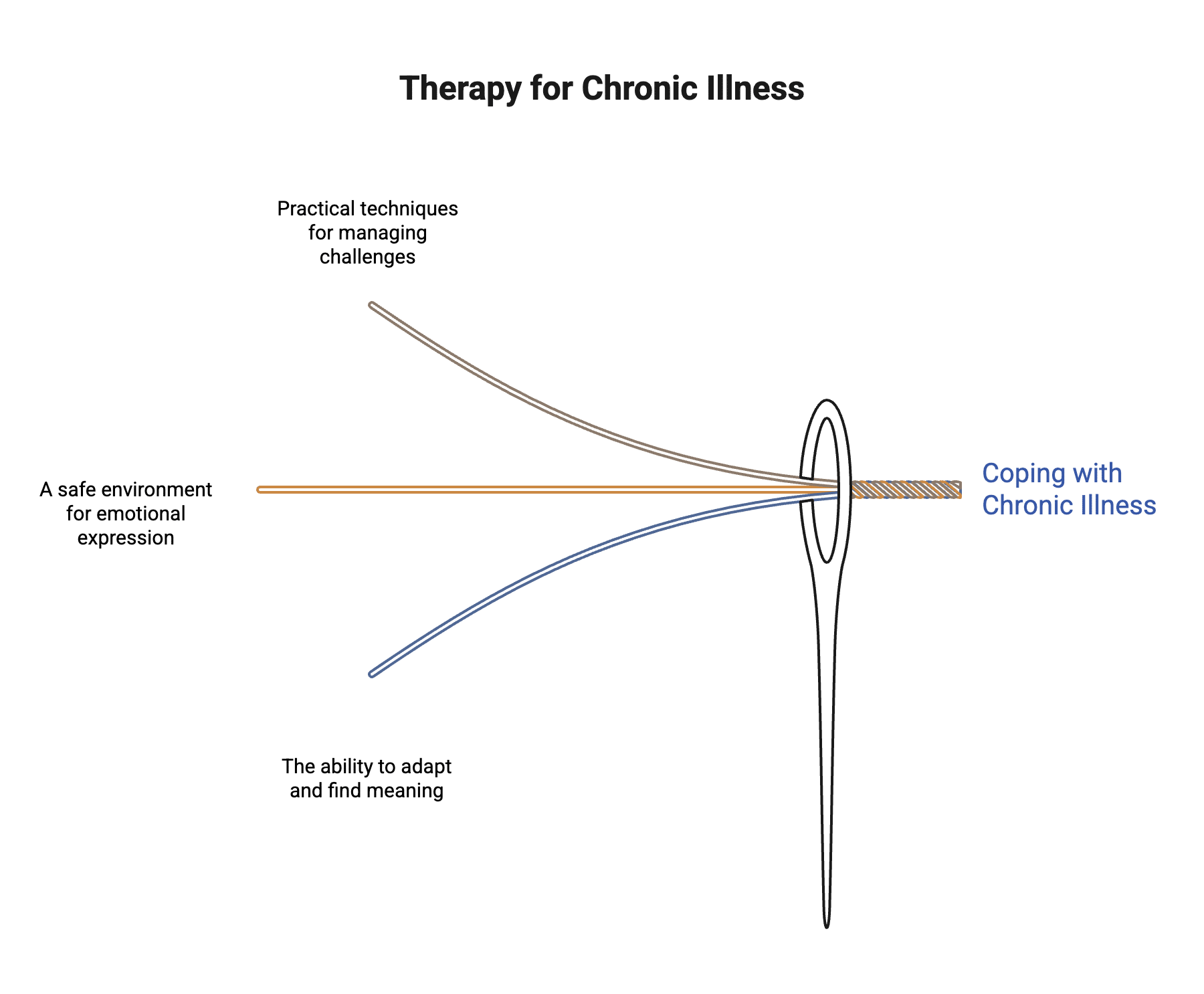
How can therapy help you cope with chronic illness?
Therapy equips you with concrete coping skills to manage the emotional and practical challenges of chronic conditions. Beyond specific techniques, therapy for chronic illness provides something equally important: a confidential space where you can express feelings that may be difficult to share with family or friends.
Many people with chronic illnesses describe feeling isolated or invalidated in their experiences. You might cancel plans last minute due to symptoms, struggle with others not understanding invisible illness, or feel frustrated when well-meaning people offer unsolicited advice. A chronic illness therapist who understands these realities can help you address them.
Practical coping skills you might develop in therapy include:
- Managing anxiety about symptoms or doctor appointments
- Communicating your needs clearly to healthcare providers and loved ones
- Setting realistic expectations and healthy boundaries around your energy and physical limitations
- Problem-solving strategies for treatment decisions and daily challenges
- Techniques for managing chronic pain, such as biofeedback or relaxation exercises
Therapy also helps you develop emotional resilience—the capacity to adapt and find meaning despite ongoing difficulties. This doesn’t mean forcing positivity or denying your struggles. It means learning to hold both grief and hope, accepting uncertainty while still planning for the future, and recognizing your strength without minimizing your pain.
How does therapy support emotional healing from chronic illness?
Chronic illness often triggers profound grief as you mourn your previous health, lifestyle, and sense of who you were. This grief is real and deserves attention. You may grieve the activities you can no longer do, the career path you had to change, or the spontaneity you’ve lost to symptom management.
Therapy provides a safe space to process these losses without rushing you toward acceptance or “silver linings.” A skilled therapist understands that healing from chronic illness doesn’t mean your symptoms disappear—it means learning to live with more emotional flexibility, less suffering, and greater connection to what matters most.
The unpredictable nature of chronic conditions creates ongoing stress. You might feel well one day and unable to function the next. This variability makes planning difficult and can strain relationships with partners when others don’t understand why you’re “fine” sometimes but not others. Therapy helps you develop strategies for managing this uncertainty and communicating about it effectively.
Changes in self-identity represent another layer of loss. Many people describe feeling lost or unsure of who they are when chronic illness becomes central to their lives. Are you a person with diabetes, or are you a teacher, parent, and friend who also manages diabetes? Therapy can help you integrate your chronic illness into your identity without letting it define you completely.
In our Charlotte practice, we see people struggling with the tension between looking “fine” on the outside while experiencing significant symptoms. This disconnect—between how you feel and how you appear—can be isolating. We’ve found that naming this experience and exploring what it means for your relationships creates space for more authentic connection, both in therapy and beyond.
What about anxiety and depression with chronic illness?
Living with chronic conditions increases the risk of developing depression and anxiety. The stress from treatment burden, chronic pain, and uncertainty affects your nervous system and emotional well-being. Physical symptoms and emotional distress often create a cycle—pain increases anxiety, which worsens pain, leading to emotional numbness or flatness.
Evidence-based therapy effectively addresses both anxiety and depression alongside chronic illness. You don’t need to choose between treating your physical health or your mental health—integrated care addresses both. Many therapists work collaboratively with your medical professionals to ensure comprehensive support.
Finding the right support for your journey
Therapy can be delivered in person, through groups, or online. Internet-based therapy is just as effective as face-to-face sessions for many people and offers greater flexibility when symptoms make travel difficult. The format matters less than finding a therapist who understands chronic illness and creates a space where you feel heard.
Support groups can complement individual therapy by connecting you with others who share similar experiences. The validation of knowing you’re not alone—that others truly understand the daily realities of chronic illness—can reduce isolation and provide practical insights.
Building a comprehensive support system matters. This might include friends and family who respect your boundaries, healthcare providers who listen, online communities, and professional mental health support. Each plays a different role in helping you manage both the practical and emotional aspects of living with chronic conditions.
Remember that seeking therapy is a sign of strength, not weakness. Managing chronic illness requires enormous resilience. Therapy simply provides additional tools and support to help you live as fully as possible.
Common Questions About Therapy for Chronic Illness
What chronic diseases can therapy help with?
Therapy for chronic illness supports people managing many types of chronic diseases and chronic health conditions. Research shows therapy benefits people with arthritis, diabetes, heart disease, high blood pressure, high cholesterol, Crohn’s disease, multiple sclerosis, cancer, and other chronic conditions that require ongoing treatment.
The specific chronic disease you have matters less than how chronic illness affects your mental health and daily life. Whether you’re managing chronic pain from arthritis or adjusting to dietary restrictions with Crohn’s disease, a chronic illness therapist can help you develop coping skills for your unique situation.
Many chronic diseases share common emotional challenges—anxiety about doctor appointments, stress from managing symptoms, depression when physical limitations affect your social relationships, and grief over losing aspects of your previous life. A therapist experienced in chronic illness understands these patterns and can help regardless of your specific diagnosis.
What are the coping strategies for chronic illness?
Effective coping strategies for chronic illness combine practical skills with emotional support. Building resilience starts with education about your chronic condition and staying connected with your healthcare provider to understand your treatment options and risk factors.
Self-care forms the foundation of managing chronic illness. This includes prioritizing adequate sleep, maintaining a nutritious diet appropriate for your chronic disease, and engaging in physical activity within your limitations. Even gentle movement can reduce chronic pain, improve mood, and support your physical health.
Setting healthy boundaries protects your well-being. This means learning to say no when you need rest, asking for help when symptoms worsen, and communicating clearly with family members about what support you need. Many people with chronic illness struggle with feeling like a burden—therapy helps you recognize that advocating for yourself is necessary, not selfish.
Managing stress through relaxation techniques, mindfulness practice, and pacing activities prevents symptom flares. Your nervous system responds to both physical and emotional stress, so learning to regulate your stress response can improve how you feel physically. Some people benefit from biofeedback, progressive muscle relaxation, or breathing exercises to manage chronic pain and anxiety.
Connecting with others who understand chronic illness reduces isolation. Support groups—whether in person or online—provide validation and practical advice from people living with similar challenges. A licensed professional counselor or certified rehabilitation counselor can help you process difficult emotions that arise and develop a therapeutic relationship where you feel truly heard.
How do I find the right therapist for chronic illness?
Finding a therapist who understands chronic illness makes a significant difference in your care. Look for a licensed professional counselor, psychologist, or therapist with experience treating people managing chronic health conditions. Some therapists specialize in chronic pain, while others focus more broadly on the mental health challenges of living with chronic disease.
When seeking a therapist, consider asking about their experience with chronic illness during your first consultation. Do they understand the unpredictability of symptoms? Can they accommodate flexible scheduling when you need to cancel appointments due to health issues? Are they familiar with collaborating with medical professionals as part of integrated care?
The therapeutic relationship matters more than credentials alone. You need a safe space where you can express difficult emotions, discuss fears about your prognosis, and work through challenges without judgment. Some people prefer in person therapy for the personal connection, while others find online therapy more accessible when chronic pain or fatigue makes travel difficult.
A therapist directory or referrals from your healthcare provider can help you start your search. Many therapy practices offer initial consultations to help you determine if the fit is right. Trust your instincts—if a therapist doesn’t seem to understand the realities of living with chronic illness, it’s okay to keep seeking answers elsewhere.
One pattern we see is people waiting months or years before starting therapy for chronic illness, thinking they should be able to handle it alone. By the time they reach out, anxiety and depression have compounded the physical burden. Getting support early—even when you’re managing symptoms well—can prevent this spiral. You don’t need to be in crisis to deserve help.
Can therapy actually improve physical symptoms of chronic illness?
While therapy doesn’t cure chronic diseases, research shows it can improve both mental health and physical health outcomes for people with chronic conditions. The mind-body connection means that reducing stress, anxiety, and depression can lead to measurable improvements in physical symptoms.
For chronic pain specifically, therapies like CBT and mindfulness-based approaches help change how your nervous system processes pain signals. You may still experience pain, but therapy can reduce pain intensity, improve your ability to function despite pain, and decrease the emotional distress that amplifies physical discomfort.
Therapy also improves treatment adherence. When depression or anxiety makes it hard to follow treatment plans, therapy provides motivation and problem-solving support. Better treatment adherence often leads to better disease control and fewer complications from chronic illness.
Some research suggests that reducing chronic stress through therapy may affect inflammation, blood pressure, and other physiological markers associated with chronic diseases. While these effects vary by person and condition, addressing mental health is increasingly recognized as essential to comprehensive chronic illness management—not optional, but a core part of treating the whole person.
Get support from Charlotte therapists who understand chronic illness
If you’re managing a chronic health condition and struggling with the emotional impact, our team at Therapy Group of Charlotte can help. Our clinicians understand the unique challenges of living with chronic illness and offer evidence-based approaches tailored to your needs. Contact us to schedule an appointment.
This blog provides general information and discussions about mental health and related subjects. The content is not intended to be a substitute for professional medical advice, diagnosis, or treatment. Always seek the advice of your physician or other qualified health provider with any questions you may have regarding a medical condition.