
Understanding Grief and Loss in Childhood: What Parents Need to Know
Grief and loss in childhood are more common than many parents realize. Many children will experience the death of a family member, friend, or beloved pet before adulthood. The death of a family pet can be a child’s first experience with mortality and can cause intense upset. Around 1 in 20 children will lose a parent by age 16. Understanding how young children grieve—and how to support a grieving child—makes a profound difference in family health and emotional wellbeing.
Is It Normal to Grieve in Childhood?

Grief is a normal response to loss at any age. Bereaved children experience the same emotions adults do—sadness, anger, confusion, and anxiety. The difference is that younger children often lack the vocabulary or emotional tools to process these difficult feelings the same way adults do.
Children experience grief just as deeply as adults, though they show it differently. Grieving children might seem fine one moment and overwhelmed the next. This doesn’t mean they’re “over it”—it means they’re processing loss in their own way, often in waves rather than all at once.
How a child grieves depends heavily on developmental stage. Very young children under age 5 may not grasp that death is permanent and may repeatedly ask when the person who died is coming back. Younger children often need repeated explanations. School age children begin to understand finality but may still engage in magical thinking, believing their thoughts somehow caused the loss. Older children and teens often grieve more like adults but may hide emotions to protect other family members or avoid talking about his or her feelings.
What Are Common Grief Reactions in Bereaved Children?
Childhood grief shows up in countless ways. Younger children might act out through behavior rather than words, while older children may withdraw from friends or show changes in school performance. Grief may also manifest in children as irritability, regression to younger behaviors, or aggressive outbursts. Understanding a child’s grief helps parents provide better support.
Common grief reactions include:
- Sadness that comes in waves
- Anger at the person who died, other family members, or themselves
- Confusion about what happened
- Guilt, especially toward the dead person
- Sleep disturbances or nightmares
- Changes in appetite
- Difficulty concentrating
- Physical symptoms like stomachaches
Some grieving children may regress to earlier behaviors. A child might start wetting the bed again, become clingy, or act younger. These are normal responses and usually fade as the grieving process continues.
It’s common for bereaved children to seem fine at times, playing normally. This doesn’t mean they aren’t grieving—younger children often process loss in shorter bursts, returning to play and everyday life between waves of emotion. This back-and-forth pattern helps a child cope with overwhelming feelings.
Important to remember: Children don’t grieve on a schedule. They may seem fine one day and overwhelmed the next. Both reactions are completely normal and part of the healing process.
How Does a Child’s Age Affect How They Grieve?
A child’s age shapes how they understand death and respond to loss. Developmental stage matters more than specific age, but general patterns help parents know what to expect as a child grieves.
Very Young Children (Ages 0-5)
Very young children don’t understand death is permanent. They may ask the same questions repeatedly: “When is Grandpa coming back?” or “Where is the person who died?” This isn’t denial—it’s developmentally appropriate confusion. Younger children in this age group engage in magical thinking and may believe the person who died is just sleeping or on a trip.
School Age Children (Ages 6-12)
Around age 6 or 7, most children understand that death is final. However, they may struggle with abstract concepts about death. School age children might become concerned with the details of how someone died. They may also feel guilty, believing they caused or could have prevented it.
Teenagers (Ages 13+)
Older children and teens understand death similarly to adults but may struggle with the existential weight of mortality. Teenagers may withdraw from family, turn to friends, or engage in risky behavior as they cope. They may also feel pressure to be strong for surviving family members, hiding the grieving process happening inside.
Key insight: The most helpful thing you can do is meet your child where they are developmentally. A 5-year-old needs different support than a 15-year-old, and that’s okay.
What Are the Symptoms of Childhood Traumatic Grief?
Childhood traumatic grief goes beyond typical reactions. While many children eventually adapt to loss with support, some develop serious problems that interfere with everyday life. Research shows that unresolved childhood grief can elevate a child’s risk for anxiety, depression, and PTSD into adulthood.
Warning signs that a child’s grief may need professional support include:
- Persistent withdrawal from friends and activities
- Significant, lasting sleep disturbances or eating changes
- Extreme behavioral changes or aggressive outbursts
- Decline in school performance that doesn’t improve over time
- Expressing that life feels meaningless
- Prolonged periods of deep sadness
- Self-harm or thoughts of suicide
If a parent dies or a child loses another primary attachment figure, children under 5 years old face particular vulnerability. The death of a family member during critical developmental periods can have lasting effects on a child’s life if the young child doesn’t receive adequate support. A child’s responses to traumatic loss differ from typical grief and require specialized care.
How Can Parents Help a Grieving Child Cope?
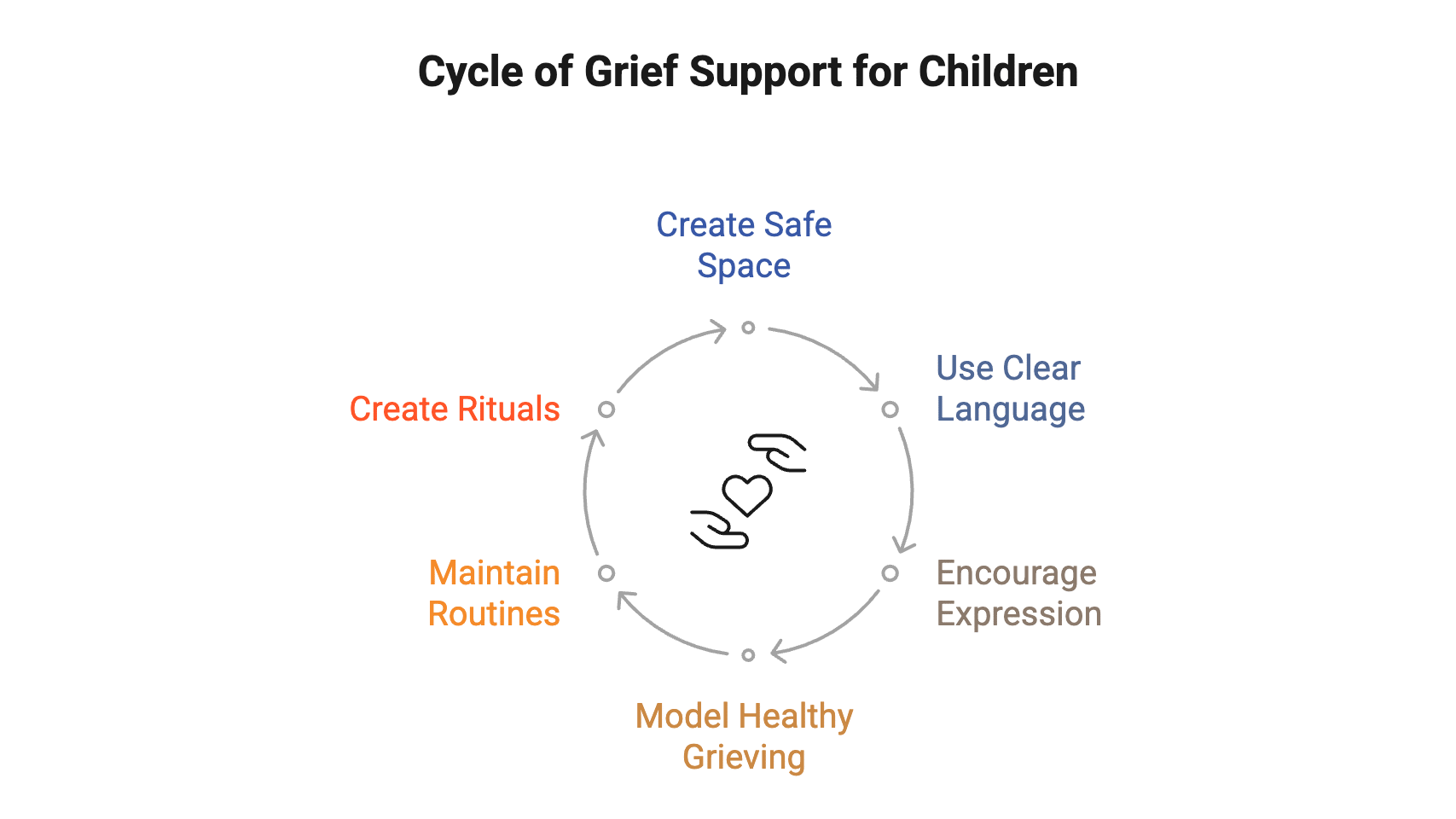
The most powerful thing parents can do is create a safe space for a child to grieve in their own way. This means being present, honest, and patient as the grieving process unfolds.
Use Clear, Age Appropriate Language
When talking about death, use direct words like “died” rather than euphemisms like “passed away” or “went to sleep.” Communicate honestly and directly about death using clear language such as “died” or “their body stopped working.” Phrases like “eternal sleep” confuse young children and create fear around bedtime. Answer questions honestly at a level the young child can understand.
Let Children Express Feelings Their Own Way
Some children want to talk, while others process through play, drawing, journaling, or music. Creating safe outlets helps children express feelings and build healthy coping skills. Let your young child know all emotions are okay—sadness, anger, confusion, even relief.
Model Healthy Grieving
It’s healthy for younger children to see caring adults expressing emotions. Crying shows them grief is natural. This normalizes the full range of feelings they’re experiencing and supports child and family health.
Remember: Your child is watching how you handle grief. By modeling healthy grieving—including showing emotion, asking for help when needed, and taking care of yourself—you teach them valuable life skills.
Maintain Routines and Provide Reassurance
Familiar routines provide stability when everything feels uncertain. Continue regular mealtimes, bedtimes, and activities. Reassure surviving family members will care for them—this matters especially when a parent dies or a sibling passes.
Create Rituals to Remember
Making a memory box, sharing stories, or creating rituals to honor the deceased person helps a child cope while maintaining connection. Consider involving grieving children in memorial services if they wish, explaining what to expect beforehand.
How Does Childhood Grief Affect Adulthood?
The way a child grieves shapes their emotional health into adulthood. With proper support, many children develop resilience and healthy coping mechanisms. However, unaddressed childhood grief contributes to mental health challenges throughout a child’s life.
Studies indicate that therapeutic interventions like cognitive-behavioral therapy effectively help grieving children and young people process loss. Early support makes a lasting difference.
The impact of loss may reemerge during future milestones. A child who lost a parent might feel the absence again at graduation, their wedding, or when they become a parent. This is normal—the grieving process doesn’t disappear, but children learn to carry it in healthy ways.
When Should You Seek Professional Support?
If you’re concerned about your child’s grief, trust your instincts. While grief is normal, complicated grief that disrupts a child’s life warrants professional attention.
Consider reaching out to a therapist if:
- The child shows persistent depression or anxiety
- Grief reactions intensify rather than easing
- The child talks about wanting to join the person who died
- School and social functioning don’t improve
- The grieving child becomes isolated from friends
- Other family members struggle to provide support due to own grief
Support groups can help grieving children connect with young people who’ve experienced similar losses. Charlotte has resources designed for children navigating grief, including age-appropriate counseling that understands how to help a child cope with loss.
Supporting the Whole Family Through Loss
Grief affects entire families, not just individual children. When a family member dies, everyone grieves differently, and adults often struggle with their own grief while trying to support their children. Having strong social support networks helps soften the trauma of loss for children. This is one of the most challenging aspects of child and family health during loss.
Therapists who specialize in childhood grief and child development provide guidance tailored to your family’s unique situation. Whether your family is coping with the death of a family member, divorce, or another significant loss, professional support helps everyone process difficult feelings.
If you’re looking for support as your child grieves, the therapists at Therapy Group of Charlotte are here to help. Schedule an appointment to discuss how we can support your family.
Frequently Asked Questions About Grief and Loss in Childhood
How can I tell if my child is experiencing complicated grief?
Complicated grief in children may show as persistent withdrawal, significant changes in sleeping or eating habits, extreme behavioral changes, and a decline in school performance that does not improve over a long period. If your child exhibits these signs or talks about life feeling meaningless, it is important to seek professional support.
What role do support people play in helping a grieving child?
Support people, including caring adults, family members, teachers, and counselors, provide essential emotional stability and guidance. They help children express feelings, maintain routines, and create safe outlets for grief, which are critical psychosocial aspects of healthy grieving.
How can I help my child remember a significant person who has died?
Creating rituals such as making a memory box, sharing stories, or involving children in memorial services helps maintain a connection to the deceased and supports the grieving process. Preparing children beforehand about what to expect during these rituals can make them feel more aware and comfortable.
Are children aware of death differently at various ages?
Yes, children’s understanding of death evolves with their developmental stage. Very young children may not grasp permanence and engage in magical thinking, while school age children start to understand finality but may still have fears. Teens are generally aware but may struggle with the emotional and existential aspects of loss.
How does the death of a grandparent affect children?
Children often experience grief after the death of a grandparent, which can trigger a range of emotions including sadness, confusion, and anxiety. This loss, though sometimes less immediate than losing a parent or sibling, is still significant and can impact their emotional wellbeing and family health.
Disclaimer: This article is for educational purposes only and is not a substitute for professional medical advice, diagnosis, or treatment. Always seek the advice of your physician or qualified mental health provider with any questions you may have regarding a medical or mental health condition. If you are in crisis or experiencing thoughts of self-harm, please call 988 (Suicide and Crisis Lifeline) or go to your nearest emergency room.

