
Having Trouble Conceiving: How It Affects Your Relationship and When Couples Therapy Can Help
Last updated: November 2025
If you and your partner are having trouble conceiving, you already know the emotional weight this experience carries. What many couples don’t expect is how much fertility struggles can affect their relationship. The stress of trying to get pregnant month after month, the grief that comes with negative pregnancy tests, and the uncertainty of unexplained infertility can create distance between partners who need each other most. You might find yourselves arguing more, feeling disconnected, or struggling to talk about your feelings without hurt or frustration taking over.
The good news is that couples therapy provides proven support for partners navigating fertility challenges. Research shows that psychotherapy helps manage stress and improve mood, and couples counseling specifically helps partners feel less alone and strengthens relationships during this difficult time.
Why Does Infertility Put So Much Strain on Relationships?

Infertility challenges the foundation of what many couples expected their life together would look like. When you’re trying to conceive without success, it’s not just about the physical inability to get pregnant—it touches every part of your relationship.
Many people find that infertility brings strong feelings like sadness, worry, anger, and frustration. These emotions are completely normal, but they can become overwhelming. The stress builds with each fertility treatment cycle, every doctor’s appointment, and all the financial decisions about whether to pursue assisted reproductive technology or other medical interventions.
Partners often experience fertility struggles differently. One person might want to talk about it constantly while the other needs space to process privately. One partner may be ready to explore fertility treatments right away while the other wants more time. These differences aren’t signs that something is wrong with your relationship—they’re normal responses to an abnormal situation. But without good communication and support, these differences can create real distance.
In our years working with couples facing infertility, we’ve learned that most partners assume they’ll grieve the same way or want the same things at the same time. They’re often surprised when one person wants to immediately schedule the next round of IVF while the other needs a month to recover emotionally. We work with these differences not as conflicts to resolve but as opportunities to understand your partner more deeply and build flexibility into your relationship.
The Hidden Ways Infertility Affects Couples
The impact goes beyond the obvious stress of medical appointments and treatment options. Infertility can change how you relate to each other sexually. When sex becomes timed to ovulation rather than an expression of intimacy, it can start to feel clinical or obligatory. Sexual dysfunction and performance anxiety can develop when intercourse shifts from connection to conception. The spontaneity and pleasure that brought you together can get lost in fertility testing schedules and treatment plans.
Social situations become minefields too. Baby showers, pregnancy announcements from friends, and well-meaning questions about when you’ll have kids can trigger strong emotions. Partners may handle these situations differently—one wanting to avoid them entirely while the other tries to push through. These differences in coping can leave both people feeling unsupported.
Money adds another layer of tension. Fertility treatments and assisted reproductive technology can be expensive. A single cycle of in vitro fertilization can cost thousands of dollars, and not all insurance covers infertility treatment. Financial stress compounds the emotional burden, and couples may disagree about how much to spend or when to stop trying.
How Do You Know If Infertility Is Affecting Your Relationship?
Watch for changes in how you and your partner connect emotionally and communicate about difficult topics. Many couples notice they’re arguing more often, especially about fertility-related decisions or whose “fault” the fertility problems might be.
You might notice:
- Avoiding conversations about trying to conceive because they always end in conflict
- Feeling like you’re going through this alone, even though your partner is right there
- Loss of physical intimacy or sex feeling like a chore
- Resentment building when one partner seems less affected by unsuccessful attempts
- Withdrawing from social situations together, or one partner always making excuses to leave early
Infertility can lead to stress, anxiety, and depression, and these mental health challenges affect how you show up in your relationship. When you’re anxious or depressed, it’s harder to be present with your partner. The emotional challenges make it difficult to offer support or receive it when you need it most.
The Blame and Guilt Cycle
Male infertility and female infertility carry different emotional weight depending on the diagnosis. Male factor infertility—which includes low sperm count, problems with sperm production, or sexual dysfunction—affects about one-third of infertility cases. Female infertility often involves issues with ovarian function, blocked fallopian tubes, conditions like polycystic ovary syndrome or uterine fibroids, or problems with the woman’s uterus or reproductive organs.
When doctors identify these specific health conditions, the partner with the diagnosis may carry guilt. The other partner might feel helpless or develop unspoken resentment. Even when couples consciously know that fertility problems aren’t anyone’s “fault,” these feelings can surface during arguments or moments of frustration.
With unexplained infertility—which accounts for about 10 to 15 percent of cases—both partners can feel helpless when testing shows no clear medical cause. The ambiguity often creates more anxiety than having a diagnosis to treat.
What Can Couples Therapy Do for Partners Facing Infertility?
Couples therapy helps you develop better communication skills and process grief together, so infertility doesn’t define or damage your relationship. A therapist who understands fertility challenges can create space for both partners to express their emotions without judgment and help you understand each other’s experience.
Mental health professionals help people cope with the emotional challenges of infertility, and couples counseling specifically addresses how these challenges affect your partnership. Rather than each person managing their grief and stress alone, therapy teaches you to support each other through the process.
What Happens in Couples Therapy for Infertility
In couples therapy sessions, you’ll work on specific relationship skills that help you manage fertility struggles together. Your therapist might help you:
- Create agreements about how much to share with family and friends
- Find ways to maintain intimacy that aren’t tied to trying to conceive
- Process grief and loss together, especially after unsuccessful fertility treatments
- Make decisions about treatment options when you have different preferences
- Address resentment or blame that’s built up between you
Therapy also provides education about how infertility affects relationships, which can normalize what you’re experiencing. When you understand that your struggles are common reactions to an incredibly stressful situation, it’s easier to have compassion for yourself and your partner.
In our practice working with couples facing fertility challenges, we’ve noticed that partners often carry very different timelines for grief. One person might be ready to move forward with the next treatment cycle while the other is still processing the loss of the previous attempt. We help couples understand that these different paces aren’t a relationship problem—they’re a normal part of how individuals process disappointment. The key is learning to honor both people’s needs while staying connected.
Does Therapy Actually Help With Fertility Struggles?
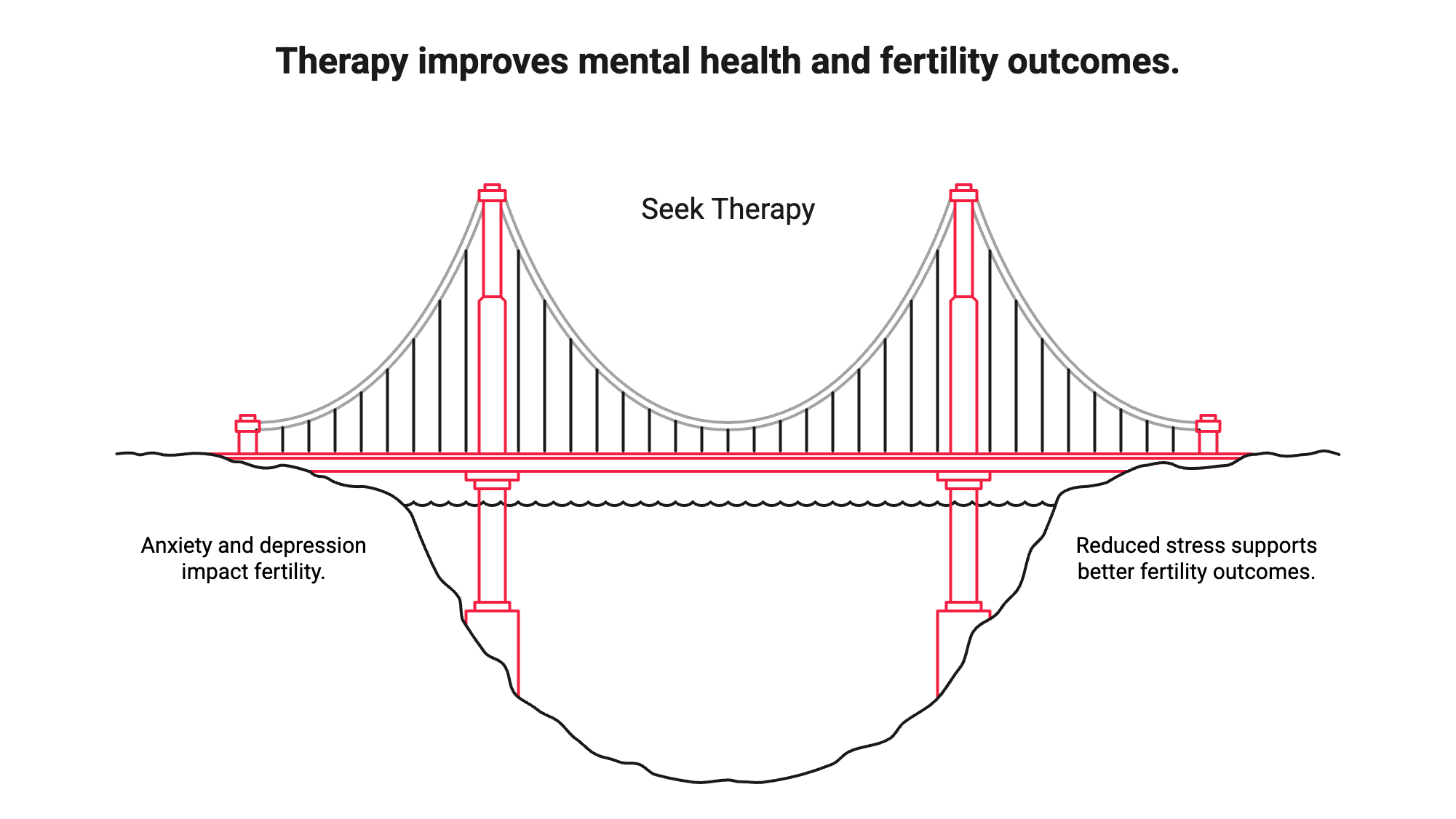
Yes—research consistently shows that psychological support improves mental health outcomes and may even support better fertility treatment results. Multiple studies demonstrate that therapy reduces anxiety and depression in people experiencing infertility.
Cognitive behavioral therapy lowers anxiety and depression, improves quality of life, and may help increase pregnancy rates, especially for those using fertility treatments like IVF. Studies show that psychotherapy interventions improve both psychological outcomes and pregnancy rates for people dealing with infertility.
This doesn’t mean therapy magically solves fertility problems or guarantees pregnancy. But it does mean that getting mental health support can help you feel better emotionally while also potentially supporting your body’s ability to conceive. Stress can affect hormones and menstrual cycles, and managing that stress through therapy creates better conditions for your overall wellbeing.
Other Therapeutic Approaches That Help
Beyond couples therapy, other mental health interventions can support you individually and as a couple:
- Support groups bring you together with other couples facing similar challenges, helping you feel less isolated in the experience
- Individual therapy gives each partner space to process their own emotions without worrying about how it affects the other person
- Mind-body programs teach stress reduction techniques like deep breathing and progressive muscle relaxation
- Cognitive behavioral therapy assists you in recognizing and altering thought patterns that contribute to increased anxiety or depression
Support groups and couples counseling help people feel less alone and improve relationships with partners during fertility treatment. Many couples find that combining couples therapy with individual support or group counseling provides the most comprehensive help. Organizations like RESOLVE: The National Infertility Association offer support groups throughout Charlotte that connect you with others who understand what you’re going through.
How Do We Start the Conversation About Couples Therapy?
Begin by acknowledging that fertility struggles are affecting both of you, even if they show up differently. You might say something like, “I notice we’ve been more disconnected lately, and I think trying to conceive is really hard on both of us. What if we talked to someone together who understands what couples go through with this?”
Many partners worry that suggesting therapy means admitting the relationship is in serious trouble. That’s not true. Seeking support early—before resentment builds and communication completely breaks down—actually strengthens relationships. It shows you’re both committed to protecting your connection during a difficult season.
If your partner is hesitant, you might frame it as support for the fertility process itself rather than relationship repair. Since research shows psychological interventions improve mental health and may support pregnancy outcomes, therapy becomes part of taking care of your health—just like the physical aspects of fertility testing and treatment.
We consistently see couples wait too long before seeking support for relationship strain related to infertility. They come in after months or years of distance, resentment, and communication breakdowns. Early intervention makes such a difference. When couples address the impact of fertility struggles on their relationship before patterns become entrenched, they develop skills that serve them well beyond the fertility experience—whether they eventually conceive, pursue adoption, or decide to live child-free.
When Should You Seek Medical and Mental Health Support?
Healthcare providers generally recommend seeking help if you haven’t conceived after one year of trying to get pregnant with unprotected sex. For women over 35, that timeline shortens to six months because fertility declines more rapidly with age, particularly after 37.
Risk factors that affect fertility include age, lifestyle factors like smoking or excessive alcohol use, environmental exposures, obesity, and certain medical conditions. Both male infertility and female infertility can result from genetic disorders, hormonal imbalances, or physical problems with reproductive organs. Sometimes infertility involves issues with the fallopian tubes, problems with ovarian function, or challenges with sperm production.
If you’ve been referred to a reproductive endocrinologist or fertility specialist and are beginning fertility testing or considering treatment options, that’s also a good time to connect with a therapist. The earlier you address the emotional impact, the better equipped you’ll be to handle the decisions and disappointments ahead.
What If We Have Unexplained Infertility?
Unexplained infertility can be especially challenging for relationships because there’s no clear problem to solve or treat. When fertility testing doesn’t reveal blocked fallopian tubes, issues with sperm production, or other identifiable medical conditions, couples are left with uncertainty. This ambiguity can fuel anxiety and make it harder to know what treatment options make sense.
Partners facing this diagnosis often struggle with whether to pursue fertility medications, assisted reproductive technology like intrauterine insemination or in vitro fertilization, or wait and keep trying naturally. These decisions can create conflict when you and your partner have different risk tolerances or beliefs about medical intervention.
Couples therapy helps you work through these decisions together and manage the unique stress of not knowing why you can’t get pregnant. A therapist can help you communicate about what feels right for your specific situation, rather than letting fear or frustration drive choices that one or both of you may later regret.
Finding Support in Charlotte
If you’re in the Charlotte area and fertility struggles are affecting your relationship, you don’t have to figure this out alone. The therapists at Therapy Group of Charlotte understand how trying to conceive—especially when it doesn’t happen easily—can strain even strong relationships. We work with couples in South End, Dilworth, Myers Park, and throughout the Charlotte region. Schedule an appointment to start building the communication skills and emotional support you need during this challenging time.
Disclaimer: This article is for educational purposes only and is not a substitute for professional medical advice, diagnosis, or treatment. Always seek the advice of your physician or qualified mental health provider with any questions you may have regarding a medical or mental health condition. If you are in crisis or experiencing thoughts of self-harm, please call 988 (Suicide and Crisis Lifeline) or go to your nearest emergency room.

