
What Is Medical Trauma? A Complete Guide to Recognition and Recovery
Medical trauma happens when healthcare experiences leave lasting emotional and psychological scars. Whether it’s a life-threatening diagnosis, invasive medical procedures, or poor treatment by medical staff, these medical events can trigger intense fear, helplessness, and distress that persist long after the experience ends. Understanding medical trauma is the first step toward healing, and effective trauma therapy is available.
What Is Medical Trauma?

Medical trauma is traumatic stress from interactions with the medical system. This includes undergoing medical procedures, receiving a serious diagnosis, or experiencing threatened death during a medical event. The trauma isn’t just about physical pain—it’s about the psychological and physiological responses your body and mind have to overwhelming medical experiences.
Common triggers for experiencing medical trauma include:
- Life-threatening events like heart attacks or cancer treatment
- Invasive medical procedures that feel violating
- Extended hospital stays that create powerlessness
- Negative interactions with medical staff
When your body’s stress response activates during medical care and doesn’t properly resolve afterward, medical trauma develops. Medical settings themselves can become triggering—hospitals, doctor’s offices, even the smell of antiseptic can bring back intense emotions tied to the original traumatic event. This is your nervous system trying to protect you, but it makes seeking necessary medical care incredibly difficult.
Research published in the Journal of Traumatic Stress (J Trauma Stress) shows that medical trauma can result in both psychological and physiological responses to potentially traumatic medical events. These responses affect not just physical health but your overall sense of safety in the world.
Is Medical Trauma the Same as Medical PTSD?
Medical trauma and medical PTSD are related but not identical. Medical trauma is the broader experience of traumatic stress from medical events, while medical PTSD is a specific diagnosis that results from a traumatic medical experience. Think of medical trauma as the umbrella term—medical PTSD is what happens when that trauma meets clinical criteria for post traumatic stress disorder as outlined in the Diagnostic and Statistical Manual of Mental Disorders.
Not everyone experiencing medical trauma will develop PTSD. Most people have distressing reactions that improve over time with support.
Medical PTSD involves persistent symptoms that significantly impact daily life and don’t resolve on their own. These PTSD symptoms include intrusive thoughts about the medical event, avoidance of medical settings, heightened anxiety, and emotional numbness. Medical PTSD falls under the category of trauma and stressor related disorders.
Medical PTSD can develop immediately or emerge months—even years—later. High-risk medical events include ICU stays, cancer treatment, heart attacks, surgery with complications, or any situation where patients felt their life was threatened. Poor treatment by healthcare professionals, lack of informed consent, or feeling dismissed also contribute to medical PTSD.
What Are Examples of Medical Trauma?
Medical trauma stems from many healthcare experiences. Life-threatening events are among the most common triggers—heart attack, stroke, severe injury, or sudden emergencies where you feared for your life. These moments activate your survival response, and sometimes that response doesn’t fully turn off afterward.
Invasive medical procedures can cause medical trauma even when medically necessary. This includes surgery under general anesthia, painful diagnostic medical procedures, or treatments involving loss of bodily autonomy. For some patients, being restrained, intubated, or unable to communicate creates lasting psychological impact.
Extended hospital stays present their own traumatic potential. Being separated from a loved one or family member, experiencing loss of independence, enduring multiple painful procedures, or witnessing other patients in distress can all contribute. Children and individuals with a history of childhood abuse or other trauma are especially vulnerable during hospital stays, as they may not understand what’s happening or their nervous system is already primed for threat.
Negative interactions with medical staff can trigger or worsen the symptoms of medical trauma:
- Being dismissed when raising concerns
- Experiencing discrimination
- Receiving inadequate pain management
- Feeling that healthcare providers aren’t listening
Certain groups—including women and people of color—face higher risk of experiencing medical trauma due to systemic biases in the healthcare setting.
A serious or life threatening illness diagnosis itself can be traumatic. Learning you have cancer, a chronic illness, or a terminal condition creates intense emotions and uncertainty that can develop into post traumatic stress.
How Do You Tell If You Have Medical Trauma?
The symptoms of medical trauma include intrusive thoughts, avoidance of medical settings, anxiety, depression, and hopelessness. If you find yourself replaying traumatic memories of your medical experience, having nightmares, or experiencing flashbacks, these are signs you may be experiencing medical trauma.
Avoidance is another key indicator. You might cancel medical appointments, resist necessary follow-up medical care, or feel panic at the thought of entering a hospital or doctor’s offices. Some people avoid anything that reminds them of the traumatic event—certain smells, TV shows about hospitals, even conversations about health.
Physical symptoms often accompany the psychological impact. These can include headaches, insomnia, and fatigue, along with rapid heartbeat or digestive issues. Your body remains in heightened alert, unable to fully relax even when you’re safe. This represents the physiological responses component of trauma.
Mental health symptoms are common too. You might experience negative thoughts about your body, fear of future medical care, or difficulty trusting a healthcare professional or medical professional. Anxiety disorders and depression frequently co-occur with medical trauma. Some people describe feeling detached from their body or their life after a traumatic medical experience.
It’s important to recognize that your trauma is real and worthy of being acknowledged. Many people minimize their medical trauma, thinking “others had it worse” or “I should just be grateful I survived.” But trauma isn’t a competition—if the experience was overwhelming for you, that’s what matters.
The International Society for Traumatic Stress Studies and ongoing traumatic stress studies confirm that medical trauma is a legitimate form of post traumatic stress that deserves proper assessment and treatment.
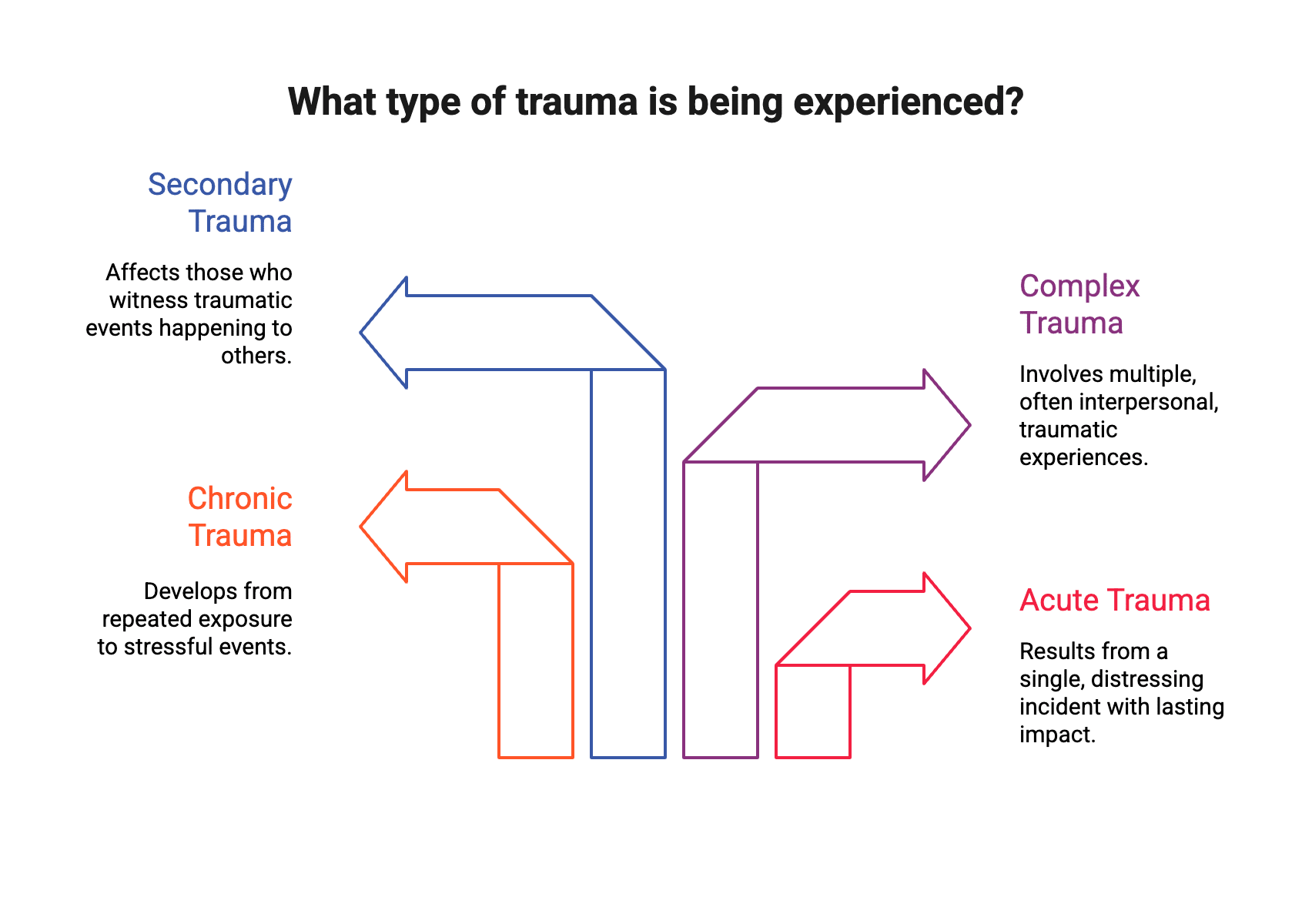
What Are the 4 Types of Trauma?
While medical trauma is our focus, understanding the broader categories helps contextualize medical experiences. The four main types are acute trauma, chronic trauma, complex trauma, and secondary trauma.
Acute trauma results from a single distressing incident—a car accident, natural disaster, or sudden health crisis like a heart attack. The traumatic event is time-limited but creates lasting impact. Many medical trauma experiences fall into this category.
Chronic trauma develops from repeated exposure to stressful events. For medical patients, this might mean ongoing painful medical procedures, multiple surgeries, or living with a chronic illness requiring constant medical intervention. The cumulative effect can be more damaging than a single traumatic event.
Complex trauma typically involves multiple traumatic experiences, often interpersonal and frequently beginning in childhood. Childhood abuse is one example. People with a history of complex trauma or other trauma are at higher risk of developing medical trauma when they encounter the medical system, as their nervous system is already primed for threat.
Secondary trauma affects people who witness traumatic events happening to others. A family member watching a loved one go through medical crisis can develop their own trauma symptoms. Healthcare professionals and medical staff themselves can experience secondary trauma from repeatedly witnessing patient suffering.
How Can Therapy Help With Medical Trauma?
Trauma-focused psychotherapy is the primary and most effective treatment for medical trauma. Multiple therapeutic approaches have strong research support for helping patients process traumatic medical experiences and reclaim their sense of safety.
At Therapy Group of Charlotte, we take a holistic approach that addresses both the psychological and emotional impact of medical experiences. We specialize in trauma therapy approaches that help you process what happened and move toward healing.
Cognitive Behavioral Therapy
Cognitive behavioral therapy (CBT) is commonly used to treat medical trauma and medical PTSD. CBT helps you identify and challenge negative thoughts related to your medical experience, develop healthier coping strategies, and gradually face medical situations you’ve been avoiding. This approach is particularly effective for managing anxiety and changing thought patterns that keep you stuck in trauma responses.
Working with a mental health professional trained in cognitive behavioral therapy, you’ll learn to recognize how your thoughts influence your feelings and behaviors around medical care. This structured treatment typically involves 12-20 sessions and has strong evidence supporting its effectiveness.
Trauma-Focused Psychodynamic Therapy
Trauma-focused psychodynamic therapy offers another powerful pathway for healing from medical trauma. This approach helps you understand how past traumatic experiences shape your current emotional patterns and relationships with healthcare. By exploring the deeper meanings and emotional responses connected to your medical trauma, you can process feelings that may be difficult to access through other methods.
Additional Evidence-Based Approaches
Eye movement desensitization and reprocessing (EMDR) therapy can be highly effective for medical PTSD. EMDR helps your brain reprocess traumatic memories so they become less emotionally charged and intrusive. Many patients experiencing medical trauma find that memories that once caused panic become more manageable after EMDR treatment.
Cognitive Processing Therapy (CPT) helps you challenge and modify unhelpful thoughts and beliefs related to your medical trauma. Prolonged Exposure (PE) Therapy involves gradually approaching trauma-related memories and medical situations to reduce fear through controlled, safe exposure. Both are evidence-based treatments for post traumatic stress disorder.
What Can I Do to Support My Recovery?
Beyond formal therapy, several practices support healing from medical trauma. Acknowledging that your trauma is real is a crucial first step in the healing process—you don’t need permission to feel impacted by what you experienced.
Here’s what can help when experiencing medical trauma:
- Bring someone supportive to medical appointments to provide emotional safety
- Practice self-advocacy by asking questions and requesting clear explanations
- Communicate openly with your healthcare provider about your past medical trauma
- Try complementary therapies like mindfulness, meditation, or yoga
Relaxation techniques help regulate your nervous system and alleviate stress responses associated with medical trauma. These practices teach your body that it’s safe to relax. Many people find that engaging in practices like yoga, tai chi, and other coping strategies helps them reconnect with their body after medical trauma created disconnection.
Support groups provide community for individuals facing similar challenges. Knowing you’re not alone reduces isolation and shame. Some people benefit from groups specific to their medical condition or diagnosis, while others prefer general trauma support groups.
Developing a tailored behavioral health treatment plan with a mental health professional ensures comprehensive support. This might include a combination of therapy approaches, complementary practices, and in some cases, medication management by a medical professional to address anxiety disorders, depression, or other mental disorders while you work through the trauma.
The goal is finding what works for your life and supporting both your mental health and physical health during recovery.
Finding Support in Charlotte
If you’re experiencing medical trauma, reaching out for professional support can make a significant difference in your healing. The therapists at Therapy Group of Charlotte understand the complex ways that medical experiences affect your mental health and sense of safety.
We offer trauma therapy approaches including cognitive behavioral therapy and trauma-focused psychodynamic therapy to help you process what happened and move toward recovery. Our treatment approach addresses the psychological impact of medical trauma while respecting your individual experience and pace of healing. Schedule an appointment to begin your recovery.
Disclaimer: This article is for educational purposes only and is not a substitute for professional medical advice, diagnosis, or treatment. Always seek the advice of your physician or qualified mental health provider with any questions you may have regarding a medical or mental health condition. If you are in crisis or experiencing thoughts of self-harm, please call 988 (Suicide and Crisis Lifeline) or go to your nearest emergency room.

